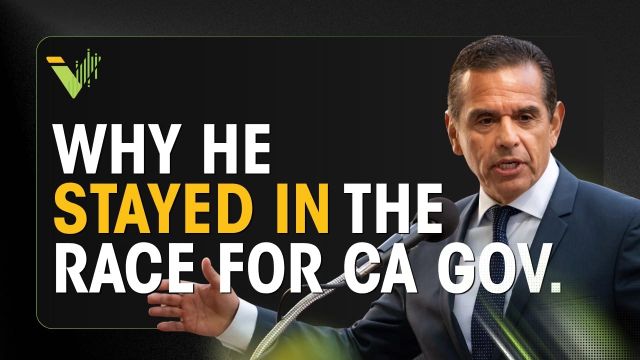
When the polls said two Republicans might take the top two spots, California Democratic Party leadership went to work getting Democrats out of the governor's race. Antonio Villaraigosa was one of them. He said no - and he says the whole thing left a black mark on the party. The first Latino mayor of Los Angeles, former Speaker of the California Assembly, and recent candidate for governor sits down with the Independent Voter Podcast and doesn't flinch. He walks through the pressure campaign on himself, Xavier Becerra, Tony Thurmond and Betty Yee, why he never believed the two-Republican scenario for a single second, and what it says about a party that spent its money on polls instead of turnout. Along the way he goes after the $40 trillion national debt, the Pentagon's $1.5 trillion budget ask, and tax cuts he says the country can't afford - plus why he thinks independence is a mindset, not a party registration.
This episode is sponsored by the Independent Voter Project and produced by Olas Media. Listen on Spotify or Apple Podcasts.
The Independent Voter Podcast also has its own YouTube channel! If you enjoy these conversations, subscribe to our dedicated channel for full episodes, interviews, and future content.
Episode Highlights
On this episode of the Independent Voter Podcast, hosts Cara McCormick and Chad Peace sit down with Antonio Villaraigosa, the first Latino mayor of Los Angeles and former Speaker of the California Assembly, fresh off his run in the last California gubernatorial election. He opens by explaining a campaign-trail line that stuck with voters: "if you want to be loved, get a dog," tying it to his belief that being respected matters more than being popular, especially when it means breaking from his own party.
Villaraigosa gets specific on fiscal policy, noting the national debt just crossed $40 trillion and connecting his long involvement with the Fix the Debt organization to his time running the city of Los Angeles. He argues wartime spending in Iraq, Afghanistan and Iran has crowded out domestic priorities like Medicare and Social Security, and flags the Pentagon's $1.5 trillion budget request alongside Trump-era tax cuts he says the country can't afford.
The conversation turns personal when Villaraigosa admits he misses having Barack Obama and Bill Clinton in the White House, framing his critique of the current economy around working people who can't keep up with the cost of living while high earners benefit disproportionately from tax policy.
Cara presses him on the party pressure campaign to clear the 2026 primary field, and Villaraigosa confirms he, Xavier Becerra, Tony Thurmond and Betty Yee were all pushed by California Democratic Party leadership to drop out over fears that two Republicans, Chad Bianco and Steve Hilton, could take both top two primary spots. He says flatly he never believed that outcome for a second, calling it statistically implausible even as insiders panicked.
He goes further, arguing the party spent money on polling instead of turnout and persuasion, and says the failed strategy "left a black mark" on that whole effort, especially since one of the candidates they tried to sideline is now positioned to be the next governor.
Chad, Cara, and Villaraigosa then debate voter ID, with Villaraigosa explaining his opposition to California Proposition 39, arguing there's no documented widespread voter fraud in the U.S. and that ID requirements burden lower-income and older voters. Cara notes a New Jersey DMV case involving roughly 6,500 noncitizens found on voter rolls and Chad challenges him to identify the changes he believes would make a voter ID bill acceptable. Villaraigosa concedes that he'd need to review the amendment line by line, but maintains his opposition to the current version and to the federal SAVE Act.
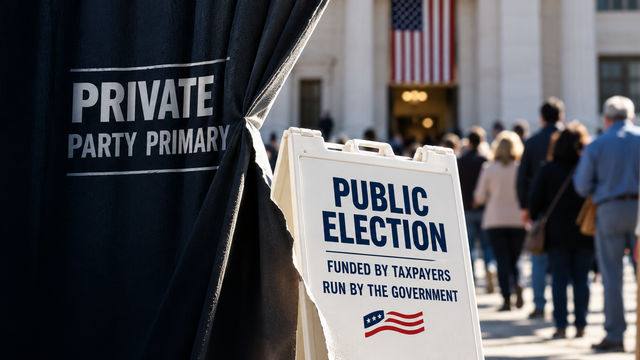
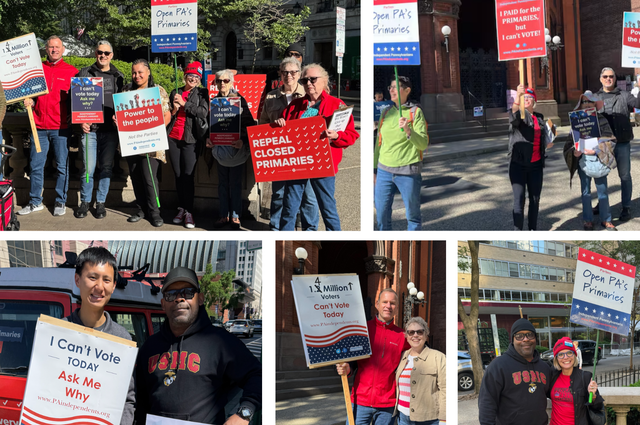
Chad closes the debate by pivoting to the show's core mission, arguing that closed primaries in states like New York and New Jersey disenfranchise far more voters than ID rules do, since independents there are legally barred from voting in taxpayer-funded primaries. Villaraigosa agrees that trust in both parties is collapsing and says Democrats and Republicans alike will have to "put the country before the party" to win back independent and decline-to-state voters, before signing off and confirming he plans to back Becerra in the general election.
Shawn Griffiths
Cara Brown McCormick
Chad Peace
John Opdycke
Election Solutions Bulletin
Matt Shinners
Carlos De Castro Pretelt
Independent Voter Podcast
Righteous Media
Dustin Dunbar, Ph.D
IVN Editorial Board