

Editor's Note: The following is an exclusive series on IVN from the better elections group Open Primaries. The content originated from the group's weekly newsletter, "Primary Buzz."
Independents played a crucial role in the midterms and their participation and influence are becoming harder to ignore…but much of the media is still catching up! We want to help them.
John joined Brittany Lewis on Forbes TV to discuss the independent voter surge in the midterms and why Democrats must understand that independents may have voted for Democrats, but that doesn’t make them Democrats.
Jeremy Gruber joined Michael Smerconish on CNN to question the media’s efforts to break independents into demographic and partisan categories rather than confront the explosive growth and impact of a genuinely independent electorate.
Together, these interviews delivered a message that both parties and the media need to hear: independent voters are no longer on the sidelines of American politics.
Campaign Updates
Pennsylvania-Independents Take the Fight to Harrisburg
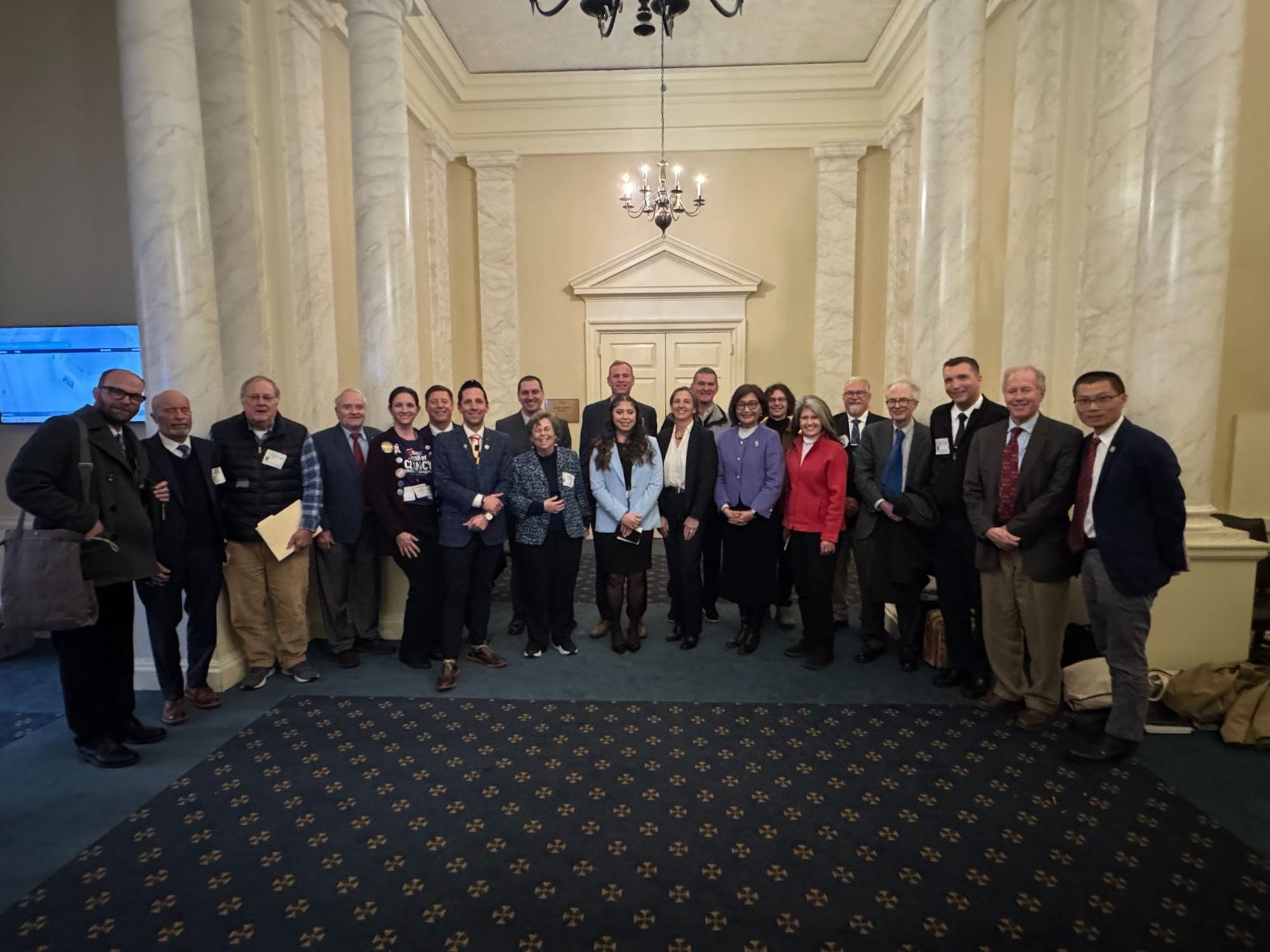
Open Primaries is mobilizing supporters across Pennsylvania to thank legislators who backed HB 280 and urge others to help move the bill forward. Hundreds of independent voters in the Keystone State have picked up the phone and called their representatives - to say THANK YOU! These calls make a big difference as we head into the next legislative session.
Susan Klacik of Reading is leading by example. She thanked Rep. Gillen for voting yes—a notable turnaround from three years ago, when he opposed opening primaries. She also challenged Rep. Weaknecht, who voted no, and is continuing the conversation with him.
As Susan puts it:
“There are simply TOO many unaffiliated voters in PA.”
She’s hopeful that growing momentum in the legislature will bring open primaries to Pennsylvania in time for the 2028 elections.
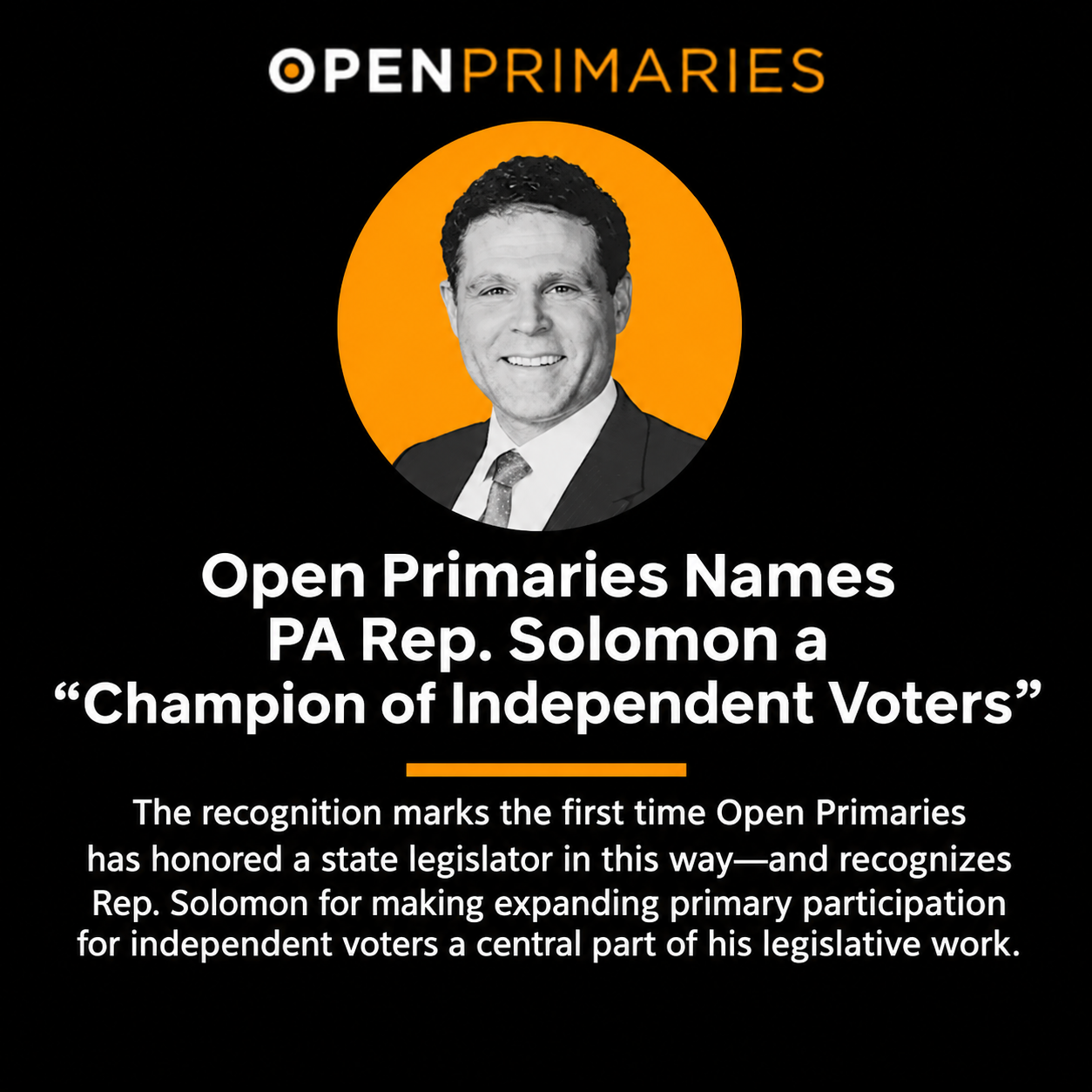
We're also recognizing a longtime champion of independent voters. Open Primaries has named Rep. Jared Solomon its inaugural Champion of Independent Voters, honoring his many years of support for independent voters and his leadership in helping bring HB 280 to bipartisan passage in the House.
In December, independent voters and supporters will descend on Harrisburg to personally present Solomon with the award and demonstrate the growing strength of the movement to open Pennsylvania's primaries.
Independents Are Organizing
The Acela Corrido Is Building Momentum. Let's Keep It Going.
The 2026 midterms gave the open primaries movement plenty to build on. Now, activists and leaders from Massachusetts to Washington, DC, are coming together to turn that momentum into action for 2027.
Join us Sunday, November 15, from 4–5:15 PM ET on Zoom for the Acela Corridor Regional Meeting of the Let Us Vote and Open Primaries movement. We’ll take stock of our 2026 wins and losses, discuss legislative momentum in Delaware, Maryland, and Pennsylvania, assess opportunities in Connecticut, New Jersey, Rhode Island and New York, and share lessons from organizing and litigation across the region.
If you live in Massachusetts, Rhode Island, Connecticut, New York, New Jersey, Pennsylvania, Delaware, Maryland or DC, join us! Come connect with fellow activists, share what’s happening in your state, and help shape what comes next.
REGISTER HERE for our zoom call this Sunday and join the conversation.
And if you're not in the Acela Corridor? Stay tuned-we’ll be organizing more regional calls across the country.
What We're Reading
- Texas Republicans Confront the Consequences of One-Party Rule: The Texas Tribune examines how decades of one-party dominance left Republicans focused on primaries rather than preparing for the November elections.
- Are Democratic Socialists a White Political Movement? It Seems So: Froma Harrop uses the DSA's New York victories to highlight how closed primaries can give small, ideologically organized factions outsized influence while shutting millions of independent voters out of elections that determine who represents everyone.
- Independents Wrote the 2026 Winning Playbook. Democrats Won on It.: Matt Shinners argues that independent-minded politics is increasingly shaping campaigns, challenging the assumption that political influence belongs exclusively to the two major parties.
- Gov.-Elect Rob Sand Adds Republican, Independent to Transition Team: Iowa's incoming governor is building a "tripartisan" transition team, bringing Republicans and independents into the process as a commitment to governing beyond party lines.
- Ten Key Factors Behind Americans' Midterm Votes: The Washington Post analyzes findings from a nationwide survey of more than 90,000 voters to identify the forces behind Democrats' midterm victories and the shifting priorities of the electorate. Spoiler alert-independents played major role.
Spotlight on Kentucky
Mark Ritter, founder of Let Us Vote Kentucky, spent the Wednesday after Election Day talking with students at Henry Clay High School in Lexington as part of CivicLex’s annual civic engagement program. For the past four years, Mark has helped students understand how elections work, covering open and closed primaries, gerrymandering, and low voter turnout. His presentations use local election data, district maps, and Open Primaries’ Young Voter Survey to bring the issues to life.
What Do Independents Do After Election Day? Organize.
By Kathy Fiess
Independent voters helped shape the midterm elections. Now it’s time to turn that momentum into action.
On Sunday, Open Primaries held its first Independent-to-Independent Phonathon. Unlike traditional political calls, these were independents reaching out to fellow independents—not asking for votes, but inviting them to join a movement to change how politics works.
Callers from eight states joined Mark Ritter in reaching Kentucky independents, the state’s fastest-growing voter community, who remain shut out of primaries. The goal: invite them to sign a letter urging both major parties to open their primaries. In just two hours, 40 Kentuckians signed on.
The best part was hearing directly from callers:

Joseph Nicholson, Maryland: “What surprised me were the number of people who responded positively. They were fully willing to join the cause.”

Jeanette Schultz, Ohio: “Kentucky is less than an hour from where I live, so I wanted to help my independent neighbors.”
One caller even brought his wife into the conversation: “She wanted in, too.”

Mark Ewoldt, Colorado: His favorite call was with someone who initially seemed reluctant to answer but quickly embraced the cause and signed the letter. He ended by telling Mark it was the first unsolicited call he had answered in quite a while.
The midterms gave the independent movement real momentum. Now, independents need to keep organizing, connecting, and making their voices heard.
Join our next Independent-to-Independent Phonathon on Wednesday, December 9, from 6:00–8:30 p.m. ET. No experience necessary—just a willingness to connect with a fellow independent.
In Case You Missed It
Oklahoma Supreme Court Strikes Down Law Restricting Voters' Right to the Ballot
In a major victory for direct democracy, the Oklahoma Supreme Court has struck down a law designed to make it harder for citizens to put issues before voters. In a 5-4 decision, the court found that Senate Bill 1027 violated the U.S. and Oklahoma constitutions, ruling that its restrictions on signature collection, petition language and campaign participation unconstitutionally burdened Oklahomans' right to petition their government.
The challenge was brought by leaders of the State Question 836 Open Primaries campaign, who are also awaiting a decision in a separate case challenging the state's rejection of their open primaries petition signatures.
Oklahoma City Mayor David Holt, a prominent supporter of State Question 836, celebrated the ruling on social media, calling the law undemocratic and emphasizing that "If people want to make policy in the state of Oklahoma, they have to include all Oklahomans."
This is an important victory for the principle that the initiative process belongs to the people, not politicians. The fight for open primaries in Oklahoma continues, but this ruling is a significant step forward.
Activities / Events
Should Primaries Be Open to Every Voter?
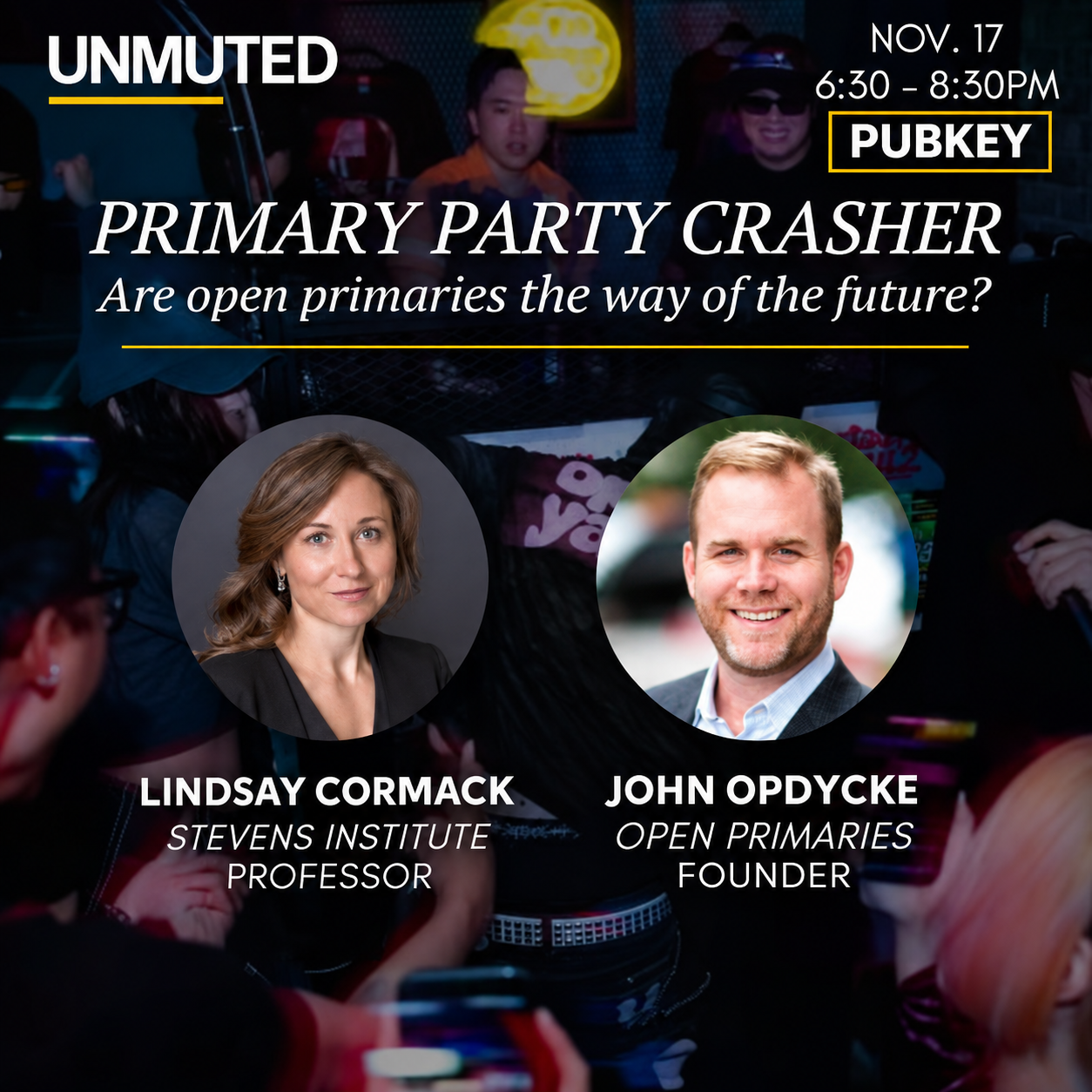
Millions of independent voters are shut out of primary elections across the country, even though these taxpayer-funded elections often determine who wins public office. Is it time to give every voter a voice?
Join Open Primaries President John Opdycke and political scientist Lindsey Cormack for a special discussion on UNMUTED exploring the case for open primaries, the arguments surrounding primary reform, and what opening elections could mean for the future of American democracy.
Tuesday, November 17 | 6:30 PM
Register: https://luma.com/8jsz8249?locale=en-CA
Find Your Voice: Join Our Next Independents' Spokesperson Training
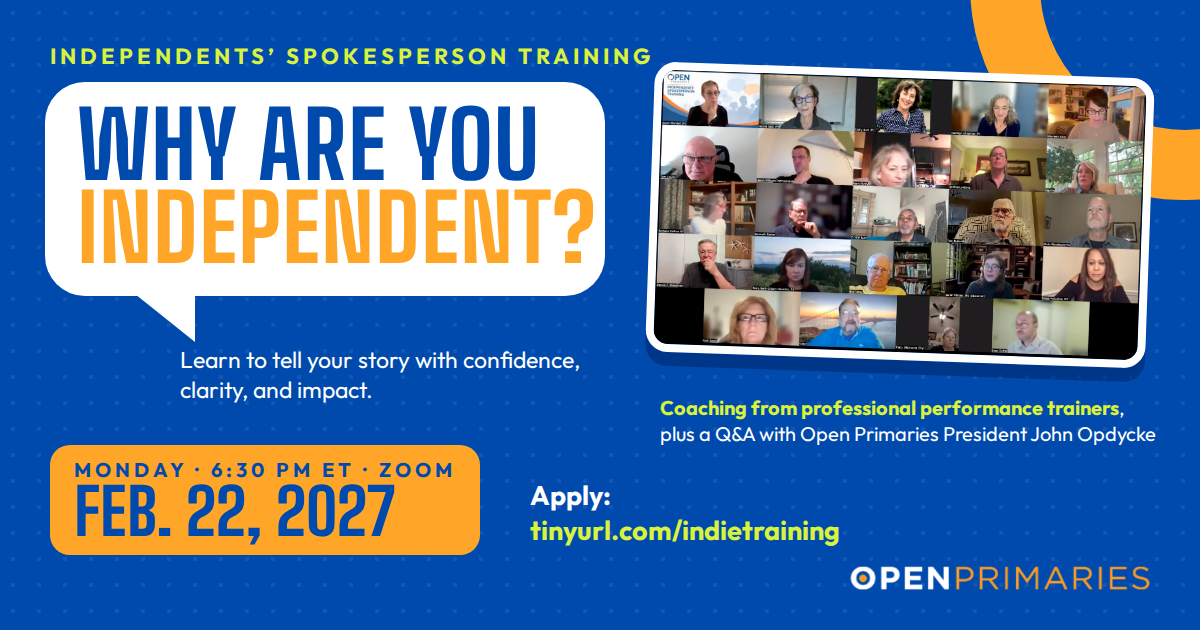
Independents are the largest and fastest-growing group of voters in America. But many of us have never had the chance to put into words why we’re independent. Our Independents’ Spokesperson Training is designed to change that.
In one evening on Zoom, you’ll work with professional performance trainers to find a clear, personal, and persuasive way to talk about why you're an independent, whether with a neighbor, a reporter, or an elected official. The session also includes a presentation on who independents are and how closed primaries shut them out, which you can use afterward, plus a Q&A with Open Primaries President John Opdycke.
Hundreds of people from across the country have taken the training, whether they’re experienced speakers or new to public speaking. They leave with a clearer sense of their own voice and a national community of people doing this work alongside them.
“Having that time and space to openly share our thoughts, experiences, and hopes for the future was incredibly energizing—and, quite honestly, cathartic for my soul!” — Heather Miller, Illinois
The training is open to anyone who is reform- or independent-minded. You don’t need to be registered as an independent, and no public speaking experience is required.
Monday, February 22, 2027, 6:30–9:00 pm ET, on ZoomSpots are limited and fill quickly. Apply Here!