

Every veteran honored on Wednesday took the same oath: to support and defend the Constitution of the United States. Not a party. No one asked their party affiliation before they served.
New York asks before they vote. A veteran who declines to join a political party cannot cast a ballot in the state's primary elections, the publicly funded stage that in much of the state decides who holds office.
More than 580,000 veterans live in New York. An estimated 140,000 of them are registered without a party, and every one of them is shut out.
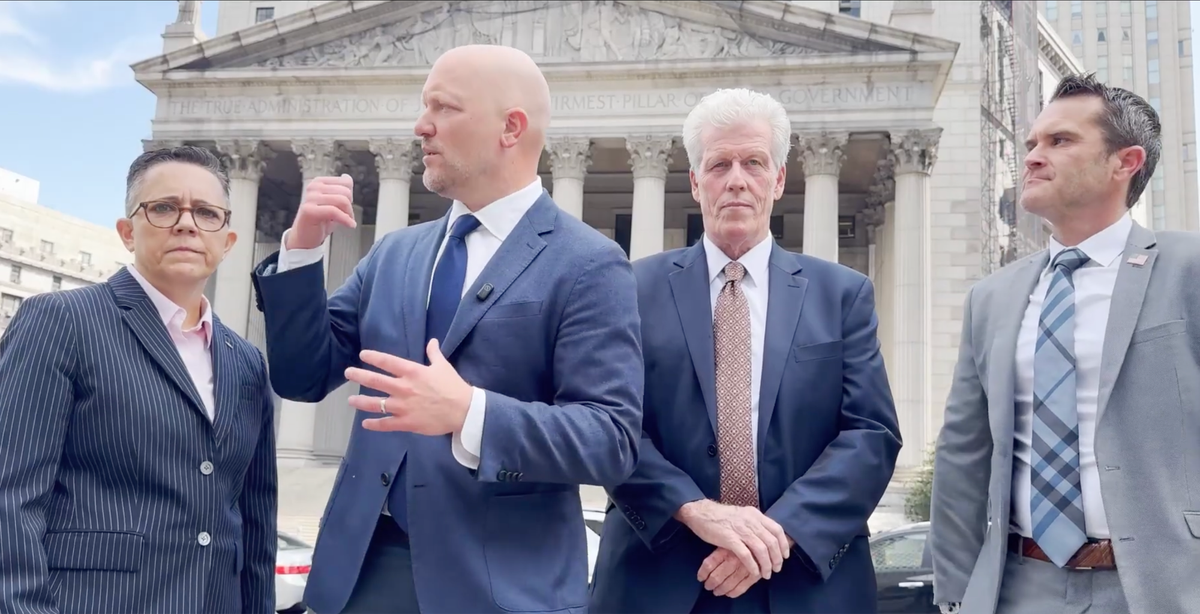
That is the issue in Rieckhoff v. Berger, filed October 1 in the US District Court for the Southern District of New York by two veterans, Independent Veterans of America, and the Independent Voter Project (IVP).
Two Veterans, One Rule
Paul Rieckhoff was a first responder at the World Trade Center on September 11, 2001, then led an Army infantry platoon in Baghdad. He has not been enrolled in a party for more than 20 years.
 IVN Editorial Board
On June 23, 2026, he was denied a ballot in contested primaries for state comptroller, Congress, and state Senate. In his congressional district, the Democratic nominee won 81% of the vote in 2024. The primary was the election.
Kristen Rouse served 32 years in the Army, Army Reserve, and National Guard, including three tours in Afghanistan. She never wanted to join a party. In 2007, she enrolled as a Democrat for one reason: it was the only way to vote in the primaries that decide her districts.
In September, she withdrew. She will be denied a ballot in every future primary unless she joins a party again.
"I spent 32 years in uniform serving my country, not a political party," Rouse said when the case was announced.
The Voting Rights Question
The case does not ask any party to admit non-members, and no party is a defendant. It challenges a decision the state made: to run a taxpayer-funded stage of the public election that no qualified voter can enter without joining a private organization and declaring that membership on a public record the state sells to campaigns.
Voters must enroll by February 14 to vote in a June primary.
The numbers show who that decision leaves out. As of February 2026, 3,187,610 active New York voters (25.4%) were registered with no party. That is more than the number of enrolled Republicans.
In 2024, 77 of the state's 239 races for Congress and the legislature had no opponent on the ballot, and only 28 were decided by ten points or less. In most districts, the only vote that matters is the one unenrolled voters are denied.
The complaint's standard is equality: every qualified voter gets the same opportunity to cast a meaningful vote at every stage of a public election. The Supreme Court has already recognized that a state can run a nonpartisan primary open to every voter without severely burdening party rights.
New York has options. It has chosen the one that excludes more than three million people.
The idea is not new. In 1971, the country lowered the voting age to 18 on a simple principle: if you are old enough to fight, you are old enough to vote. The vote followed the service. It did not follow a party card.
Veterans Are Signing On
Since the filing, IVP has received 276 submissions through its declaration page. Most came from veterans. 105 people signed declarations under penalty of perjury and authorized IVP's attorneys to file them in court under their own names.
"I am a six-tour combat veteran," one wrote. "It is deeply frustrating to have exercised my commitment to those principles through military service, only to find that my independence limits my participation in the democratic process."
Another: "While deployed in 2008, New York State didn't even provide me a ballot."
IVP will soon announce additional plaintiffs who will join the case through an amended complaint. Unenrolled New Yorkers can add a declaration in about five minutes.
The country did not ask these veterans which party they belonged to before it asked them to serve. New York should not ask before it lets them vote.
Disclosure: The Independent Voter Project, which funds IVN, is a plaintiff in this case.