With Colorado voters increasingly rejecting the two-party label, Navy veteran Bob Chew explains why he left the GOP, joined the Forward Party, and is betting on an independent breakthrough in 2026.
The Supreme Court allowed the Trump administration to use Social Security records to verify voter citizenship, raising questions about balancing election security with privacy protections that Congress warned against for decades.
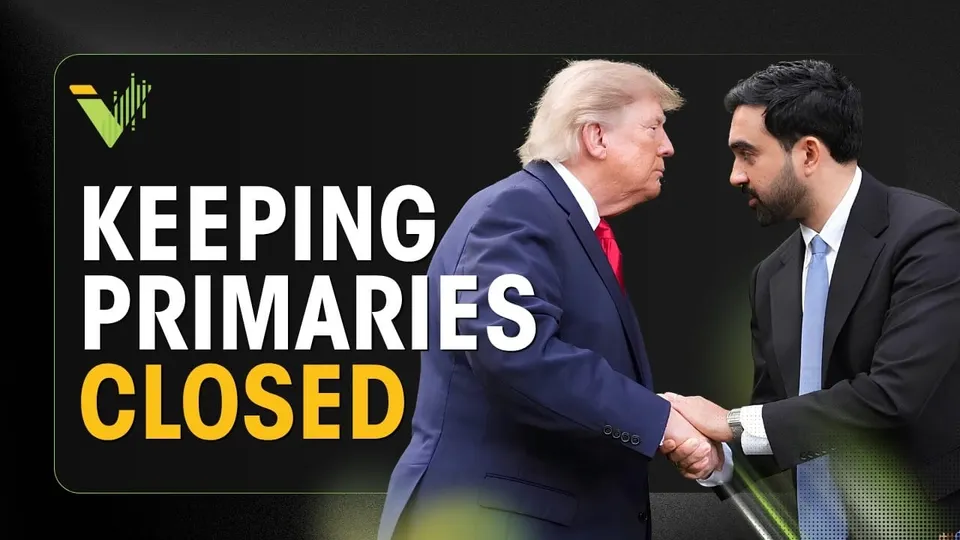
Trump and NYC Mayor Zohran Mamdani meet cordially at Gracie Mansion while publicly using scorched-earth rhetoric. The Independent Voter Podcast explores how closed primary systems manufacture ideological extremes and announces a federal lawsuit challenging New York's closed primaries.
A new poll shows 56% of voters want to replace closed party primaries with open elections where all candidates compete on one ballot. The survey reveals voters are frustrated that just 9% of Americans effectively decide most congressional races.
A newly launched super PAC in New Hampshire will use AI to influence Senate races by elevating third-party candidates designed to siphon votes from Republican candidates and help Democrats gain control of the chamber.
A ProPublica investigation into Susan Collins, a defense contractor and a super PAC, is the strongest case yet for the law that three out of four Mainers have already passed.
Missouri voters face confusion as dueling court rulings create uncertainty over which congressional map will be used for the November general election, while absentee ballots are already being sent out.
California’s 22nd Congressional District challenges conventional wisdom about Latino voters, party loyalty, and the political assumptions that shape how campaigns are fought.
From MAGA’s takeover of the GOP to the rise of democratic socialists, the author argues that America’s political upheaval is a symptom of an election system that rewards party capture, discourages independent competition, and leaves voters with too few choices.

 Righteous Media




 Cara Brown McCormick
 Jeremy Gruber
 Matt Shinners
 Independent Voter Podcast
 Shawn Griffiths
 IVN Editorial Board
 Katherine Gehl