 Cara Brown McCormick

SAN FRANCISCO - On November 3, Democrats and Republicans will mostly vote as they always do, along straight party lines. That leaves independents to decide the closest U.S. Senate races, and with them control of the iconic chamber known as “the world’s greatest deliberative body.”
Recent polling indicates independent voters will base their votes less on a candidate’s party and more on whether they can be trusted with power. With six days left, corruption has overtaken grocery and gas prices as the issue all voters say matters most, according to CNBC’s final pre-election survey. Voters who ranked it first favored Democratic candidates by 17 points, and independents favored Democrats by 15.
Nearly 90% of independent voters say corruption is widespread in the federal government, according to Gallup.
 Shawn Griffiths
Candidates or their allies have run corruption-themed ads in almost all of the contested Senate states, The Washington Sun found, and Democratic strategists told the Sun that President Donald Trump’s personal enrichment in his second term has raised the issue’s profile. A Washington Post-ABC News-Ipsos poll last week found 66% of Americans believe Trump is using the presidency to enrich himself, including 34% of Republicans and Republican-leaning independents, up from 22% a year earlier.
The same poll found 41% of voters trust neither party to reduce corruption.
The amount of money being spent in these races is obviously part of the story, too. Elon Musk has contributed more than $440 million, more than any other donor, including to campaigns in Maine and Texas. George Soros and Mike Bloomberg lead Democratic donors with $102 million and $84 million, according to Federal Election Commission data. Nearly all of it flows through super PACs, which can accept unlimited contributions.
 Shawn Griffiths
Independents who rank corruption first are asking the question Washington raised in 1796: can the people seeking power be trusted with it? If enough of them answer no, they could unseat some of the Senate’s most entrenched incumbents and send both parties, and the president, the same message.
Maine: Sen. Susan Collins (R) vs. Troy Jackson (D)
ProPublica reported in September that FBI public corruption agents moved in 2024 to open a wider bribery inquiry that included Collins' dealings with Navatek, a Hawaii defense contractor. Former Navatek CEO Martin Kao, who pleaded guilty to illegal campaign contributions, including about $33,000 routed to Collins through relatives, told agents that the chair of the pro-Collins super PAC asked company executives for $500,000 in late 2019. Kao routed a $150,000 company check to the super PAC through a shell company. Weeks after a meeting with Collins' office, an internal Navatek email said the company would support $32 million in Navy funding, according to ProPublica.
The FBI file details are specific. The $500,000 request came at a meeting at a Corner Bakery near the Capitol. Kao created a limited liability company called the Society of Young Women Scientist and Engineers to hide the source of the $150,000 and emailed the super PAC's chair, Scott Reed, about the plan. Reed replied, "Very smart." A week after the check cleared, a super PAC staffer asked a Navatek lobbyist for Kao's phone number so Collins could thank him. After watchdogs flagged the shell company, the super PAC's lawyer suggested the company award engineering scholarships to make it look legitimate, ProPublica reported.
The agents sought approval for the broader inquiry late in 2024. It never went forward: The Trump administration broke up the FBI's public corruption unit, and it fired one of the agents on the case. An FBI spokesperson said an earlier review had cleared Collins and her campaign. Collins called the report a partisan hit job, and no one on her staff was charged. Kao is serving 87 months in federal prison. Collins' husband worked for a firm Reed led last year.
Democrat Troy Jackson, a former Maine Senate president, has called it "corruption of the highest order."
 Shawn Griffiths

Jackson leads the Real Clear Politics average by a whisper, but Collins trailed in every public poll in 2020 and won by nearly 9 percentage points.
Senate Majority PAC is spending $3.4 million on a 30-second spot built on the ProPublica report, Axios reported (watch).
South Carolina: Sen. Darline Graham (R) vs. Annie Andrews (D)
In South Carolina, 10.2% of registered voters have no party lean, while 40.7% are modeled Democratic and 49.1% are modeled Republican.
Answered directly from the voter file with Voter Count
ProPublica's follow-up reporting traced the Navatek case from Maine to South Carolina, where another US Senate race is being decided. Kao told investigators the late Sen. Lindsey Graham promised to direct $10 million in Navy work to the company after a steakhouse fundraising dinner. A Graham spokesperson acknowledged that the office inserted $9.5 million into the budget at the urging of Navatek and its university partner. Graham's national security adviser, Craig Abele, confirmed with the Navy that the money was meant for the Navatek partnership, and Navatek's internal records listed Graham as a "key supporter." The inquiry also examined Democratic Rep. Jim Clyburn before it went dark in the 2025 purge.
Graham died in July. Gov. Henry McMaster appointed his sister, Darline Graham, who had never held elected office. She has retained much of her brother's senior team, and Abele is now her deputy chief of staff. She faces Democrat Annie Andrews, a pediatrician, in a race RealClearPolitics moved to tossup on Oct. 25. Polling averages show Graham ahead by about 3 percentage points. Democrats have not won a Senate race in South Carolina since 1998.
Alaska: Sen. Dan Sullivan (R) vs. Mary Peltola (D)
On October 28, the New York Times reported that a staffer on Mary Peltola’s campaign received instructions to “find as many people named Dan Sullivan in Alaska as you can.”
“This was no random request…if the Peltola campaign or its allies could track down and persuade another Dan Sullivan to run for Senate, the confusion could cost the senator crucial votes on the state’s unusual, four-person ballot.”
On Oct. 22, the Justice Department sued Alaska election officials, asking a federal judge to halt certification of the election on November 3 in one scenario: Republican Sen. Dan S. Sullivan loses but would have won if the ballots cast for Dan J. Sullivan, a retired Petersburg teacher, had gone to him. Trump said he ordered the filing. Attorney General Todd Blanche defended it as a safeguard in case the result ends up in court.
State election officials already tried to remove Dan J. Sullivan from the ballot, with a brief from 14 Republican-led states backing them, but state courts ordered him on, and the Alaska Supreme Court agreed in June.
The ballot lists the senator as the registered Republican incumbent and the challenger with no party label. Republican Sen. Lisa Murkowski said the department "should never have filed this lawsuit." Former Alaska Attorney General Bruce Botelho, a Democrat, called the suit unprecedented, and Democrat Mary Peltola's campaign and Senate Democrats have moved to intervene.
 Cara Brown McCormick

Peltola led the August top-four primary with 49.5% to the incumbent senator's 41.4%; Dan J. Sullivan drew 2.5%. Under Alaska's ranked-choice ballot, a vote that ranks Dan J. Sullivan first and the senator second transfers to the senator once Dan J. is eliminated, Election Solutions Bulletin noted.
Results typically take two weeks because overseas ballots can arrive as late as Nov. 18, a schedule that predates ranked-choice voting. Musk is backing the ballot measure to repeal the system with more than $1 million.
 Shawn Griffiths
Democrats have not won a Senate race in Alaska since 2008.
Texas: Ken Paxton (R) vs. James Talarico (D) —Open Seat
In Texas, 15.2% of registered voters have no party lean, while 48.6% are modeled Democratic and 36.2% are modeled Republican.
Answered directly from the voter file with Voter Count
Republican Ken Paxton, the state attorney general, was impeached by the Texas House in 2023 on articles including bribery and abuse of office and acquitted by the state Senate. The case centered on his dealings with Austin developer Nate Paul.
 Shawn Griffiths
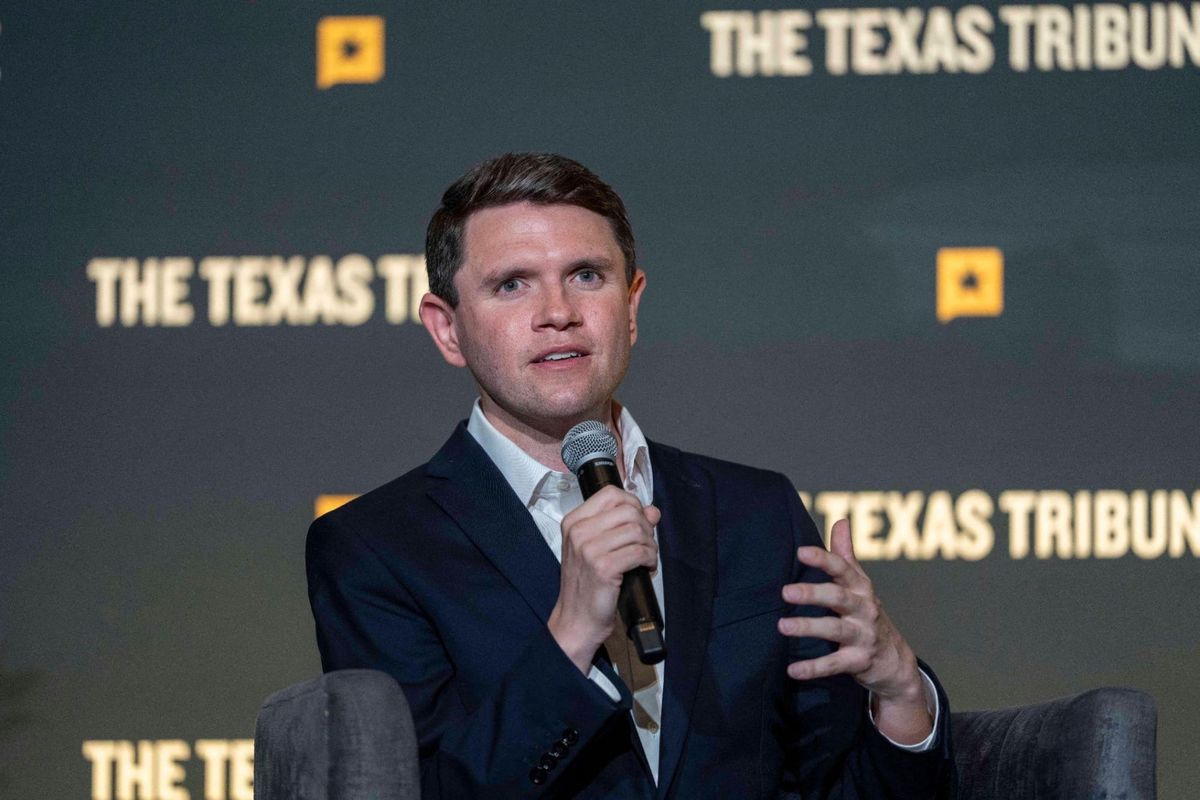
Former Texas Ranger David Maxwell, who ran law enforcement for Paxton's office, testified that he reported Paxton to the FBI and was later fired.
In 2024, Paxton resolved a securities fraud case first brought in 2015 by agreeing to pay about $300,000 in restitution.
On Oct. 23, The Texas Tribune and ProPublica reported that the Paxtons' blind trust invested $600,000 in a construction materials company owned by a North Texas homebuilder who served federal prison time for mortgage fraud, and that records indicate Paxton knew about the trust's holdings. Property records show Paxton acquired eight parcels from 2015 to 2026 and shifted them into the trust. A separate investigation by the two outlets found he may have cast ballots in as many as six elections from a former address, Courier Texas reported. Paxton's campaign has accused Democrat James Talarico of registering at his mother's address during a 2022 state House race.
Musk gave $158 million to the Senate Leadership Fund, which passed it to a Texas super PAC supporting Paxton. A University of Houston poll of likely voters taken Oct. 10-14 showed Talarico ahead 48-46, and 60-32 among independents. A Democrat has not won a Senate race in Texas since 1988.
Talarico's first TV attack, "Most Corrupt," calls Paxton the most corrupt politician in Texas.
Other Talarico ads feature Maxwell endorsing Talarico and revisit a 2012 incident involving a courthouse pen. The pro-Talarico Lone Star Rising PAC is running a seven-figure digital ad on Paxton's impeachment and real estate. Paxton's campaign calls the attacks an attempt to hide Talarico's "far-left record."
Ohio: Sen. Jon Husted (R) vs. Sherrod Brown (D)
In Ohio, 36.5% of registered voters have no party lean, while 32.6% are modeled Democratic and 30.7% are modeled Republican.
Answered directly from the voter file with Voter Count
FirstEnergy funneled about $61 million to groups controlled by former Ohio House Speaker Larry Householder to pass House Bill 6, a nuclear plant bailout, in a case widely described as Ohio's biggest public corruption scandal. Householder is now in prison.
Appointed Republican U.S. Sen. Jon Husted was lieutenant governor at the time, and FirstEnergy-linked money helped fund his 2017 bid for governor. In March, he testified at the bribery trial of two former FirstEnergy executives about a dinner with company leaders. He has not been charged with wrongdoing.
Democrat Sherrod Brown, a former three-term senator, calls Husted FirstEnergy's "Golden Boy," a phrase a company lobbyist and later co-defendant used in 2020. A fact-check by ABC6 found most of the $3.5 million Brown says FirstEnergy spent to help Husted went to super PACs rather than his campaign, and Media Bias/Fact Check rated the suggestion that Husted took part in the scheme misleading, while noting FirstEnergy money did benefit campaigns linked to him and that he supported the bailout. Polling averages show Brown ahead by about 3 percentage points in a state Trump carried by 11 points in 2024.
Brown's "Golden Boy" ad says Husted "got paid" and Ohio "got the bill."
The League of Conservation Voters, NRDC Action Fund and EDF Action are running a $9 million campaign saying the bribery case happened on Husted's watch. A National Republican Senatorial Committee ad approved by Husted attacks Brown's decades in politics.
Kansas: Sen. Roger Marshall (R) vs. Adam Hamilton (D)
Democrat Adam Hamilton, pastor of the nation's largest Methodist church and candidate for US Senate, has asked the Senate Ethics Committee to investigate records from incumbent Republican Sen. Roger Marshall's 2020 campaign. Records obtained by the Kansas Reflector and MS NOW indicate Marshall’s top aide told Senate employees to put travel and food costs on the government's tab during trips that mixed official business with campaign events.
When staff asked whether one trip was official or political, the chief of staff replied, "Primary purpose is what we say it is," KCUR reported. Legal and ethics specialists said that practice and a required meeting of combined Senate and campaign staff broke federal rules, and one staffer texted afterward that they had objected to the "illegal" activity. The records also include a list, written on congressional stationery and titled with an expletive, of companies that would not donate to Marshall.
The corruption, chaos, and cruelty in Washington don't represent our values. pic.twitter.com/zCHWPCYLd2
— Adam Hamilton (@Hamilton4Kansas) October 24, 2026
Marshall's campaign says he fully complies with Senate and FEC rules and attributed the reporting to a disgruntled former employee.
Marshall has attacked Hamilton over his church's handling of a 2005 child abuse case at a church camp.
Polling averages show Marshall ahead by less than a percentage point.
Iowa: Rep. Ashley Hinson (R) vs. Josh Turek (D)
In August, NOTUS, now The Washington Sun, reported that Republican Rep. Ashley Hinson's husband, insurance executive Matt Arenholz, headed the Independent Insurance Agents of Iowa's government affairs committee and helped schedule the group's meetings with Iowa's members of Congress, including Hinson.
The group's national affiliate has reported more than $5 million in federal lobbying since Hinson's 2020 election, and its PAC and another insurance PAC have each given her committees $67,500. Arenholz holds a stake worth $1 million to $5 million in a private equity-backed insurance brokerage.
An ethics complaint asks the House Office of Congressional Conduct to investigate; Hinson sits on the House Committee on Ethics. Hinson says her husband is an insurance agent, not a lobbyist, and that the meetings went through proper channels.
Democrat Josh Turek has made Hinson's wealth his closing argument, but PolitiFact rated a claim that she got "$8 million richer" in Congress as Mostly False. Hinson has focused on Turek's missed votes in the Iowa House. Polling averages show Hinson ahead by less than a percentage point. Iowa has not elected a Democratic senator since 2008.
Ads: Turek's "Change" ad says Hinson got up to $8 million richer; a similar WinSenate spot was rated Mostly False. Hinson's campaign called the claims "liberal lies."
Michigan: Mike Rogers (R) vs. Abdul El-Sayed (D)
In Michigan, 16.9% of registered voters have no party lean, while 53.2% are modeled Democratic and 30.0% are modeled Republican.
Answered directly from the voter file with Voter Count
Republican Mike Rogers, a former FBI agent and House Intelligence Committee chairman, left Congress in 2015 with an estimated net worth of $800,000 to $1.7 million. After joining boards at companies including AT&T, Nokia, and Telefónica and doing corporate consulting, he is now worth an estimated $10 million to $17 million, according to PolitiFact. His 2023 disclosure listed more than $1 million in advising and consulting payments, and drug industry PACs were among his top donors in Congress. He was never a registered lobbyist.
Democrat Abdul El-Sayed calls Rogers one of the most corrupt Senate candidates in state history, but PolitiFact rated his claim that Rogers took a "$14 million payout as a pharma lobbyist" Pants on Fire.
Rogers and Trump have tied El-Sayed to the Muslim Brotherhood through some of his donors; PolitiFact rated Trump's claim that El-Sayed is a Brotherhood member Pants on Fire and Rogers' claim that El-Sayed never disavowed the group False.
Rogers engaged in a heated debate with the Meet the Press moderator over the charges.
A Detroit News-WDIV poll taken Oct. 19-22 showed El-Sayed ahead 51-45. A Rogers win would be the first Republican Senate victory in Michigan since 1994.
A Democratic Senatorial Campaign Committee's six-figure buy called Rogers "the biggest name in corruption." The Senate Leadership Fund opened with an ad calling El-Sayed "dangerously radical."
New Hampshire: John E. Sununu (R) vs. Chris Pappas (D)
Republican John E. Sununu, a former senator running for the seat Democratic Sen. Jeanne Shaheen is vacating, reported assets of $297,000 to $855,000 when he left the Senate in 2009. His current disclosures put them between $7.9 million and $36.3 million, built in part on about a decade advising the firm Akin Gump, which collected $10.3 million in lobbying fees from pharmaceutical clients over that period, and 15 years on the board of medical device maker Boston Scientific, which paid him nearly $4.8 million. He was not a registered lobbyist.
Democrat Chris Pappas says Sununu cashed in with Big Pharma for up to $35 million; PolitiFact rated that Mostly False because it relies on the top of a broad range.
The Republican-controlled Senate Leadership Fund accuses Pappas of hiding his relationship with an Amazon lobbyist, now his husband, while voting on bills Amazon lobbied on. PolitiFact also rated it Mostly False.
A Saint Anselm College poll released Oct. 22 showed Pappas ahead 50-43, but a New York Times poll found independents rated Sununu 10 percentage points higher on character. Republicans have not won a Senate race in New Hampshire since 2010.
Pappas' "I'll Never Sell Out New Hampshire" and a Democratic spot accusing Sununu of "cashing in" target his post-Senate career. Republican ads accuse Pappas of voting "on Amazon's behalf", as does the Senate Leadership Fund's "Only Looking Out For Himself."
Nebraska: Sen. Pete Ricketts (R) vs. Dan Osborn (I)
Independent Dan Osborn, a union steamfitter who came within about 7 percentage points of Republican Sen. Deb Fischer in 2024, is challenging Republican Sen. Pete Ricketts, a former governor and son of TD Ameritrade founder Joe Ricketts, whose family owns the Chicago Cubs. There is no Democrat on the ballot. Osborn has built his campaign around money in politics, accusing Ricketts of buying his seat.
 Matt Shinners

Ricketts has put $5.25 million of his own money into the race, and the Republican Party’s Senate Leadership Fund committed another $8 million. Outside groups had spent more than $15 million by early October, mostly on negative ads, Nebraska Public Media reported.
 Matt Shinners
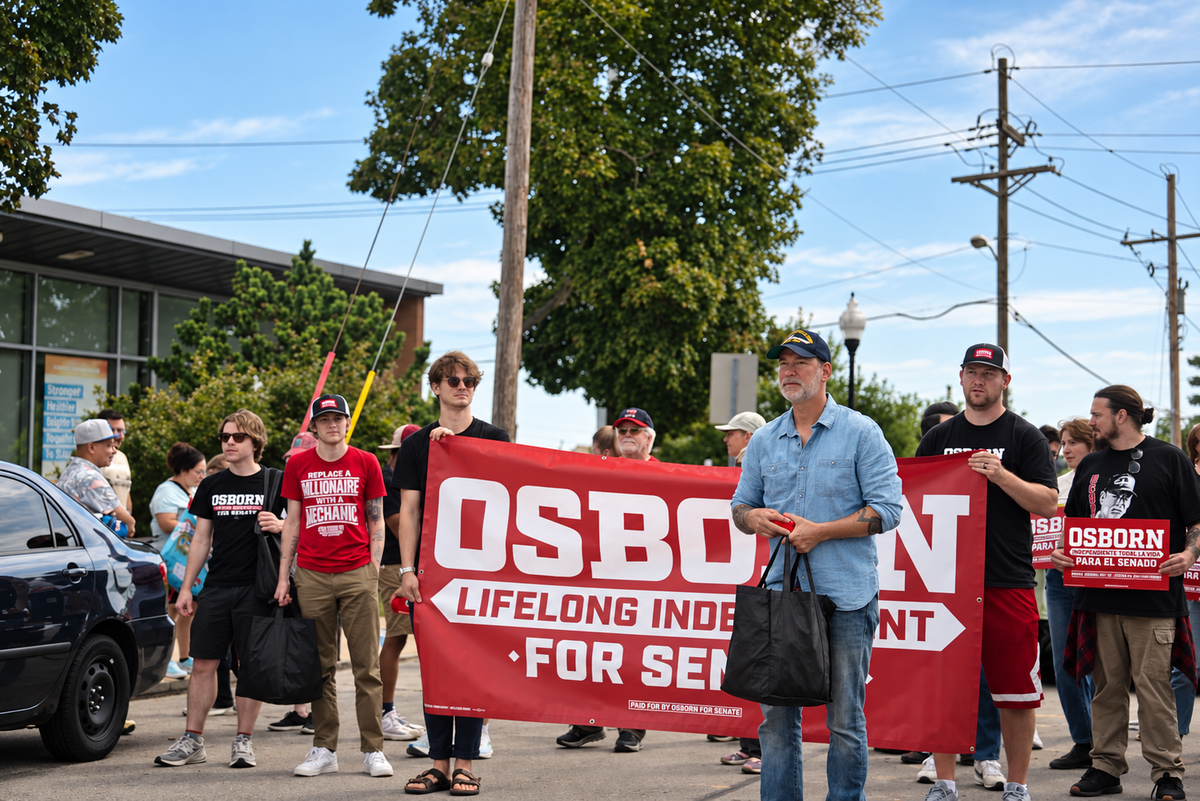
The two biggest spenders list only post office box addresses and have spent in no other race.
Ricketts' campaign says Osborn is "bought and paid for" by out-of-state liberal donors. Polling averages show the race within about 2 percentage points. No independent has won a Nebraska Senate seat since George Norris in 1936.
Osborn opened his campaign with a launch video saying Congress should not be "a playground for the rich." The Senate Leadership Fund's One Nation arm began a seven-figure ad buy for Ricketts more than a year before the election, the Nebraska Examiner reported.
Montana: Kurt Alme (R) vs. Seth Bodnar (I) vs. Alani Bankhead (D)
In Montana, 29.1% of registered voters have no party lean, while 26.4% are modeled Democratic and 44.5% are modeled Republican.
Answered directly from the voter file with Voter Count
On March 4, the last day to file, Republican Sen. Steve Daines withdrew from his reelection race about three minutes before the deadline. U.S. Attorney Kurt Alme filed at 4:52 p.m., and Daines and President Trump endorsed him within minutes. Daines had worked privately with the White House political team to vet Alme, and the timing left no room for other Republicans to enter, according to the Daily Montanan and other reporting. Daines said the move was meant to avoid an expensive race. Within hours, at least one analyst downgraded the seat from safely to lean Republican, citing the backroom nature of the handoff.
Seth Bodnar, a former Green Beret who resigned as University of Montana president to run, filed as an independent the same day and has made the insider handoff the center of his campaign, invoking the state's Copper Kings, whose attempts to buy Senate seats helped lead to the direct election of senators. Republicans call Bodnar a Democrat in disguise, and Democrats argue he splits the vote with their nominee, Alani Bankhead.
 Matt Shinners
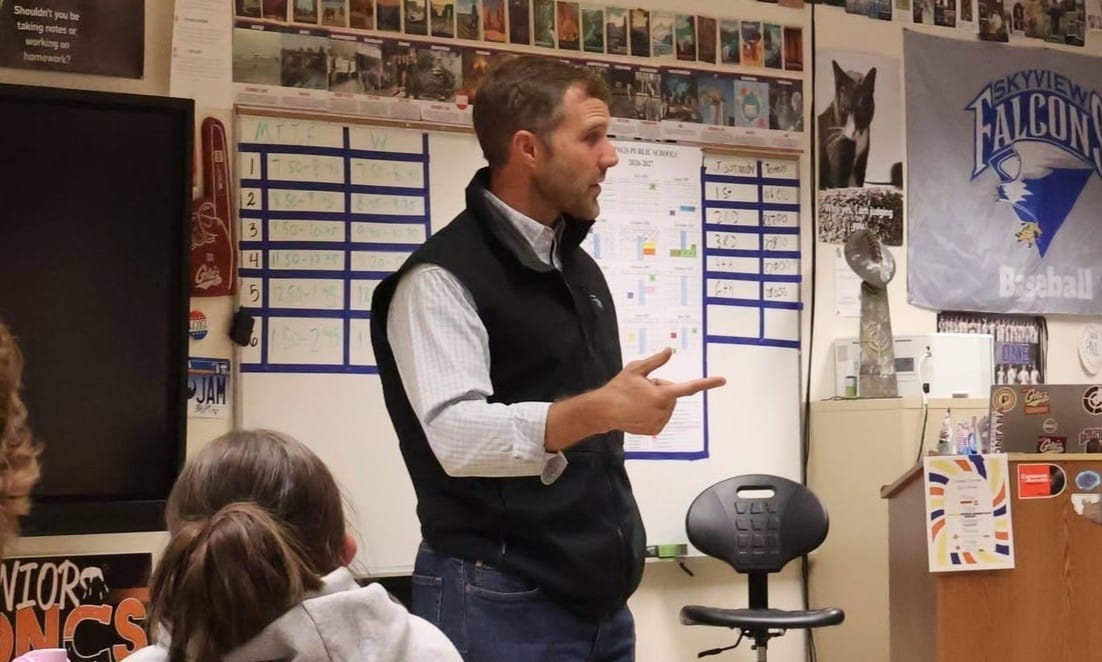
Former Democratic Sen. Jon Tester backs Bodnar, and Pete Buttigieg endorsed him over the Democrat, IVN reported. Alme leads the RealClearPolitics average by about 12 percentage points, but a Montana Free Press poll in early September had him up 8, with Bodnar second. In a late September poll, nearly 45% of Bodnar's supporters identified as independents.
Mississippi: Sen. Cindy Hyde-Smith (R) vs. Scott Colom (D)
In Mississippi, 47.3% of registered voters have no party lean, while 23.9% are modeled Democratic and 28.8% are modeled Republican.
Answered directly from the voter file with Voter Count
Democrat Scott Colom, a district attorney, is running against Republican Sen. Cindy Hyde-Smith on a pledge to fight "corruption in both parties." Hyde-Smith blocked Colom's nomination to a federal judgeship in 2023, citing in part support he had received from George Soros, and she and President Trump have pressed that attack in the campaign.
Mississippi voters are still grappling with a welfare scandal in which about $77 million in federal anti-poverty funds was misspent from 2016 to 2020 on projects that allegedly did little or nothing for the poor. Several defendants have pleaded guilty, including Nancy New, whose nonprofit was at the center of the scheme; former Gov. Phil Bryant, whose administration oversaw the program, has not been charged.
In 2020, Hyde-Smith's campaign donated to charity $2,500 it had received from Nancy New. Hyde-Smith declined to give Mississippi Today an interview about the scandal's status. Polls show Colom trailing by 3 to 6 percentage points, and most forecasters rate the seat likely Republican, though a Colom win would make him the state's first Democratic senator since 1982.
Senate Majority PAC's $1.2 million campaign casts Colom as a Democrat who will "fight corruption in both parties" and Hyde-Smith as a do-nothing incumbent, NBC News reported. President Trump rallied for Hyde-Smith in Corinth on Oct. 26 and criticized Colom from the stage.
“I’m here because Cindy is doing great, but I just have to make sure,” Trump said. “I can’t take a chance.”
A Warning the Senate Reads Every Year
Since 1896, the United States Senate has marked Washington’s birthday by having one member read his 1796 Farewell Address on the floor. In it, Washington warned that factions could become “potent engines, by which cunning, ambitious, and unprincipled men will be enabled to subvert the power of the people and to usurp for themselves the reins of government.”
 Cara Brown McCormick
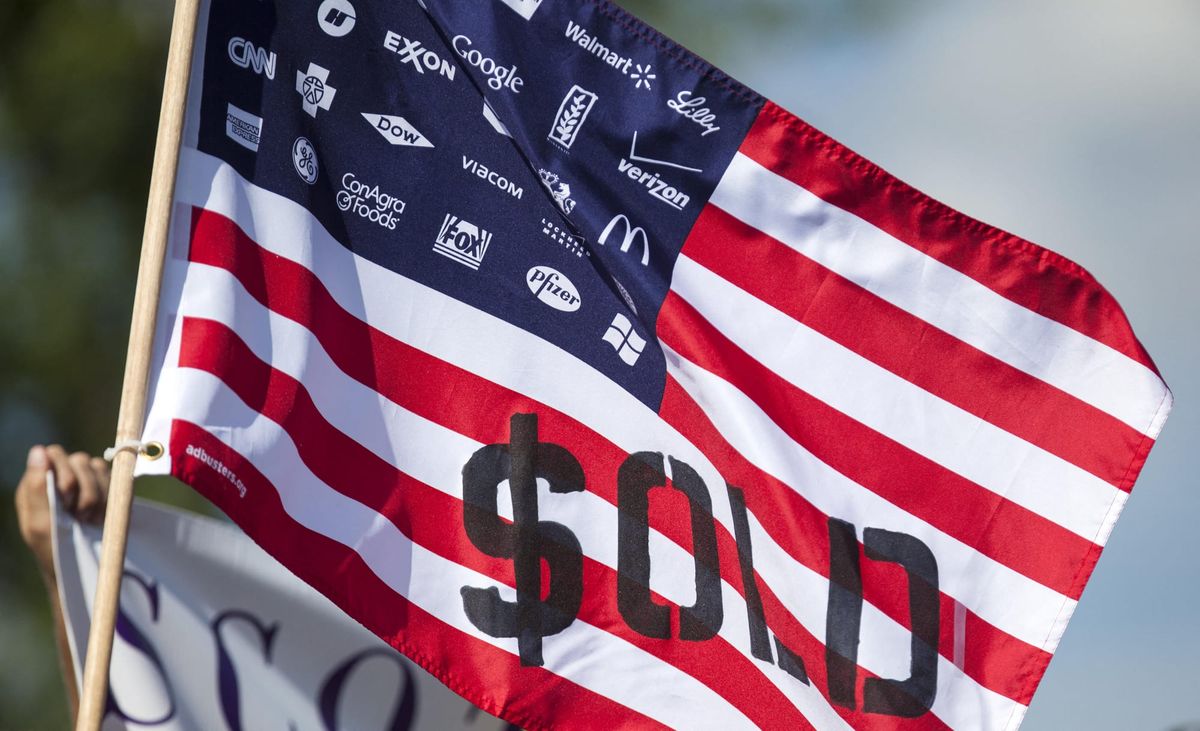
Washington cautioned that the spirit of party “opens the door to foreign influence and corruption, which find a facilitated access to the government itself through the channels of party passions.”
His safeguard was not party loyalty but character: “virtue or morality is a necessary spring of popular government.”
This year, independent voters who have taken his warnings most to heart will decide who controls the Senate floor and the balance of power.
Disclaimer: The author is an intervenor in the lawsuit described in this news item. Citizens to End Superpacs is an affiliate of Independent Voter Project and the Foundation for Independent Voter Education.