

 IVN Editorial Board
 Cara Brown McCormick
 Righteous Media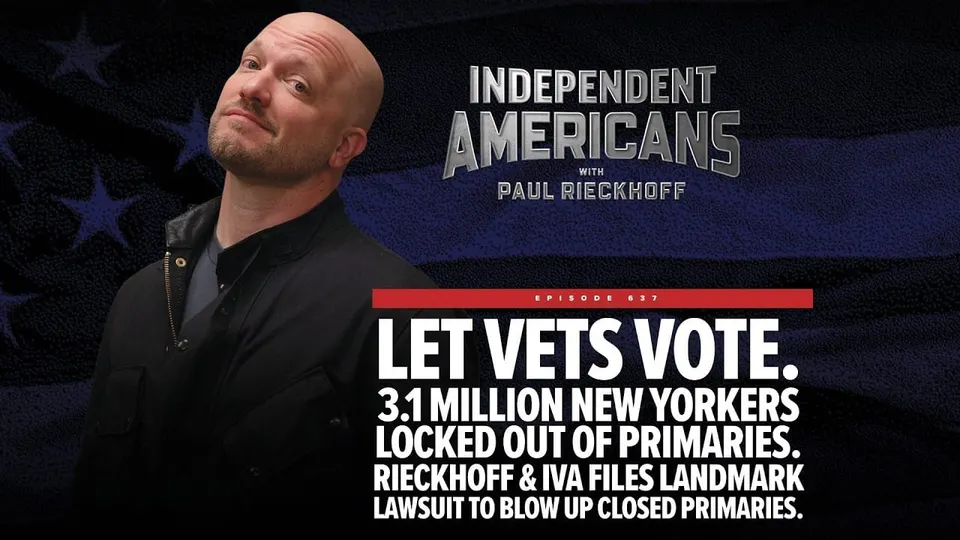
 Shawn Griffiths
 Jabari Gibbs, The Current


 Jeremy Gruber

 John Opdycke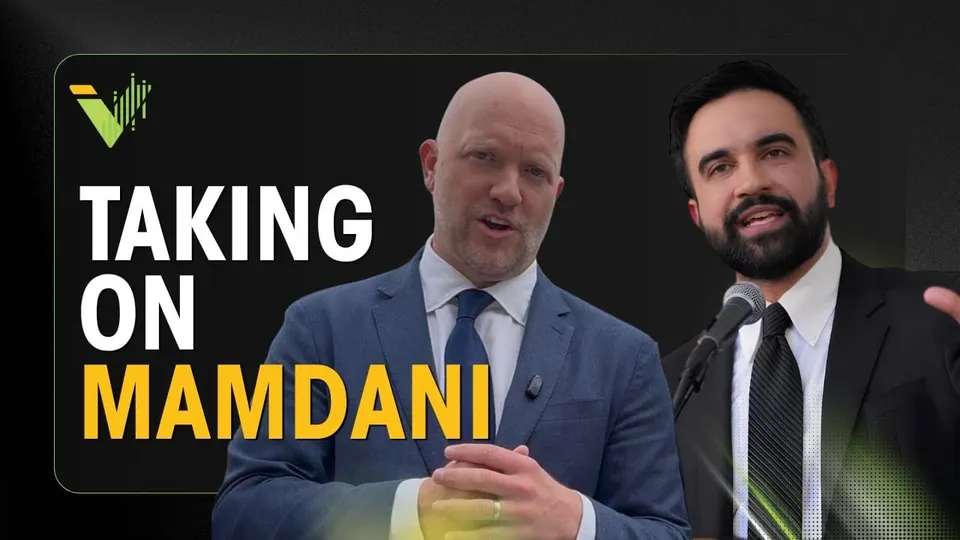
Paul Rieckhoff, founder of Independent Veterans of America and now the face of a growing independent-veteran movement, just became the lead plaintiff in a lawsuit against New York State's closed primary system, and he's joined by his attorney (and IVP host) Chad Peace to explain why.
Paul tells the personal story that pushed him into this fight: walking his kids to their New York City public school on primary day and having to explain to them why dad, a combat veteran and 9/11 first responder, isn't allowed to vote. Chad, Cara McCormick, and Shawn Griffiths connect that story to the bigger picture, including how Zohran Mamdani's administration and the Democratic Socialists of America have blocked open primary reform through New York's Charter Revision Commission, and how Texas Republicans are now trying to close their own primaries for the opposite partisan reason.
This episode is sponsored by the Independent Voter Project and produced by Olas Media. Listen on Spotify or Apple Podcasts.
The Independent Voter Podcast also has its own YouTube channel! If you enjoy these conversations, subscribe to our dedicated channel for full episodes, interviews, and future content.
Episode Highlights
On this episode of the Independent Voter Podcast, host Chad Peace welcomes Paul Rieckhoff, founder of Iraq and Afghanistan Veterans of America and now Independent Veterans of America, who has become lead plaintiff in a new lawsuit against New York State's closed primary system, with Chad serving as his attorney.
Paul traces his path from 25 years leading veteran advocacy (passing the new GI Bill, VA reform, burn pit legislation) to founding Independent Americans, after years of surveys showing more post-9/11 veterans identifying as independent rather than Democrat or Republican.
He shares the personal moment that drove him to join the suit: walking his kids to their New York City public school on primary day and having to explain why he, a combat veteran and 9/11 first responder, isn't allowed to vote in an election held on public property with public funds.
Cara McCormick and Chad connect Paul's story to the mechanics of the system, noting that in New York the primary is effectively the real election, so barring independents from voting there amounts to disenfranchisement, the core legal claim behind the lawsuit filed at letvetsvote.org.
Shawn Griffiths links the fight to New York's Charter Revision Commission, explaining how Zohran Mamdani's administration and the Democratic Socialists of America, after riding a low-turnout closed primary to power, have since blocked open primary reform that had momentum under the prior Adams administration.
The conversation broadens into a national frame: Shawn and Paul note Texas Republicans are pushing in the opposite direction, suing to close their own primaries, while a judge recently paused that case pending legislative action, illustrating how both parties weaponize closed primaries for partisan advantage.
Paul makes the closing case that open primaries are a civil rights and equality issue on par with past veteran fights like burn pits and the GI Bill, pointing to the 45% of Americans who now identify as independent as a rising political force he hopes will reach the Supreme Court.


 Matt Shinners


 Independent Voter Podcast