 Jeremy Gruber

Editor's Note: The following is an exclusive series on IVN from the better elections group Open Primaries. The content originated from the group's weekly newsletter, "Primary Buzz."
Ten years in the making. A bipartisan breakthrough. And a huge step toward opening Pennsylvania’s primaries.
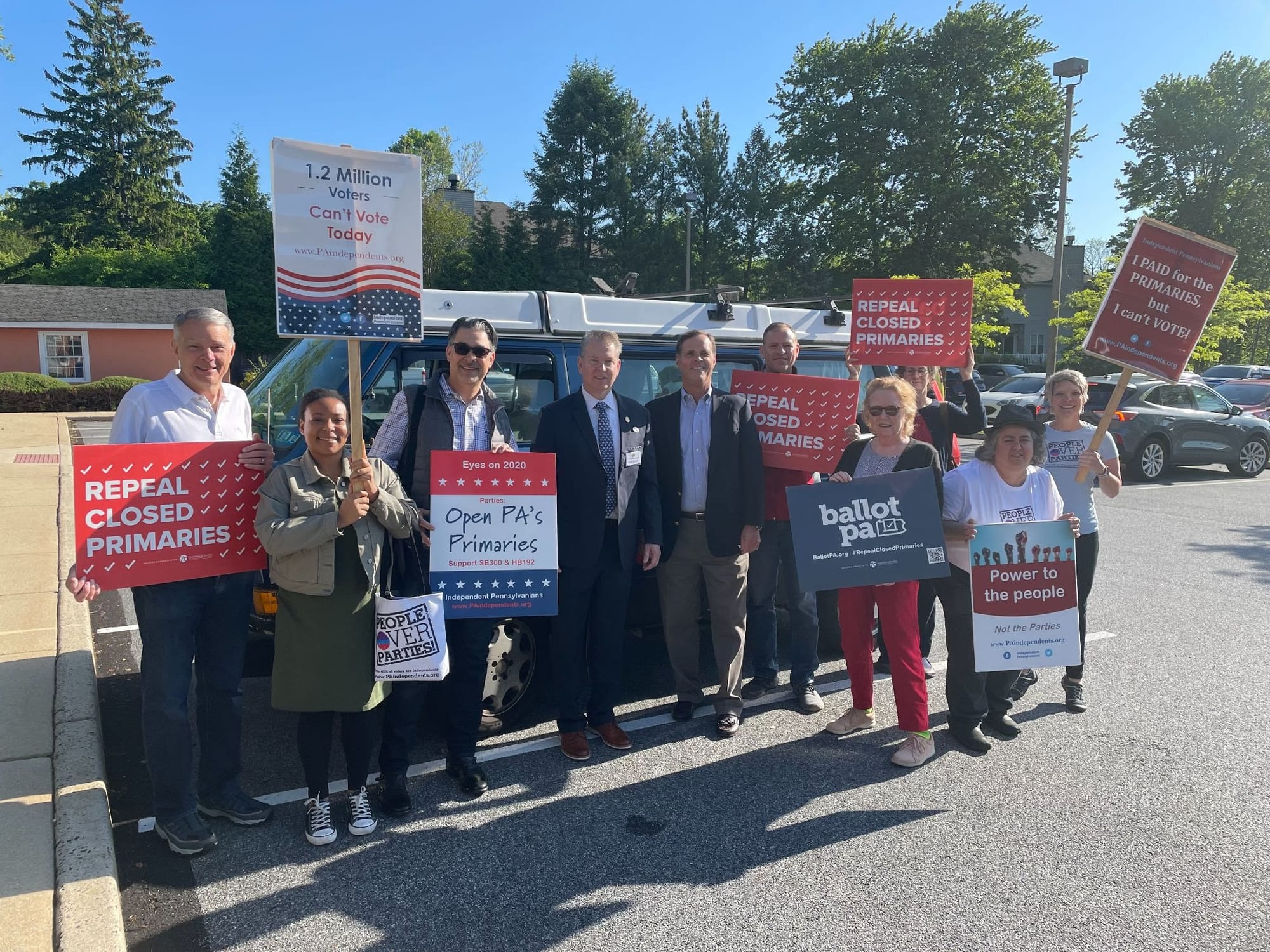
This week, the Pennsylvania House passed HB 280 in a bipartisan, moving legislation forward that would allow the state’s 1.5 million independent voters to participate in primary elections. Open Primaries has been fighting for this moment for a decade, working in partnership with Ballot PA Action, its founder and Open Primaries national spokesperson David Thornburgh, and grassroots activists from Pittsburgh to Philly on both legislation and litigation to break down Pennsylvania’s closed-primary system.
 Shawn Griffiths
Now, that decade of work has produced a House-passed bill.
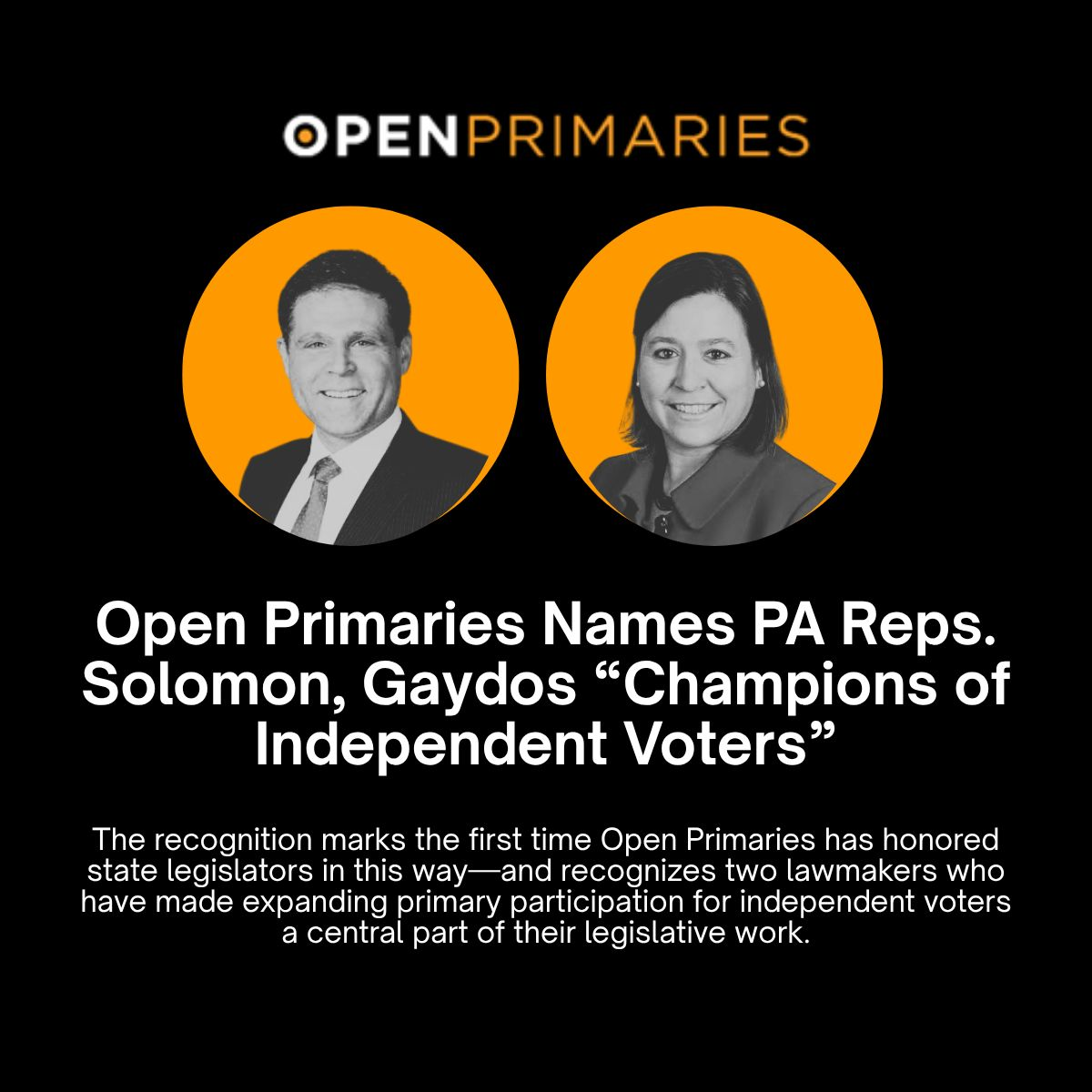
Open Primaries also named Rep. Jared Solomon (D) and Rep. Valerie Gaydos (R) its inaugural “Champions of Independent Voters,” recognizing their bipartisan leadership that helped bring HB 280 across the House.
Pennsylvania is the Keystone State—and this is a keystone moment. With independent voters now the largest segment of the American electorate, what happens in Pennsylvania will be watched far beyond its borders. The fight now moves to the Senate.
What We're Reading
DO VOTING RIGHTS ONLY MATTER WHEN THE VOTERS ARE DEMOCRATS?
That’s the question I am forcing New York’s progressive establishment to confront in a new New York Daily News op-ed.
More than 1.2 million independent New Yorkers—including over 600,000 people of color—are shut out of the city’s primary elections. Yet many of the same politicians and organizations that have made voting rights central to their progressive identity are defending that exclusion.
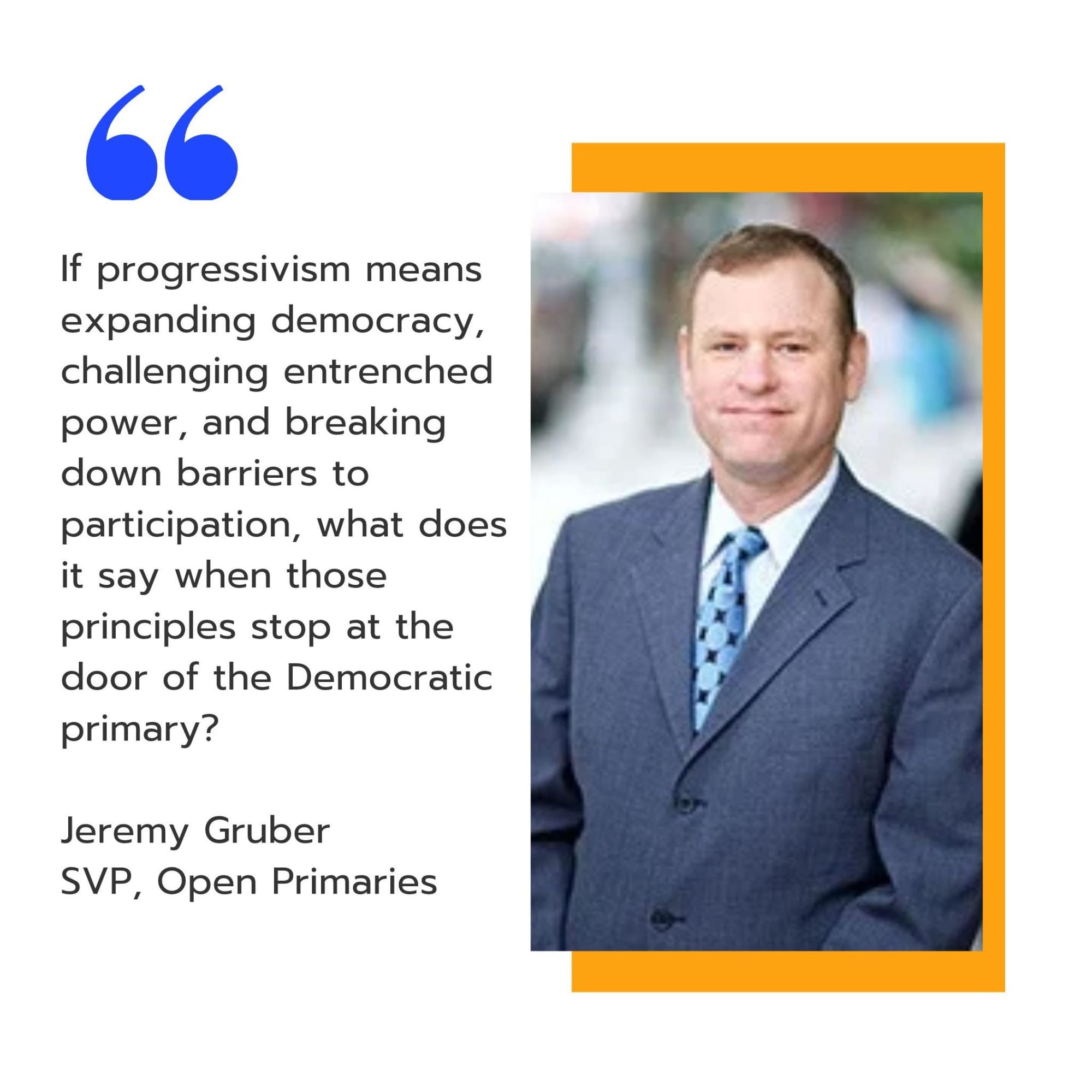
I put the contradiction front and center:
Litigation
THE FIGHT FOR INDEPENDENTS IS GROWING IN THE COURTS

Paul Rieckhoff of Independent Veterans of America and Chad Peace of the Independent Voter Project have filed a federal lawsuit challenging New York’s exclusion of independent voters from its primary elections. They are joined by Veterans for All Voters.
The legal team and their supporters gathered in downtown NYC to commemorate the event.
 IVN Editorial Board
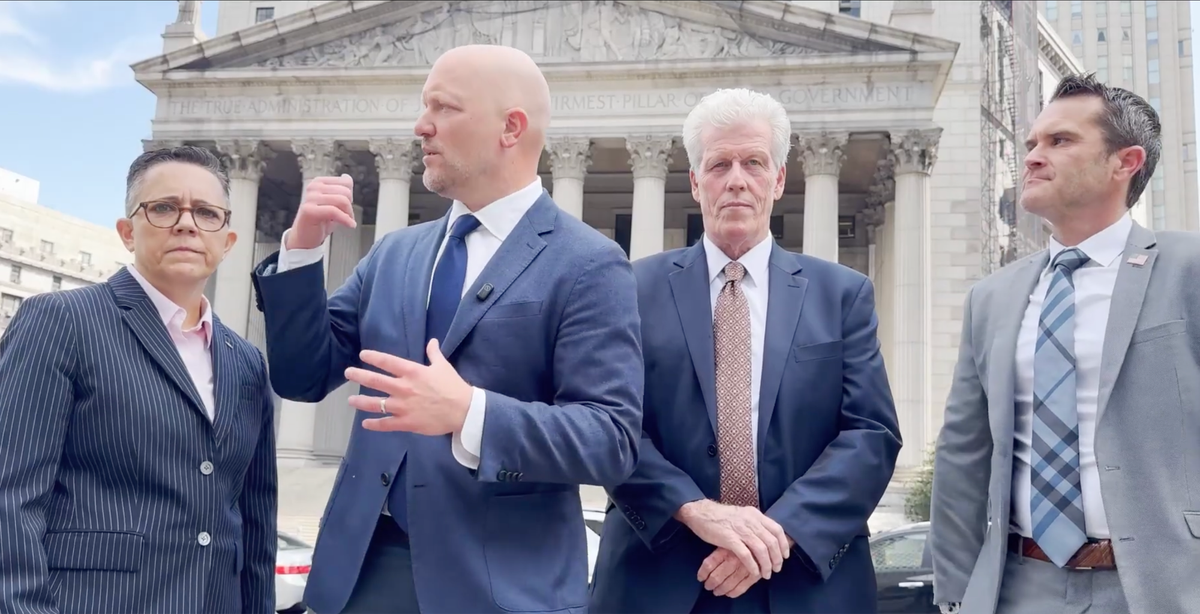
The case joins a growing number of constitutional challenges in states across the country, including Maryland and Oregon.
New York is not an isolated case-it is the latest chapter in a growing national legal movement for open primaries and independent voter rights.
Learn more at the Open Primaries Litigation Portal.
Did You Know
MORE VOTERS VOTE IN OPEN PRIMARIES
Fresh findings from the Bipartisan Policy Center demonstrate that open primaries consistently drive stronger voter participation than closed systems throughout the 2026 midterm elections—reinforcing a clear trend highlighted in earlier BPC research.
What We're Talking About
GENZ IS INDEPENDENT. POLITICS ISN’T LISTENING.
A new CIRCLE study reveals just how badly America’s political system is failing a generation that increasingly sees itself as independent.
56% of Gen Z identifies as independent—and half of those young independents are people of color. Yet only 38% say they are extremely likely to vote in 2026, and just 37% believe their vote matters.
That disconnect should be impossible to ignore.
Young independents are racially diverse, economically stressed and deeply concerned about the cost of living, healthcare, housing and jobs. They aren’t disengaged because they have nothing to say. They’re disengaged because too many don’t see a political system built to hear them.
A generation that increasingly rejects party labels deserves elections that don’t force voters into them.
In The News
New York: Open the primaries to independent voters.
Pennsylvania: PA’s Closed Primaries Close Out Democracy. It’s Time to Open Them.
South Carolina: South Carolina’s elections should serve voters — not political parties.
National: Cassidy Introduces Bill to Strengthen Election Security, Give Accountability to Voters.
In Case You Missed It
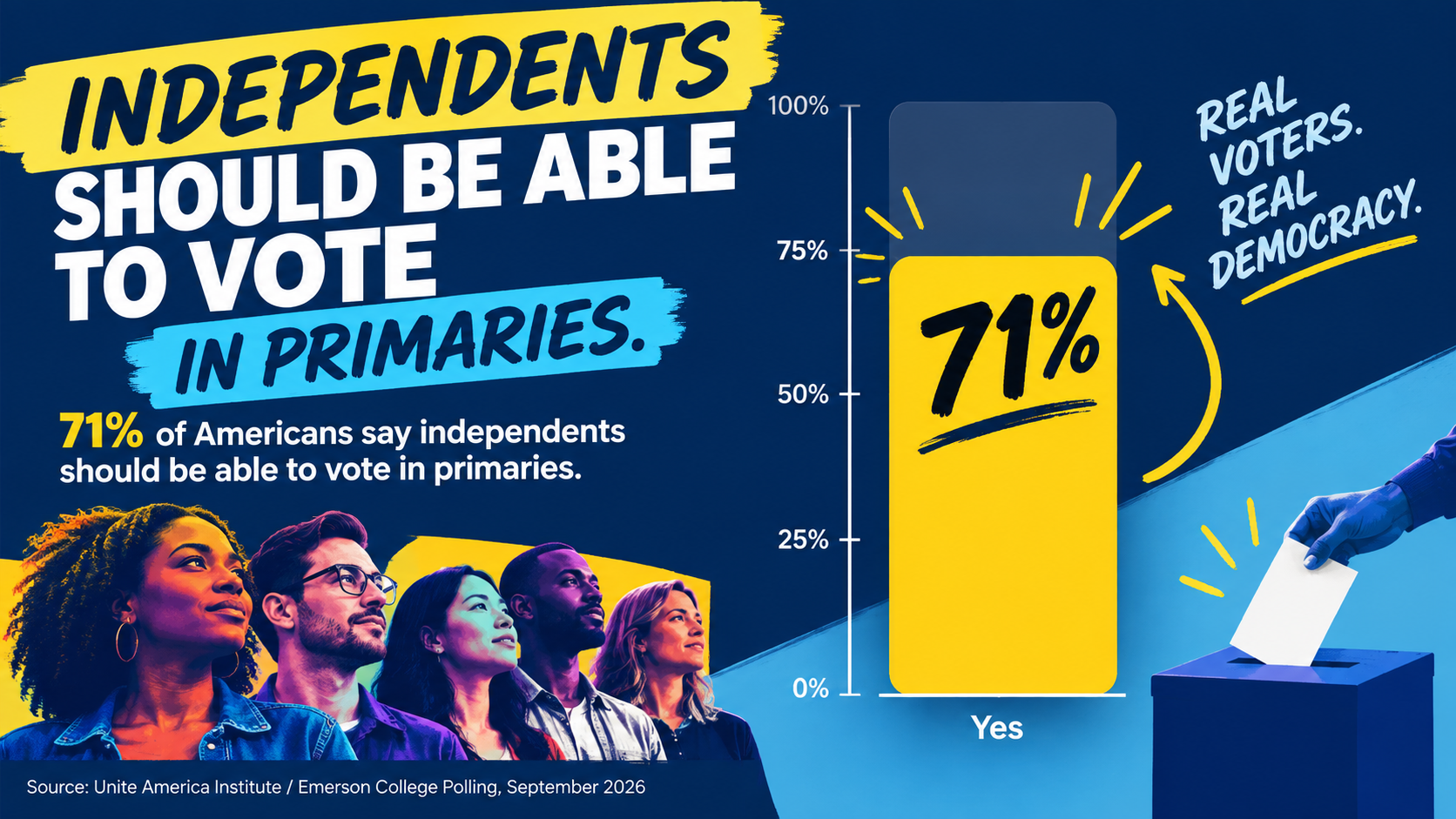
A new Unite America poll tells a remarkably simple story: 43% say primaries reward the most partisan voters, while 62% say wealthy donors and special interests have too much influence—and only 13% say ordinary voters do. No wonder 71% say independents should be able to vote in primaries.
When just 9.4% of eligible voters effectively decide 88% of House seats, the message is hard to miss: voters want their voice back.
Welcome Independents!
This is an exciting moment for independent voters. We are the fastest-growing segment of the electorate, and in many states we outnumber either major party. More importantly, independents are beginning to organize and make our voices heard—from legislative hearing rooms in Maryland and Delaware to the streets of New York City and the pages of USA Today.
But most independents still don’t know how many of us there are—or the power we have to change how politics works. And millions of us still don’t have full voting rights in the primary elections we pay for and participate in.
That changes when independents start talking to each other. There is no substitute for person-to-person connection. That’s how movements are built.
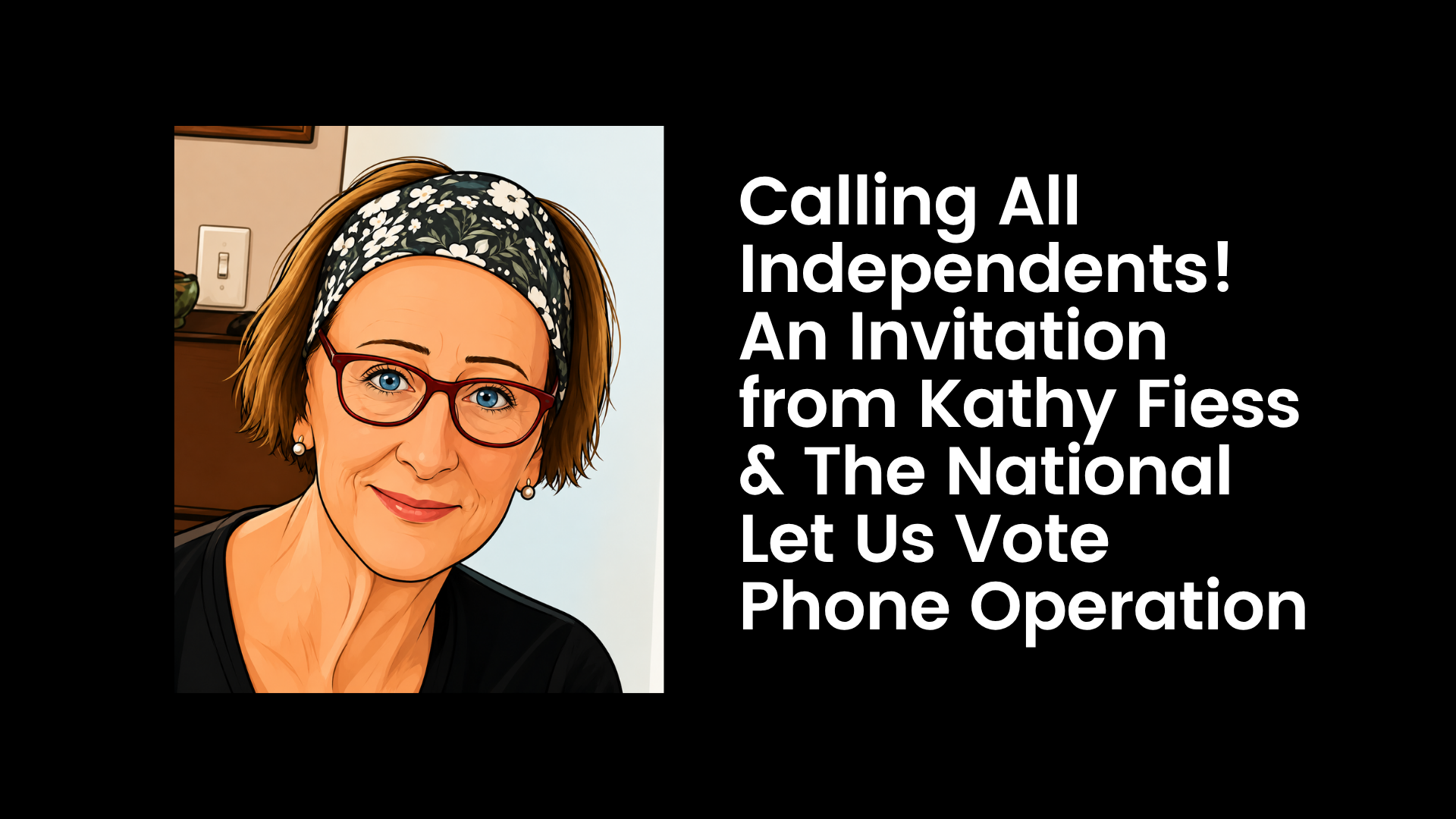
If you ever watched the TV detective series, Harry Bosch, you will remember the sign above his desk: Get off your ass and go knock on doors! Okay, a little revision: Sit on your ass and make some phone calls!
We have more than 3,300 independents who recently joined our movement, and we need your help to welcome them. Join our inaugural Welcome Independents! National Phonathon. No experience required—just a willingness to pick up the phone and connect with a fellow independent.
Phonathons:
- Sunday, November 8, 2:30–5:00 PM
- Sunday, December 9, 6:00–8:30 PM
Trainings:
- Wednesday, October 28, 6:00–8:30 PM
- Monday, November 2, 6:00–8:30 PM
- Wednesday, December 2, 6:00–8:30 PM
And if you can’t join us on the phones, please pick up when we call. The movement starts with us talking to each other.