Skip to content
Subscribe

OpenSecrets Tears Down the Wall Between State and Federal Money Data

OpenSecrets launches a new dashboard combining state and federal campaign finance data into one searchable platform, making it easier for voters, journalists, and researchers to track money in politics across all levels of government.

OpenSecrets Tears Down the Wall Between State and Federal Money Data
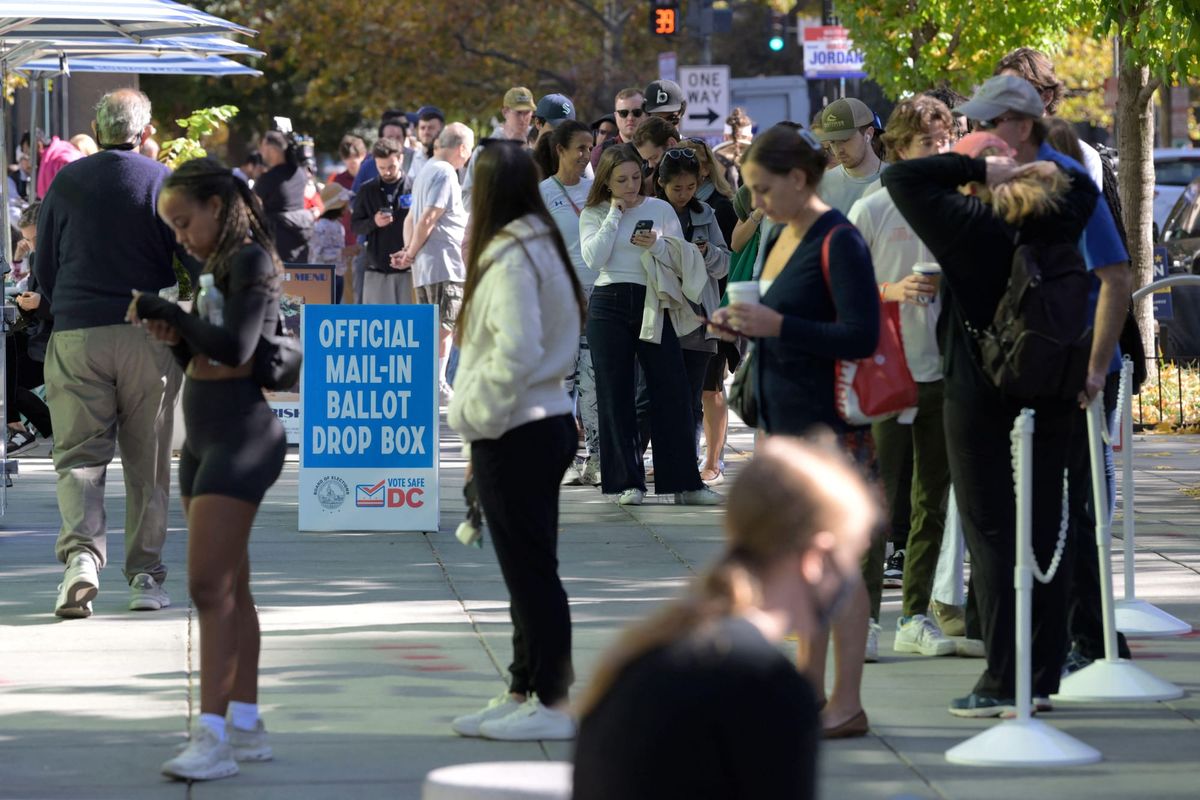
Image Credit: Igor Stevanovic on Alamy. Image license obtained and used exclusively by IVN Editor Shawn Griffiths.

Polling shows most Americans are concerned about the impact money has in politics. Ask any voter, Republican, Democrat, or independent, and they are likely to tell you that there is too much cash being injected in state and federal elections.

However, tracking all that money has traditionally meant knowing where to look. It meant several Google searches and opening 19 different browser tabs to identify how much money is being spent, where it is being spent, and who is spending it.

Federal campaign contributions might be found in one database. State races in another. And some information is not easily obtained because it requires navigating a complex labyrinth of disclosure rules and bureaucracy.

Now, OpenSecrets is trying to make the process easier. The nonpartisan organization announced this week the launch of a new public dashboard that combines historical state and federal political finance data into a single searchable platform.

217 Million Voters, One Chat Box: New AI Tool Opens Up the Voter File
A new AI chatbot called Voter Count lets anyone ask plain-English questions about 217 million registered voters, making demographic and voting data accessible without expensive contracts or technical expertise.

The stated goal is to allow journalists, researchers, and voters to follow money across different levels of government in one, easy-to-access location.

“Understanding how money influences politics shouldn't require a degree in data science or dozens of browser tabs,” OpenSecrets Executive Director Hilary Braseth said.

The dashboard allows users to look at broad spending and contribution trends while also digging deeper into individual jurisdictions and donors. OpenSecrets says users can analyze financial activity in gubernatorial, legislative, and judicial elections alongside federal contests.

Users can also filter contribution data by characteristics including geography, industry, employer, gender, and donation size.

According to OpenSecrets, it is the first time its federal and state campaign finance information has been aggregated into a single unified platform, which could be useful for people who want to track monied interests that operate across multiple levels of government.

And across state borders.

For example, a company, advocacy group, or network of individual donors may be active in congressional elections while also putting money into state legislative contests. The new platform could help make it easier to identify patterns.

The endeavor is the culmination of a merger that happened 5 years ago.

The Center for Responsive Politics, which was best known for tracking money in federal politics through OpenSecrets, merged with the National Institute on Money in Politics in 2021. The latter specialized in state campaign finance data.

The combined organization became OpenSecrets.

“When the Center for Responsive Politics and the National Institute for Money in Politics merged to form OpenSecrets, our vision was to eliminate the artificial wall between federal and state political spending data,” OpenSecrets Board Chairman Daniel Doktori said.

The organization says this is just the beginning. It plans to update its dashboard with current state election data, additional ballot measure tracking and information related to the 2028 presidential election.

The dashboard is free and available through OpenSecrets’ State Profiles section.

Adhere to the IVN etiquette

By posting a comment, you agree to adhere to our etiquette rules: No partisan attacks, no personal attacks, substantiate your sources, no self-promotion.

Contact IVN

Questions about this article or our coverage? Send us a message. A free IVN member account is required.

Message sent

Thanks, we’ll review it and get back to you if needed.

Message not sent

Sorry, something went wrong. Please try again.

Sign in to send a message

Messages are tied to your IVN member account. Signing in is free and takes a few seconds.

Republish this article

Republishing guidelines

Republish IVN articles for free. Independent Voter News articles may be republished online or in print under a Creative Commons BY-NC-ND 4.0 license, on these terms:

  1. Credit the author and IVN. Keep the byline ("By Author Name, Independent Voter News") and the attribution note at the end, which links to the original.
  2. Keep the meaning. You may update time and place references and apply your house style. You may trim for length, as long as the cuts don't change the meaning or misrepresent the author. Keep the headline. Mark any additions as your own (for example "Additional reporting by ...").
  3. Translations are welcome. Translate faithfully, add "Translated from English by [your outlet]", and tell us at editor@ivn.us.
  4. Keep the links, including the link to the original article.
  5. Keep the tracking image. The HTML includes a 1-pixel image that counts readers on your page. It collects no personal information.
  6. Photos and illustrations. Images credited to IVN may be used with this article only. Images credited to others (AP, Getty, Unsplash, Wikimedia and so on) stay under their owners' terms. Secure the rights or switch "Include images" off.
  7. Don't sell it. You can't sell our articles or sell ads specifically against them. Your normal site advertising is fine.
  8. No implied endorsement. Don't suggest that IVN or the author endorses you, your candidates or your causes, or that donations to you support IVN.
  9. Keep labels. Opinion or analysis pieces keep that label.
  10. Point search engines to the original. Where your CMS allows, set the canonical URL to the original IVN article.
  11. No bulk or automated republishing, and don't submit our articles to aggregators (Apple News, Google News, MSN) as your own.
  12. Corrections and removals. Update your copy when we correct it, and remove it promptly if we ask. We'll contact you at the email you give us.
  13. Questions or print republication: editor@ivn.us.

IVN staff: fill in who you're inviting above, then create the invite.

Preparing the article

OpenSecrets Tears Down the Wall Between State and Federal Money Data

Choose a format
  • HTML
  • Email HTML
  • Markdown
  • Formatted (.docx)
  • Plain text
  • WordPress blocks
  • PDF
Choose a platform

Photos credited to others need their owners' permission.

To for

Republishing somewhere else? Questions? editor@ivn.us