A campaign ad in Alaska claims Ballot Measure 2 would bring back open primaries and reject dark money, but the state already has nonpartisan open primaries that the measure would actually repeal and restrict campaign finance transparency.
Alaska's effort to repeal ranked choice voting would also roll back campaign finance transparency rules, removing disclosure requirements for dark money and out-of-state donations that voters approved in 2020.
A federal judge granted the Idaho Libertarian Party temporary freedom from state campaign spending limits, following a Supreme Court decision that removed federal caps on coordinated party spending with candidates.
Alaska voters approved campaign contribution limits in Tuesday's primary, but face another vote in November on whether to repeal disclosure rules that expose sources of political spending.
Former Maine Republican Senate President Rick Bennett is running for governor as an independent, arguing that the two-party system itself is corrupt and a major cause of government dysfunction.
From a national popular vote and ranked choice voting to proportional representation, court reform and a constitutional right to vote, Rob Richie argues the next era of American democracy will require rewriting the rules.
From ballot access and open primaries to independent candidates and ranked choice voting, these groups are shaping the next phase of the voter-first reform movement.
The court struck down a post-Watergate limit on coordinated party spending, clearing the way for Republican and Democratic committees to pour unlimited money into races—and making it even harder for independents to compete.
California voters are set to decide whether to add voter ID to the state constitution, after election officials announced the California Voter ID Initiative cleared the signature threshold needed for the 2026 ballot.

 Shawn Griffiths


 Independent Voter Podcast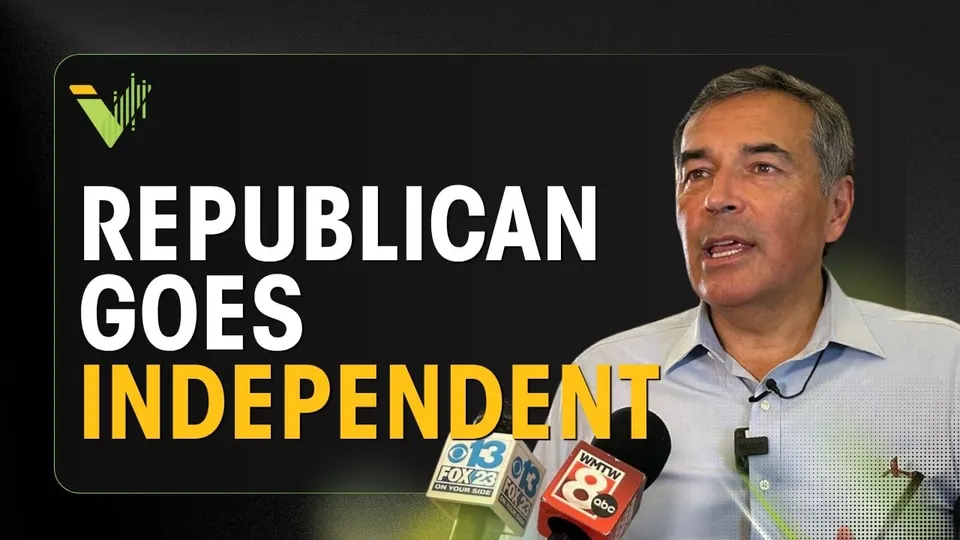
 Rob Richie

 Cara Brown McCormick
 IVN Editorial Board
 Matt Shinners

