
 Shawn Griffiths
OKLAHOMA CITY - The fight for open primaries in Oklahoma is not over. While Secretary of State Benjamin Lepak rejected State Question 836 back in January, a group of Oklahoma voters has filed a challenge with the state Supreme Court disputing Lepak’s signature count.
SQ 836 proposes an all-voter and all-candidate nonpartisan open primary.
The initiative’s campaign submitted over 209,000 signatures, which surpassed the 172,993 needed to qualify for the ballot. The question facing reformers: Was the gap between signatures collected and signatures needed large enough to survive inevitable signature disqualifications?
The secretary of state announced that only 142,567 were valid—meaning nearly 58,000 signatures were disqualified. According to the aggregate report from Lepak's office, a majority of rejections were because the signatures did not match 4 out of 5 data points in the voter file.
 Shawn Griffiths
However, the challenge filed in court on behalf of 4 Oklahoma voters asserts that the secretary of state refuses to identify the signatures or provide specific details as to why they were tossed.
“It is not plausible that 57,841 persons [...] would sign the Official Initiative Petition Form and represent that they are Legal Voters, when they are not in fact Legal Voters,” the challenge states.
It adds in bold, “57,841 citizens did not lie.”
The new primary system proposed under SQ 836 would open primary elections to all voters and candidates, regardless of party. Any voter can choose any candidate they want, and the top two vote-getters move on to the general election.
Similar nonpartisan election models are in place in California and Washington. Alaska has a nonpartisan primary that advances 4 people, something reformers are now looking at in California.
 Shawn Griffiths
SQ 836 would replace a closed partisan system that gives parties the authority to decide if independent voters have the right to vote in taxpayer-funded elections. On June 16, the primaries are completely closed to party members only.
“We all want more faith in our government, but trust is not built by summarily rejecting more than 57,000 signatures without providing a sufficient explanation as to their exclusion,” said SQ 836 volunteer Ken Setter in a statement.
It wasn’t an easy road for the initiative to even get to the signature gathering stage. The campaign had to fend off legal challenges, establishment resistance, and organized opposition from the parties that benefit from a closed system.
On top of that, Oklahoma was hit with severe winter weather that made the final days off signature gathering tough, including getting completed signatures to Oklahoma City.
The secretary of state disqualified many signatures because of amended statutes in Oklahoma law that require initiative petitions to include 5 voter-identifying data points from the voter file for each signer. To be verified, 4 of the 5 must match.
The required fields include:
- Legal first name
- Legal last name
- ZIP code
- House number
- Numerical month and day of birth
Plus, when signing the petition, each voter must:
- Sign their name
- Print their name
- Provide birth date, address, and county associated with their voter registration record during the circulator verification process.
It is a noticeable difference compared to what was required before the new requirements, which were approved by the legislature in 2024:
- Signature
- Printed name
- Address
- City/county
Proponents of the change claimed that it would improve fraud detection and verification accuracy—and that it would reduce the number of disputes over signatures.
Critics argue the law does the exact opposite (in terms of disputes), and proponents of SQ 835 assert that it was used to disqualify tens of thousands of legitimate signatures from legal Oklahoma voters.
The burden of proof in this case is placed on the objectors challenging the secretary of state’s count. However, the plaintiffs argue that the aggregate reporting from the state lacks transparency and does not provide an explanation for why individual signatures were tossed.
“The Secretary has refused to identify those signatures which were rejected. Nor does the Secretary disclose, for the rejected signatures, which of the data points… he found to be mis-matched,” the complaint states.
It also says:
“Without the individual Signature Data, the burden upon the Objecting Signatories to meaningfully object to the Secretary’s count is extraordinary and prohibitive.”
Lepak insists that his office’s count is accurate. He said elections administrators “conducted their review in accordance with applicable law, following the same standard protocols and procedures they always do for initiative petitions.”
The plaintiffs are asking the court to either rule that the signatures submitted for SQ 836 are sufficient or to order the secretary of state to account for why individual signatures were disqualified and if no data is provided then the signatures should count.
Oral arguments in this case are set for July 7.
In Other Reform News…
DC Democratic Leaders Fail to Kill Pro-Voter Reforms in Court
While reform advocates turn to the courts to defend the rights of petitioners in Oklahoma, a DC court has rejected a challenge brought by Democratic Party leaders against Initiative 83, which was approved by 73% of voters in 2024.
Initiative 83 requires the city to use semi-open primaries (meaning independents can pick a party ballot while party members vote in their party’s primary) and ranked choice voting in all city elections.
The DC City Council has funded ranked choice voting, but has refused to fund open primaries. Part of the excuse city officials have used is that there is pending litigation over the initiative. That excuse doesn’t appear to hold up anymore.
 Shawn Griffiths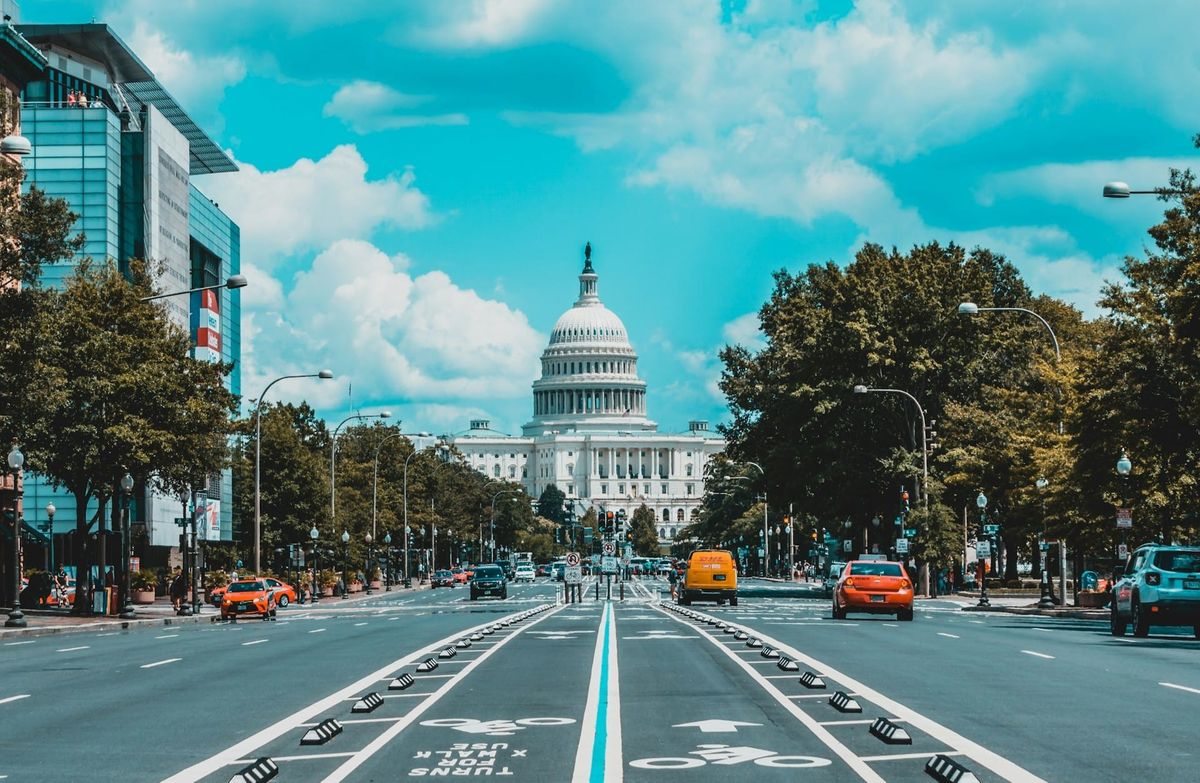
Campaign Legal Center, which helped defend the initiative, said the ruling confirmed that the reform does not violate District or federal law.
The immediate impact is DC will use ranked choice voting for the first time in the June 16 primary. This will allow registered party members to rank candidates on the ballot in order of preference (1st choice, 2nd choice, 3rd choice, etc.)
If no candidate gets over 50% of first-choice selections, the last place candidate will be eliminated in an instant runoff and their voters’ next preference will be applied to the tabulation.
The process continues as needed until a single candidate has a majority of the vote.
But the open primary portion of Initiative 83 remains unresolved. The measure’s proposer, Lisa D.T. Rice, spoke at a DC Council Budget Oversight Hearing in May, where she called on council members to honor the will of voters and fully fund Initiative 83.
She challenged them to stand by their word that they would defend DC voters. “Which is it? Are the outcomes of our local elections sacred and worthy of respect from elected officials – or not?”
Ranked Choice Voting Takes Center Stage in June Primaries
Speaking of ranked choice voting, the reform is slated to be used not only in the June 16 primaries in DC, but also the June 9 primaries in Maine.
Maine voters will use RCV for governor, Congress, and state legislative races—and research shows that voters use it and like it.
A SurveyUSA poll released by FairVote found that 75% of likely Maine primary voters rank at least two candidates in crowded gubernatorial fields. Additionally, 84% said ranking candidates was easy and 70% supported the ability to rank.
The same poll found Bobby Charles leading the GOP gubernatorial primary, Joe Baldacci leading the Democratic primary in the 2nd Congressional District, and Hannah Pingree narrowly leading the Dem gubernatorial primary.
“Ranked choice voting is delivering on its promise of more choice and more voice for Maine voters, and can foster a more positive form of politics with cross-endorsements,” said Meredith Sumpter, president and CEO of FairVote.
“Maine voters take advantage of ranked choice voting, find it easy to use, and like it. As other states’ primaries are won with just 20 or 30% of the vote, Maine’s use of RCV also ensures majority winners in crowded fields.”
In The Mid-Cycle Gerrymandering Fight, New York Enters the Chat
In the current political environment, another week means further escalation in the mid-cycle gerrymandering fight between the two major parties.
At the same time Axios reported that Republican-led redistricting efforts have raised the bar for Democrats to win back the US House, New York lawmakers have approved the first passage of a constitutional amendment that would overhaul the state’s congressional redistricting process.
It is a move that would make it easier for lawmakers to redraw maps more aggressively and outside the standard redistricting window (i.e. following each decade’s census). New York may not try to redraw its maps for the 2026 midterms, but more states are expected to escalate things between now and 2028.
New Mexico Independents Finally Got a Primary Vote
New Mexico held its first semi-open primary on June 2, giving independent and declined-to-state voters the ability to participate in a major-party primary without changing their registration.
More than 37,600 independent voters cast a ballot under the new system.
 Shawn Griffiths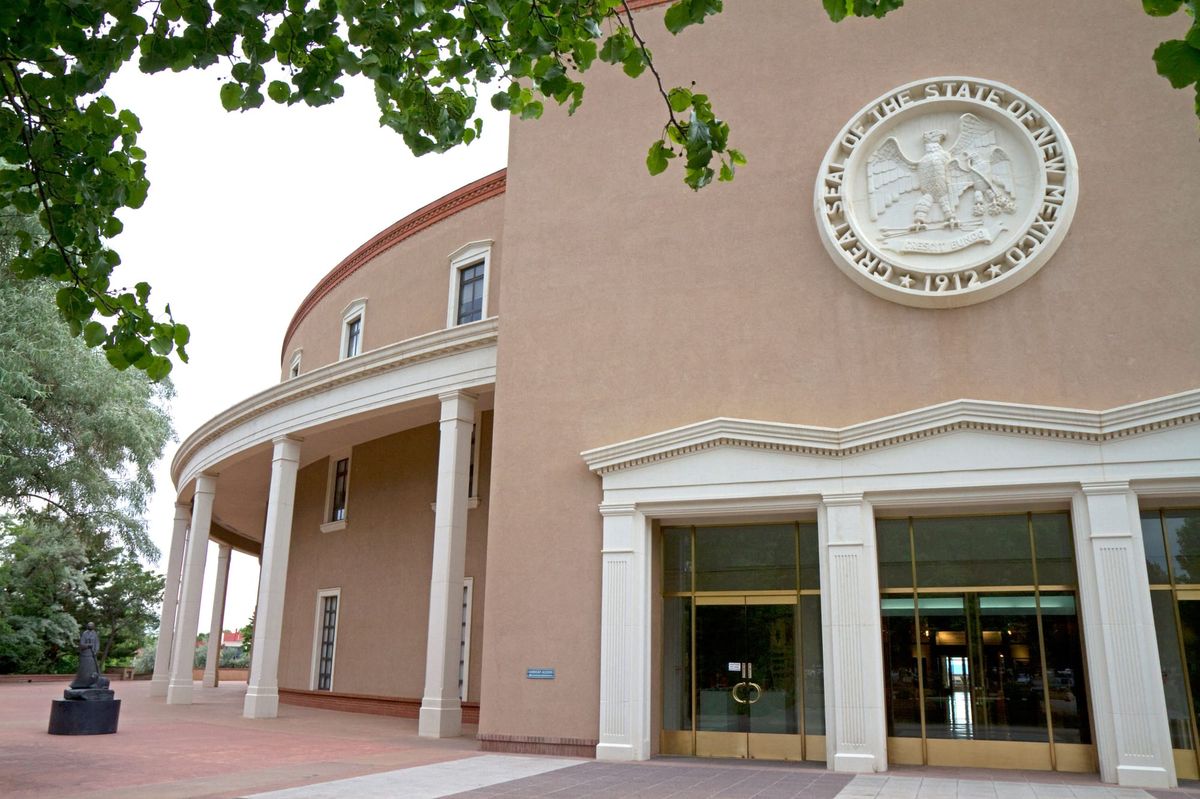
Some may argue that independent participation was only a fraction of eligible unaffiliated voters. But the reform still added tens of thousands of voters who would previously have been blocked from participating unless they joined a party.
The state’s overall unofficial turnout was 24.62%, with 346,705 ballots cast out of 1,408,181 eligible voters.
 Jeremy Gruber
US Rep. Barrett Says Voters Are Tired of Seeing Billions Pumped into Elections—Introduces Constitutional Amendment
Campaign finance is getting a lot of attention in the 2026 midterms.
And while it is featured on the national stage, US Rep. Tom Barrett (R-Mich.) announced a campaign finance reform package that includes a proposed constitutional amendment to give Congress and state governments authority to set stricter rules on election spending.
“Americans are tired of watching billions of dollars flood into our elections while their own voices feel increasingly ignored,” Barrett said.
“Free speech and competitive campaigns are essential to our democracy, but our elections should not be determined by elite megadonors who have never been to Michigan. The Constitutional Campaign Finance Reform Amendment guarantees Congress and the states the authority to give the power in elections back to the people, restore confidence in our elections, and ensure that candidates spend more time serving their constituents than catering to special interests.”
If this sounds familiar, it is because IVN has covered the ongoing efforts by the cross-partisan organization American Promise to pass such an amendment. In fact, it is the sole purpose and has worked with state legislatures to call on Congress to act.
In April, Idaho became the 25th state to pass a resolution in favor of such a constitutional amendment—meaning half of US states are on board. An amendment needs ratification from three-fourths of the states to become law.
 Shawn Griffiths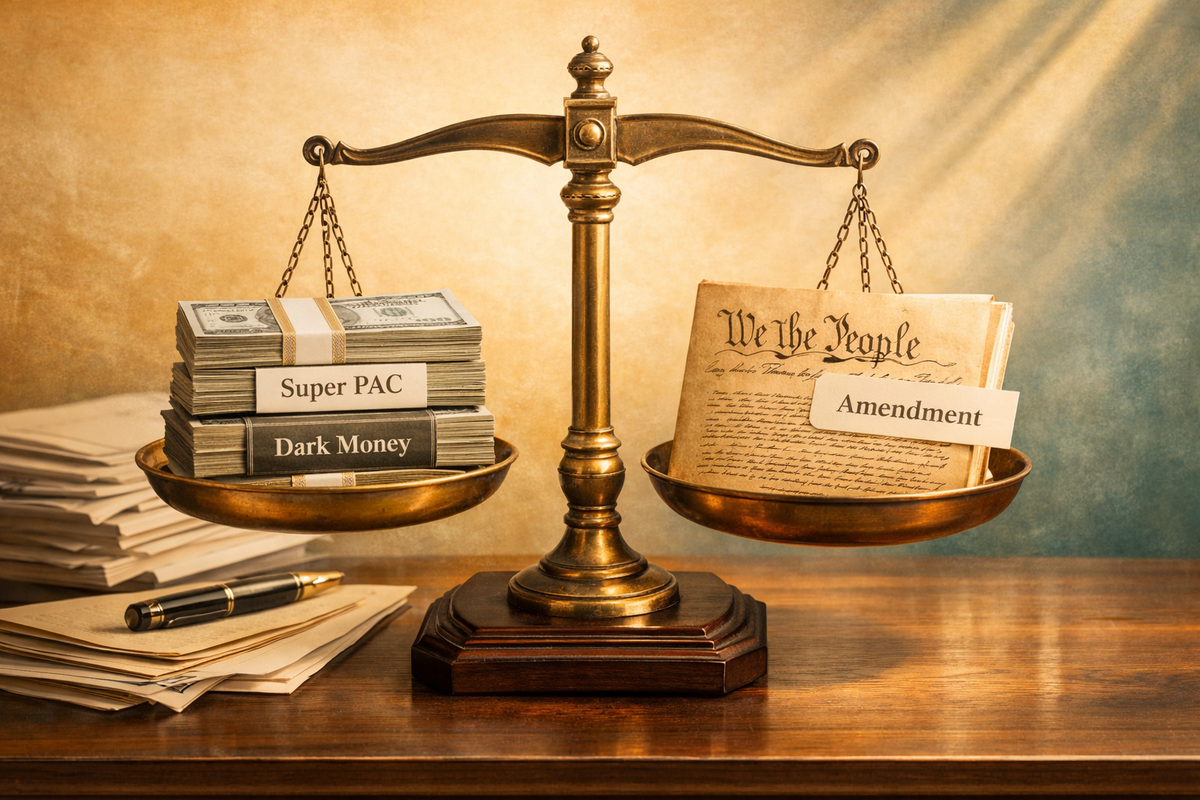
“What’s striking about this moment is the overwhelmingly cross-partisan agreement that something must be done,” said Jeff Clements, co-founder and CEO of American Promise.
“Twenty-five state legislatures — representing red, blue and purple states alike — have called on Congress to support this amendment, often with unanimous support. We thank Representative Barrett for heeding the growing call of Americans and our states to move the constitutional amendment process forward."