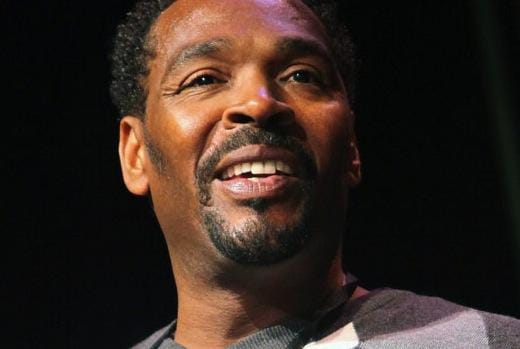
With the recent passing of iconic police brutality victim, Rodney King, who died of an apparent drowning earlier this week at the age of 47, the significance and legacy of his story are back in the national conversation. Unfortunately, just over twenty years after the video footage of Rodney King's brutal beating at the hands of Los Angeles police shocked and outraged the country, the use of excessive force by increasingly militarized police continues to increase in an epidemic of "isolated incidents" across the country.
Oddly enough, as this trend continues unabated, media scrutiny, public awareness, and moral outrage are curiously absent. In 1991, it took just one incident of excessive police force to rally the attention of an entire nation, and months later in 1992, when a jury acquitted Rodney King's attackers of their charges, it wasn't just "bleeding hearts" that were outraged.
Even Republican President George H. W. Bush said, "Viewed from outside the trial, it was hard to understand how the verdict could possibly square with the video. Those civil rights leaders with whom I met were stunned. And so was I and so was Barbara and so were my kids."
Today, the level of national awareness and outrage over police brutality is vanishingly small compared to outrage over Rodney King's beating, despite incidents of excessive police force occurring literally every day across the nation.
In 2012, state and federal police conduct multiple militarized SWAT raids to serve drug warrants every day. In fact, one estimate puts the number of such raids at 40,000 per year in the United States. Meanwhile, all these cell phone cameras people have catch incidents of police brutality that until recently, you would have never heard of and could have never proven. The use and misuse of tasers regularly finds its way into the headlines. The nation sat and watched armed police attack Occupy Wall Street encampments in full riot gear and disperse the activists with rubber bullets, metal batons, and chemical agents we can't even legally use on enemy soldiers in war, all despite the protesters being told by the government that they can legally stay in their encampments.
The libertarian Cato Institute recently started a new project just to document the extent of police misconduct, entitled The National Police Misconduct Reporting Project. The project has yielded an interactive map of botched paramilitary police raids, interactive maps of excessive force and police misconduct, and archives of detailed quarterly and yearly statistical reports on police misconduct along with policy papers suggesting various solutions and new ways of understanding the systemic causes that underlie these trends.
But these are just numbers. Each one represents the story of a real person, just like Rodney King, who has been hurt by police misconduct. Where is the fresh outrage for each of these victims?
Why aren't Americans just as captivated and outraged by the story of a 14-year-old girl and her 11-year-old sister who were attacked in their own beds in 2007 by armed DEA agents conducting a raid at the wrong house? After apprehending their parents, the agents burst into the sleeping girls' rooms and shouted at them to, "Get down on the ****ing ground," where they were handcuffed and forced to lie face down. The younger sister had a gun held to her head. Two decades after Rodney King became a household name, these botched raids are happening more often than ever and ending in more tragic deaths.
To be clear, this is not an indictment of all police, many of whom are true heroes whose work makes our communities safer. If anything it's a criticism of American voters, who have become complacent about incidents of police brutality even in the face of an epidemic of it. In order to protect the honor and credibility of those police who do serve our communities, as well as to prevent the future victimization of more citizens, it is incumbent upon a vigilant, engaged, and compassionate citizenry to identify and close the gaps in public policy that allow a systemic pattern of misconduct and excessive force to grow.
With little leadership from either of the two major parties on a state or national level to objectively analyze and urgently reform the direction of police and criminal justice policy in this nation to stem the tide of excessive police force, this is an area where independent voters and candidates can take the lead and make a difference.