California Governor Jerry Brown // credit: educationnews.org
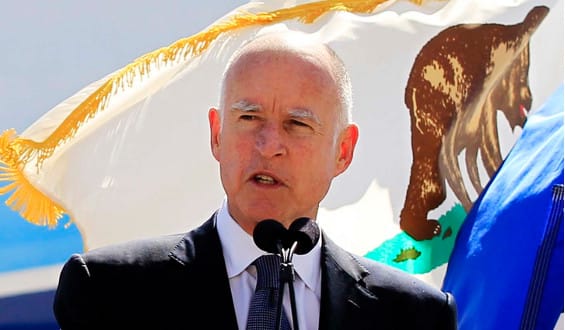
Governor Jerry Brown's revised budget projections -- announced on Tuesday -- painted a slightly bleaker, yet more cautious picture for the fiscal future of California. Initial figures from the Legislative Analyst's Office foresaw about $4.5 billion in additional revenues brought in during the 2012-2013 fiscal year. Brown's projections for additional revenues were much more modest.
From the updated budget:
"The May Revision proposes a multiyear plan that is balanced, maintains a $1.1 billion reserve, and pays down budgetary debt. Yet, the budget remains balanced only by a narrow margin. Further, the state must begin to plan now to ensure that the budget will remain balanced after the temporary Proposition 30 tax revenues expire."
The $1.1 billion in reserves can either end up in something like a 'rainy-day fund' or be put back into programs that had been cut during tighter budget years. However, according to Brown's revisions, the state may have far less to throw around.
A few state programs are already seeing a spending bump, including a $48-million increase to CalWORKS, an additional $1 billion for Common Core implementation in schools, and $72 million to aid in California's prison realignment process.
Deferred payments to California schools are also taking up a substantial portion of the added revenues, which exceeded expectations around tax day. Analysts have parsed the one-time revenues to uncertainty at the federal level, which prompted many high income earners to shift realization of assets, including capital gains into 2012.
Revenues from capital gains were at the highest point since 2007, coming in at almost $100 billion for 2012 -- a situation unlikely to repeat in the next fiscal year. This is why Brown's revised budget projects only a fraction, $58 billion, in 2013. As for now, the question remains how best to allocate the additional reserves.
Chris Hoene, executive director of the California Budget Project, explains:
"The Governor's proposal highlights once again that the economic and fiscal outlook is certainly better than it was the last few years it still shows we're not out of the woods yet... You can do this with some balance. For example the Governor's proposals for repaying budgetary debt are in essence also good fiscal policy, operating in some respects like an investment in a reserve... and therefore you want to be able to put some funding into some of these programs and help those folks who are most in need"
Whether or not the surplus will stick around past 2014, once the one-time revenue spikes even out, remains to be seen. The likelihood of robust budget reserves enduring to 2017 diminishes if more programs return to pre-recession funding levels.
Refunding programs like adult dental care, child care for underprivileged families, and others have been pushed by Democrats amidst budget talks. Senate President pro Tem Darrell Steinberg (D-Sacramento) said in a statement:
"I agree we must aggressively pay down our state’s debt and set aside money for a reserve, but there’s a disappointing aspect to this proposal. It’s important that we also begin making up for some of the damage done to tens of thousands of Californians. Unless the Legislative Analyst has a different conclusion, the Governor proposes few if any resources to restore cuts made over the past few years to the courts, and to health and human services."
Maintaining a sound fiscal course throughout seemingly robust fiscal years will remain a challenge for Democrats and Republicans in Sacramento. Likewise, unexpected returns from 2012 are unlikely to materialize in the coming fiscal years, especially notoriously volatile capital gains revenue.