
 Shawn Griffiths
The 2026 midterm elections are already underway as states conduct their primary elections – and independent voters are expected to have a major impact on results from California to Maine and in several places in-between.
Independent voters are not often a part of the discussion in primaries because partisan campaigns tend to ignore them. However, as independent ID hits 45% of the electorate, their influence over the US political landscape cannot be ignored.
Here are the top 10 states independent voters will decide elections in 2026 – including some surprises.
1. Alaska
Roughly 60% of the state’s electorate is already registered unaffiliated with any political party. Independent voters are not just the majority; they are practically a super-majority.
Yet, for many years the largest voting bloc in the state was denied access to critical, taxpayer-funded primary elections.
This changed after voters approved Ballot Measure 2 in 2020, which implemented a nonpartisan Top Four primary (open to all voters and candidates) with ranked choice voting in the general election.
In only a few years, research has shown that Alaska already has more competitive elections and voters previously underrepresented by the old closed primary system have taken advantage of the opportunity to have their voices heard.
The US Senate race that features former Democratic US Rep. Mary Peltola, in particular, has gotten a lot of attention. Independent voters will not only decide which 4 candidates advance to the general election, but they will also decide who the preferred winner is under ranked choice voting.
2. California
California is another state with a nonpartisan open primary system, authored by the Independent Voter Project and approved by voters in 2010. Cambridge University recently published research that shows Top Two has generated more competitive elections in the state.
Recent actions by California Gov. Gavin Newsom and the California Legislature to gerrymander the state's congressional map under Prop 50 reduced the number of competitive congressional contests this year. However, independent voters will end up having the greatest impact on elections statewide.
This includes the race for governor, where a large candidate field of Republicans and (mostly) Democrats is going to split the vote considerably.
The most important takeaway from all the polls on this race is the number of undecided voters. While Democrats raise doomsday alarms about two Republicans winning, about a quarter of the electorate remains undecided.
And lo and behold, independent voters make up more than a quarter of the electorate.
 Cara Brown McCormick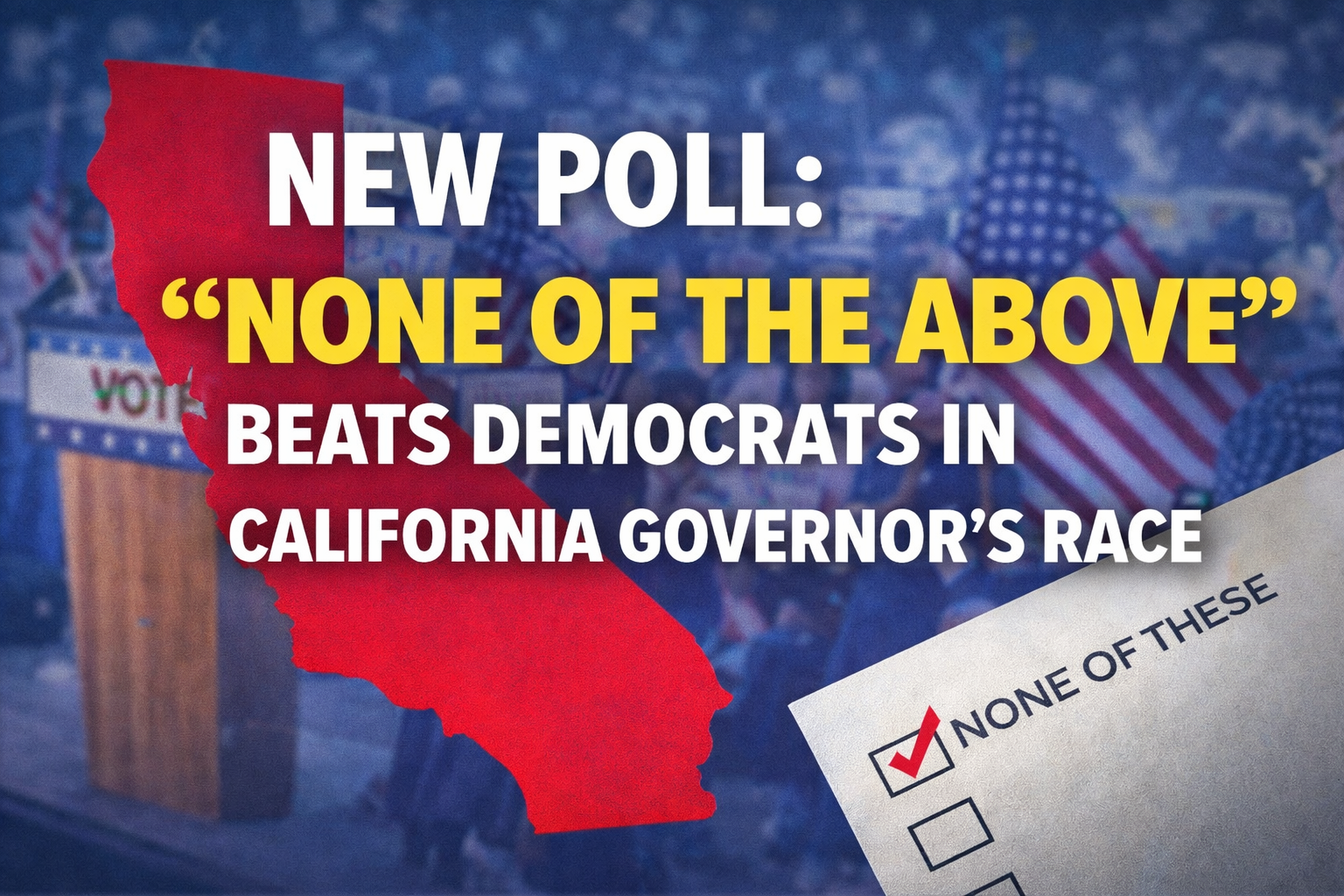
These voters will ultimately decide which two candidates advance to November, and if the Prop 50 results from 2025 are any indicator, Republicans Steve Hilton and Chad Bianco may have hit their ceiling of potential support.
Importantly, Cambridge found that even in contests that result in two candidates from the same party advancing, voters outside the party have a greater say in who represents them.
It is no longer an easy victory for a single candidate of the controlling party because to win they have to broaden their appeal beyond their party's base.
3. Maine
Maine now uses a semi-open primary system that lets independent voters participate in a party primary without joining that party. While the system was implemented for the first time in 2024, this year will feature the first governor’s race to use it.
Local media outlets have already dubbed independent voters as the “deciders” in this high-profile contest since it is an open seat. Current Gov. Janet Mills is running for US Senate, a race that will also be decided by independent voters
Mills is running in the Democratic primary to determine who will face incumbent Republican US Sen. Susan Collins.
An additional factor in US Senate and House elections (both primary and general) in Maine is that they use ranked choice voting. Voters will be able to rank candidates in order of preference.
Notably, Maine voters were the first in the US to approve statewide use of ranked choice voting for all elections. However, a 2017 advisory opinion by the Maine Supreme Court was used to keep it out of gubernatorial and legislative general elections.
A bill was approved by the Maine Legislature this year that would allow the reform’s use in these elections. It remains in the legislature until the state Supreme Court issues an opinion on its constitutionality.
A hearing was held on April 1. Five days later, the Maine Supreme Court issued its opinion that the bill violated a provision in the state constitution that requires plurality winners in gubernatorial and legislative general elections.
Ranked choice voting is used in primaries, US House and Senate general elections – even in presidential elections.
4. Georgia
Georgia is the type of open primary state that does not register voters by party. Registered Georgians choose a party ballot in the primary, which gives independent-minded voters real leverage before November.
While it is not uncommon even under these primary types for partisan campaigns to ignore independents – thus giving these voters little incentive to participate – reports out of Georgia say campaigns are actively courting them this year.
L2 Data modeling shows that Georgia has nearly 2 million voters who identify as independent, which explains its consistent battleground status each election cycle, including in the 2026 midterms with a hotly contested US Senate election.
So, independents are expected to be “deciders” in both the primary AND general elections.
5. Texas
Texas has long been considered a Republican stronghold, but the 2026 primary elections showed this may be more of a product of independent preference in recent history than Republicans dominating voter registration.
In fact, data modeling shows Republicans may not have the majority many people think.
Shawn Griffiths
Like Georgia, Texas does not register voters by party. People select a party ballot when they vote in primaries, which means they can pick a different party ballot each cycle.
However, if there are runoffs, any voter who participated in the primary cannot switch parties.
This year’s primary elections stood out because for the first time since the 1990s, turnout in the Democratic primary was higher than the Republican primary in a non-presidential contest
(Democrats outnumbered Republicans in the 2020 presidential primary).
Shawn Griffiths
Not only were voters drawn in by the high-profile Senate race, but Democratic US Senate nominee James Talarico didn’t leave out independent voters in his campaign messaging and targeting – leading to higher independent participation.
Independent voters made the difference for his campaign, which could extend to the general election depending on who wins the May 26 Republican runoff. And if these voters still feel incentivized to vote for either party’s nominee.
6. Arizona
Independents are likely to be especially influential in Arizona because voters registered as “independent” or “party not designated” are allowed to choose any major party's primary ballot.
These voters represent more than a third of the registered electorate.
Shawn Griffiths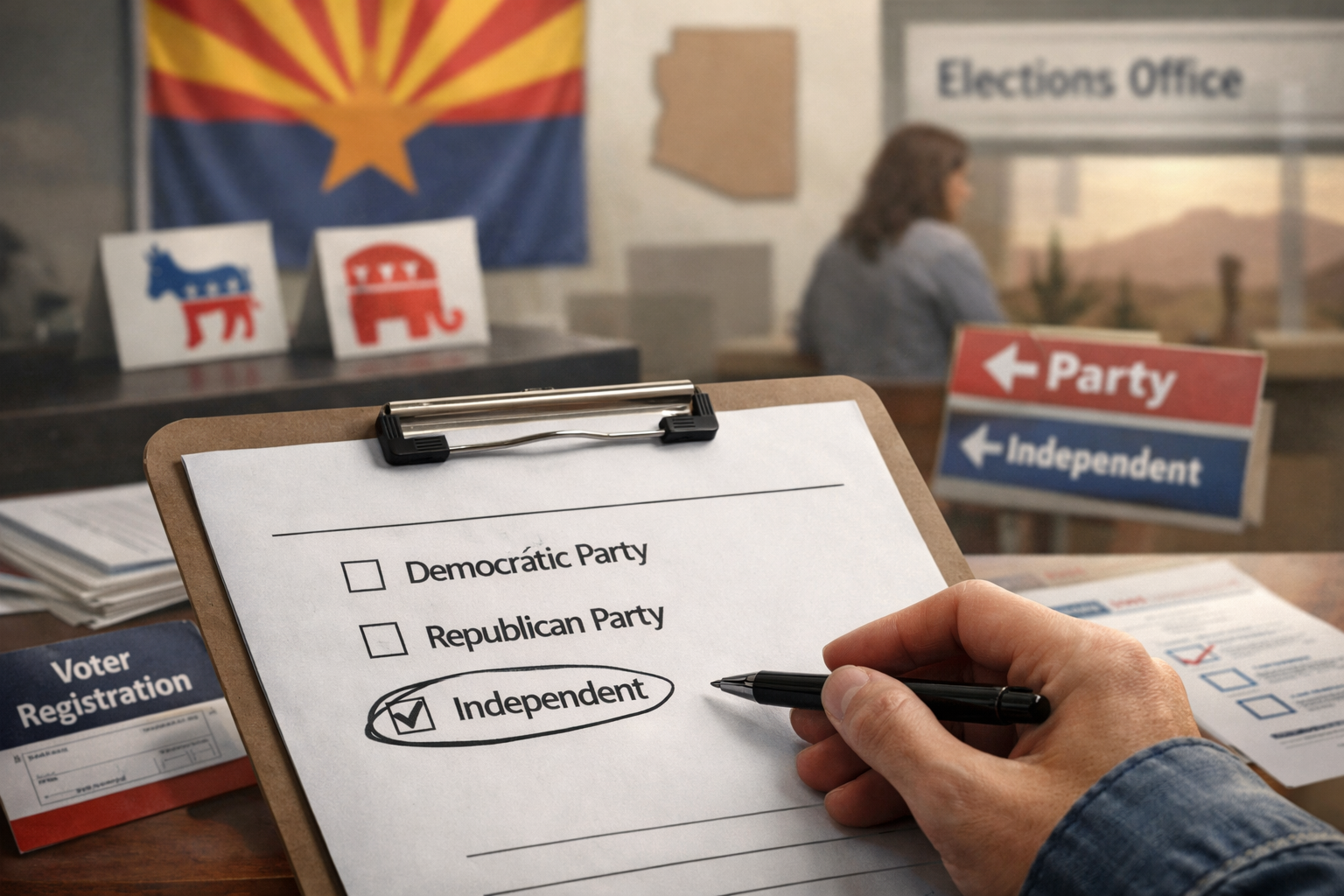
Like Maine, Arizona uses a semi-open primary system. Registered party members have to vote in their respective party’s primary. It is also considered one of the nation’s hottest battlegrounds, giving independent voters substantial leverage.
7. North Carolina
North Carolina has a notable mix of independent-voter opportunity and battleground status. Independent voters can choose a party ballot in the primaries, which gives them the opportunity to leverage their influence at all stages of the elections process.
And these voters do not have allegiance to a single party.
Trump won the state in 2024 with 51% of the vote, and Republicans have a slight majority in the legislature. At the same time, state voters elected a Democratic governor, Josh Stein, and other state Democratic officials.
Reuters lists the open US Senate race as one of the most competitive in the country.
8. Wisconsin
Wisconsin isn’t just a battleground state, but is also considered one of the nation’s purest swing states with a sizable independent voter population. Data modeling shows about a third of registered voters identify as independent.
Ballotpedia identified the 2026 governor’s race as a Toss-Up, and AP noted that Democrats are also trying to flip the legislature while the state Supreme Court remains central to election law, redistricting, and abortion politics.
Due to how razor thin the margins in elections tend to be, independent voters make the difference in every election cycle.
9. Michigan
Michigan is in a unique position on this list because not only does it have open primaries for a high-profile governor’s race and an open US Senate seat, but it has an independent candidate who could break through the two-party duopoly.
That is former Detroit Mayor Mike Duggan.
Duggan was a popular mayor and oversaw a transformation of the city from bankruptcy to vibrancy. He could pull voters who are dissatisfied with both major parties – which has Republicans and Democrats calling him a spoiler.
Still, the 2026 midterms have created multiple paths for independents to matter in Michigan. Not only are they the “deciders” in the state’s biggest elections, but they could actually give Michigan a governor that isn’t a Republican or Democrat.
10. Nevada
Nevada is the only closed primary state on this list. While independent voters are locked out of a critical stage of the elections process, they account for more than 2.1 million active registered voters and are the largest voting bloc in the state.
Notably, in the last legislative session, the legislature managed to pass a semi-open primary bill that was vetoed by the governor. The better elections group Vote Nevada is collecting signatures for a ballot initiative that would enshrine the right to vote in all taxpayer-funded elections to independents.
This could offer a major incentive for these voters to turn out in greater numbers if the initiative makes the ballot.
Even though Nevada’s partisan primary is closed to independents, that bloc is large enough to decide close statewide general elections in a battleground state.
Honorable Mention
Colorado – while the state is not considered the battleground state it once was, independent voters make up a majority of registered voters, and they can participate in the state’s semi-open primary system. Given their numbers, independent voters are the most impactful voting bloc in the state in statewide contests.
It will also be curious to see how these voters turn out as Colorado Republicans try to close primary elections and Colorado Democrats fight independent redistricting.