Skip to content
Subscribe

Monsanto Says "No on 37" Despite Being Pro-Labeling in UK

Published:

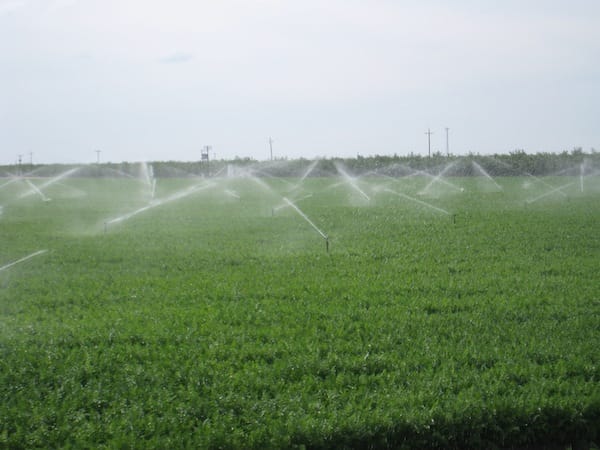
Photo: www.aquafornia.com
Prop 37 presents an interesting dilemma for Californians this election season. The proposition poses whether or not genetically modified organic foods should be labeled as such. It is important to consider the funding campaigns receive, especially when donors have high stakes in the success or failure of an initiative. Agricultural biotechnology corporation, Monsanto, and Prop 37 are an interesting duo at the ballot box this election season.

In Proposition 37, the label does not prohibit the production, sale, or consumption of genetically modified foods, it merely requires that producers using genetically modified ingredients make it known to consumers.

Theoretically, the initiative should increase the cost of food in California, but the impact of Prop 37 varies, depending on the study. Regardless of the effects of the bill, a September USC poll showed Californians broadly supporting the ballot measure.

The majority of money regarding the issue has been funneled into the "No on 37" campaign, with the largest sum of cash coming from the Monsanto checkbook.

Monsanto is an agricultural biotechnology corporation known for producing genetically engineered seed. They are not new to controversy, particularly in regards to their product and their lobbying activity, and now they've contributed $7 millon to Prop 37's opposition campaign.

Yet, strangely, they have actually been a vocal supporter of GMO labeling in foreign countries. This should leave California voters questioning both their intent and their products.

In the UK, Monsanto has established a hotline for consumers who would like to learn more about the genetically engineered foods they buy at the grocery. In California, we are seeing No on 37 ads intended to ‘Stop the Deceptive Food Labeling Scheme.’

For nearly a decade, the European Union has enforced laws similar to those contemplated in Proposition 37. After several years, corporations like Monsanto have supported the GMO labels in the UK, but now they are trying to block similar measures state-side.

Despite a large amount of support for the measure, it is important for voters to recognize and research the donors which fund both "No" and "Yes" campaigns.

Adhere to the IVN etiquette

By posting a comment, you agree to adhere to our etiquette rules: No partisan attacks, no personal attacks, substantiate your sources, no self-promotion.

Contact IVN

Questions about this article or our coverage? Send us a message. A free IVN member account is required.

Message sent

Thanks, we’ll review it and get back to you if needed.

Message not sent

Sorry, something went wrong. Please try again.

Sign in to send a message

Messages are tied to your IVN member account. Signing in is free and takes a few seconds.

Republish this article

Republishing guidelines

Republish IVN articles for free. Independent Voter News articles may be republished online or in print under a Creative Commons BY-NC-ND 4.0 license, on these terms:

  1. Credit the author and IVN. Keep the byline ("By Author Name, Independent Voter News") and the attribution note at the end, which links to the original.
  2. Keep the meaning. You may update time and place references and apply your house style. You may trim for length, as long as the cuts don't change the meaning or misrepresent the author. Keep the headline. Mark any additions as your own (for example "Additional reporting by ...").
  3. Translations are welcome. Translate faithfully, add "Translated from English by [your outlet]", and tell us at editor@ivn.us.
  4. Keep the links, including the link to the original article.
  5. Keep the tracking image. The HTML includes a 1-pixel image that counts readers on your page. It collects no personal information.
  6. Photos and illustrations. Images credited to IVN may be used with this article only. Images credited to others (AP, Getty, Unsplash, Wikimedia and so on) stay under their owners' terms. Secure the rights or switch "Include images" off.
  7. Don't sell it. You can't sell our articles or sell ads specifically against them. Your normal site advertising is fine.
  8. No implied endorsement. Don't suggest that IVN or the author endorses you, your candidates or your causes, or that donations to you support IVN.
  9. Keep labels. Opinion or analysis pieces keep that label.
  10. Point search engines to the original. Where your CMS allows, set the canonical URL to the original IVN article.
  11. No bulk or automated republishing, and don't submit our articles to aggregators (Apple News, Google News, MSN) as your own.
  12. Corrections and removals. Update your copy when we correct it, and remove it promptly if we ask. We'll contact you at the email you give us.
  13. Questions or print republication: editor@ivn.us.

IVN staff: fill in who you're inviting above, then create the invite.

Preparing the article

Monsanto Says "No on 37" Despite Being Pro-Labeling in UK

Choose a format
  • HTML
  • Email HTML
  • Markdown
  • Formatted (.docx)
  • Plain text
  • WordPress blocks
  • PDF
Choose a platform

Photos credited to others need their owners' permission.

To for

Republishing somewhere else? Questions? editor@ivn.us