Skip to content
Subscribe

Proposition 37: Estimated Household Food Costs Vary By Study

Published:

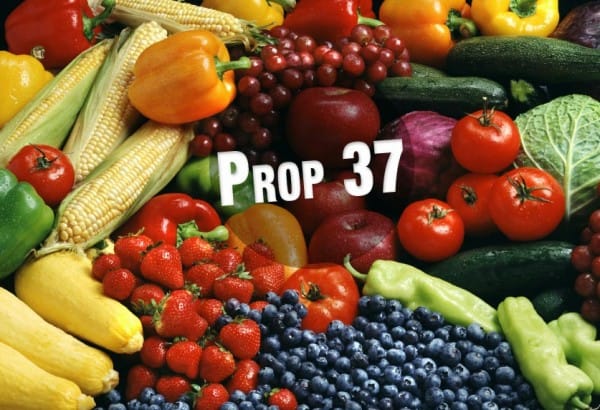
The Yes on 37 and No on 37 campaigns each report drastically different estimates regarding California Proposition 37’s potential effects on annual household food costs. The discrepancy is largely a result of differing assumptions on supply chain reactions.

The report, publicized on the Yes on 37 campaign website, focuses almost entirely on how labeling will change costs to food producers and distributors, making the assumption that all or most producers will choose to label their product as “Genetically Engineered.” According to author Joanna Shepherd-Bailey, a professor at the Emory School of Law, the total cost of labeling changes would result in a negligible $1.37 increase in annual food costs.

The opposition’s analysis focuses on what it claims to be a more likely outcome: food growers making wide-spread conversions to non-Genetically Engineered (GE) and Certified Organic crops. This would apparently result in price hikes for consumers, raising the cost of grocery bills by up to 400 dollars annually for each California household. The report only briefly considers the labeling scenario, estimating costs to be between three and eight million dollars for food distributors.

Most large-scale agricultural producers, farmer coalitions and farm bureaus currently oppose California Prop 37, while organic farmers and producers tend to be in favor of the bill. (Organic products and produce are exempt under Prop 37 because Certified Organic produce already cannot include GE crops). However, not all agricultural supporters of Prop 37 come from Certified Organic farms.

Bob Cannard, co-owner of Green String Farm in Petaluma, California, is strongly in favor of Prop 37. “I don’t see how it would increase costs ,” says Cannard, whose farm does not use pesticides but instead works with the ecological system as a whole to produce nutritious food. In fact, Cannard believes that continuing to grow GE crops will increase food prices over time.

Costly or not, Californians appear to be strongly in favor of Prop 37. A recent poll sponsored by the LA Times and the University of Southern California found that 61 percent of Californians support Proposition 37, even after being made aware of the potential increased food costs associated with the bill.

Adhere to the IVN etiquette

By posting a comment, you agree to adhere to our etiquette rules: No partisan attacks, no personal attacks, substantiate your sources, no self-promotion.

Contact IVN

Questions about this article or our coverage? Send us a message. A free IVN member account is required.

Message sent

Thanks, we’ll review it and get back to you if needed.

Message not sent

Sorry, something went wrong. Please try again.

Sign in to send a message

Messages are tied to your IVN member account. Signing in is free and takes a few seconds.

Republish this article

Republishing guidelines

Republish IVN articles for free. Independent Voter News articles may be republished online or in print under a Creative Commons BY-NC-ND 4.0 license, on these terms:

  1. Credit the author and IVN. Keep the byline ("By Author Name, Independent Voter News") and the attribution note at the end, which links to the original.
  2. Keep the meaning. You may update time and place references and apply your house style. You may trim for length, as long as the cuts don't change the meaning or misrepresent the author. Keep the headline. Mark any additions as your own (for example "Additional reporting by ...").
  3. Translations are welcome. Translate faithfully, add "Translated from English by [your outlet]", and tell us at editor@ivn.us.
  4. Keep the links, including the link to the original article.
  5. Keep the tracking image. The HTML includes a 1-pixel image that counts readers on your page. It collects no personal information.
  6. Photos and illustrations. Images credited to IVN may be used with this article only. Images credited to others (AP, Getty, Unsplash, Wikimedia and so on) stay under their owners' terms. Secure the rights or switch "Include images" off.
  7. Don't sell it. You can't sell our articles or sell ads specifically against them. Your normal site advertising is fine.
  8. No implied endorsement. Don't suggest that IVN or the author endorses you, your candidates or your causes, or that donations to you support IVN.
  9. Keep labels. Opinion or analysis pieces keep that label.
  10. Point search engines to the original. Where your CMS allows, set the canonical URL to the original IVN article.
  11. No bulk or automated republishing, and don't submit our articles to aggregators (Apple News, Google News, MSN) as your own.
  12. Corrections and removals. Update your copy when we correct it, and remove it promptly if we ask. We'll contact you at the email you give us.
  13. Questions or print republication: editor@ivn.us.

IVN staff: fill in who you're inviting above, then create the invite.

Preparing the article

Proposition 37: Estimated Household Food Costs Vary By Study

Choose a format
  • HTML
  • Email HTML
  • Markdown
  • Formatted (.docx)
  • Plain text
  • WordPress blocks
  • PDF
Choose a platform

Photos credited to others need their owners' permission.

To for

Republishing somewhere else? Questions? editor@ivn.us