 Matt Shinners
This is the first installment to a weekly update that tracks major independent candidates, campaigns, voters, and reforms, covering updates in races across the US, including polling, fundraising, and major news stories.
Author's Note: If you know of a candidate running on an independent line that you think should be included, please reach out to matt@ivn.us.
Nebraska
After a weird Democratic primary that saw a candidate who promised to drop out should she win taking the victory, Nebraska appears headed for an independent vs. Republican Party rematch. Dan Osborn, after hitting nearly 47% of the vote in his race against Sen. Deb Fischer last cycle, is set to be the main opponent of incumbent Sen. Pete Ricketts.
Osborn’s 2024 campaign was the most successful independent Senate run in Nebraska history, and polling by left-leaning firm Tavern has Osborn up 5% over the incumbent (with 12% undecided). Independents in that poll supported Osborn by a 40-point margin (62-20). Unlike most independents, because of his recent and prior campaign, his name recognition starts relatively high in the state.
This campaign will likely be the most-watched independent campaign this cycle.
 Matt Shinners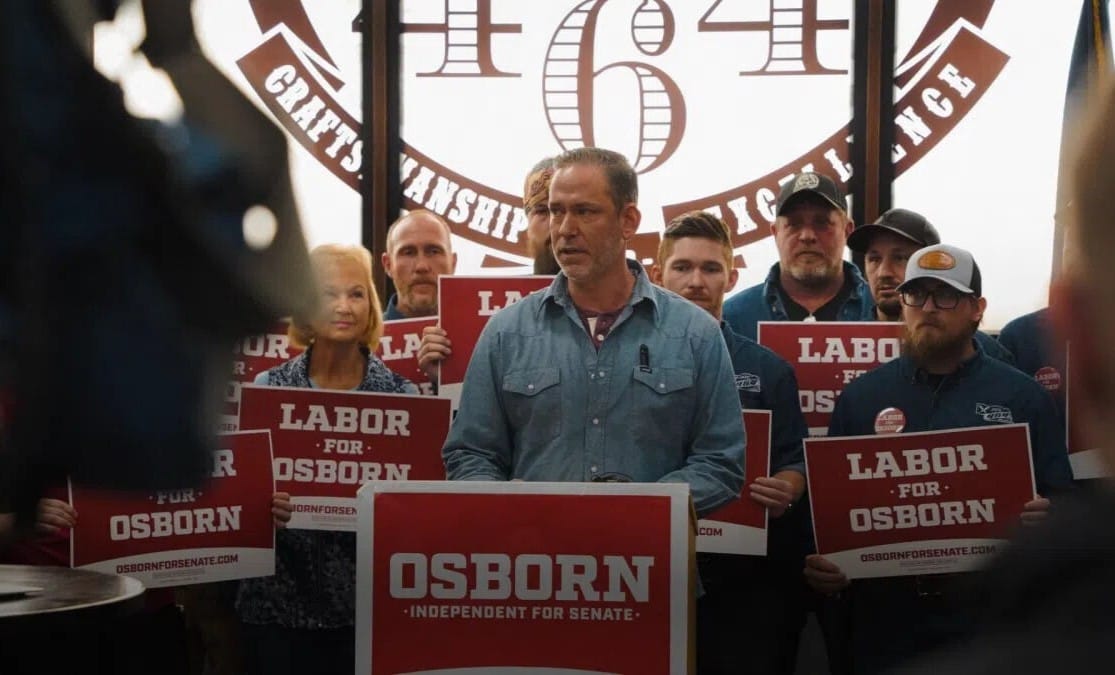
Montana
Independent and former University of Montana president Seth Bodnar is running for the Senate seat currently held by Sen. Steve Daines. Based on campaign filings, Bodnar has already raised well over $1 million, the most raised by an independent in Montana’s history. Incumbent Daines decided not to run for re-election at the last minute, endorsing Kurt Alme as his successor. Primaries will be held June 2 to determine Bodnar’s major-party opponents in November.
Bodnar needs to collect 13,327 signatures to get his name on the ballot; his campaign believes they’ll reach that threshold by the end of May.
South Dakota
Brian Bengs has officially qualified for the November ballot in the South Dakota Senate race. The candidate describes himself as “Lt Col (Ret) USAF, USN Vet, Former Wind Cave National Park Ranger, Husband & Father now running for U.S. Senate to stand up for people who work for a living.”
The Secretary of State announced his qualification at the end of April.
Idaho
Todd Achilles was a registered Republican and represented a Boise district as a Democrat in the Idaho House. Now, hitting the trifecta, he’s running for Senate as an Independent.
Party primaries will happen Tuesday, May 19. He is likely to face Republican incumbent Jim Risch and Democratic candidate David Roth.
Mississippi
Mississippi will see a three-way race for its Senate seat this year.
Ty Pinkins was the Democratic candidate for Senate in 2024. He lost to incumbent Roger Wicker by a 25-point margin. He has since left the Democratic Party and is running for Mississippi’s other Senate seat in 2026.
Mississippi’s party primaries were held in early March. He will face off against Republican incumbent Cindy Hyde-Smith and Democratic candidate Scott Colom.
California
Rep. Kevin Kiley left the Republican Party earlier this year and announced he was running for re-election in the new California 6th District as an independent. The district is rated Solid Democratic by Cook and Likely Democratic by Sabato’s Crystal Ball.
Shawn Griffiths
California’s nonpartisan primary system sees Kiley running against 6 other candidates; 5 Democrats and 1 Republican. He has a significant cash-on-hand advantage ($2.1 million vs. just under $200k for the next highest candidate, as of the filing at the end of March).
Kiley has recently made the news through his votes on two pieces of legislation. First, he was the final sign-off on a discharge petition to force a vote on additional aid to Ukraine. Second, he recently introduced a bill that would ban mid-cycle redistricting.
The primary for this seat will be held on June 2.
Michigan
Former Democratic mayor of Detroit Mike Duggan announced in 2024 he would run for governor as an independent. This race will be a three-way race, with Secretary of State Jocelyn Benson expected to win the Democratic primary, and former Attorney General Mike Cox expected to win the Republican primary (both will be held on August 4).
Shawn Griffiths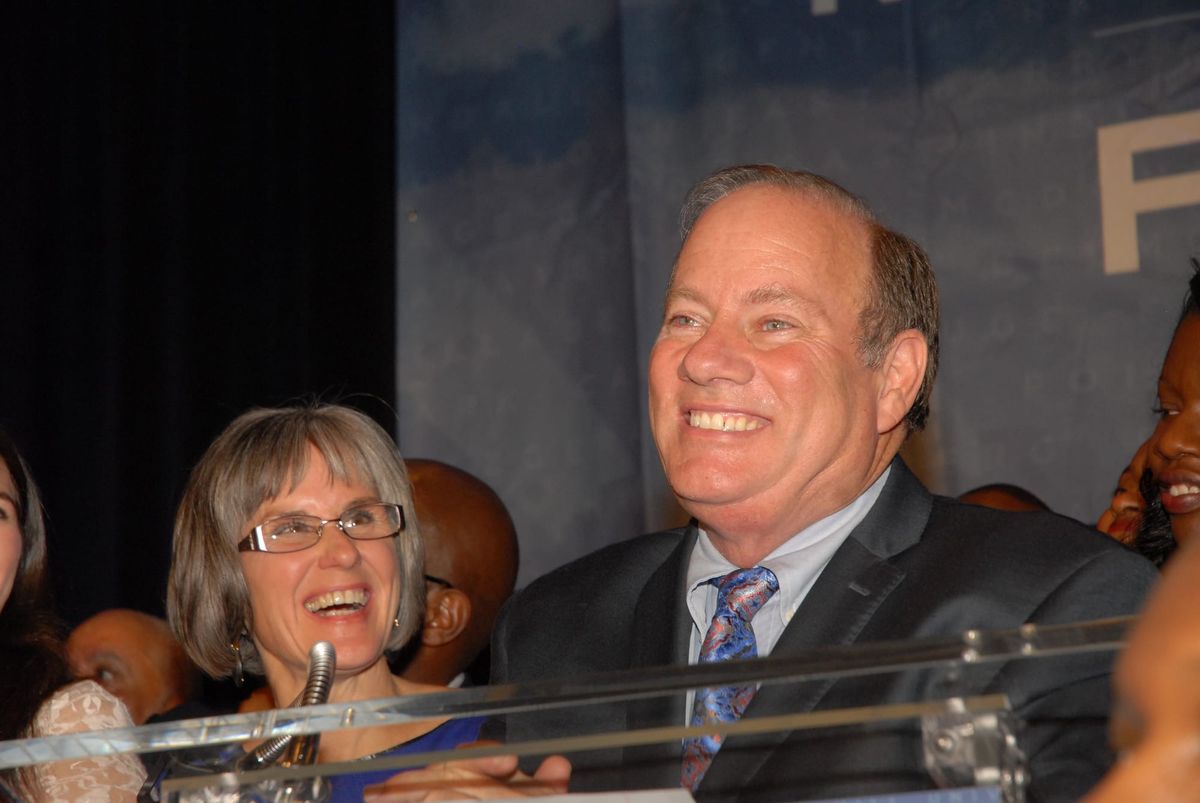
In recent polling, Duggan is seeing double-digit support, hovering just under 15% depending on the candidates who come out of the major party primaries. His fundraising has also kept pace with the major party candidates ($4-$5m range for the expected winners).
Polling Shows Nearly a Third of Independent Voters Plan to Sit Out 2026 Elections
A recent Ipsos poll from April 24-27 highlighted some trends among the independent electorate:
- The top issue for polled independents (25%) is the economy, which is no surprise. Interestingly, corruption came in second (13%).
- 72% of independents polled believe the country is headed in the wrong direction. This is 18% lower than Democrats and 39% higher than Republicans.
- This statistic aligns with independent approval rating for President Trump, which was 74-24 disapproval/approval among independents in the poll
- This feeling isn’t necessarily translating into a desire to vote, with 30% of polled independents saying they plan to sit out the ‘26 election
- Immigration was a major issue among independents in the ‘24 presidential exit polls. 61% of Independents polled disapprove of the President’s handling of the issue, though Republicans have a +4% edge over Democrats among this cohort on trust in handling the issue.
- On the economic front, 23% of polled Independents prefer Democrats on cost-of-living issues, while 17% prefer Republicans.
A Quick Reform Roundup
California
More Choice California is leading the opposition against a proposed repeal of the state’s nonpartisan Top Two primary system. They’re promoting two initiatives: one ensuring a right to participate in all stages of an election for all voters; and one to expand the Top Two voting system to a Top Four voting system. Read more about it here.
 Shawn Griffiths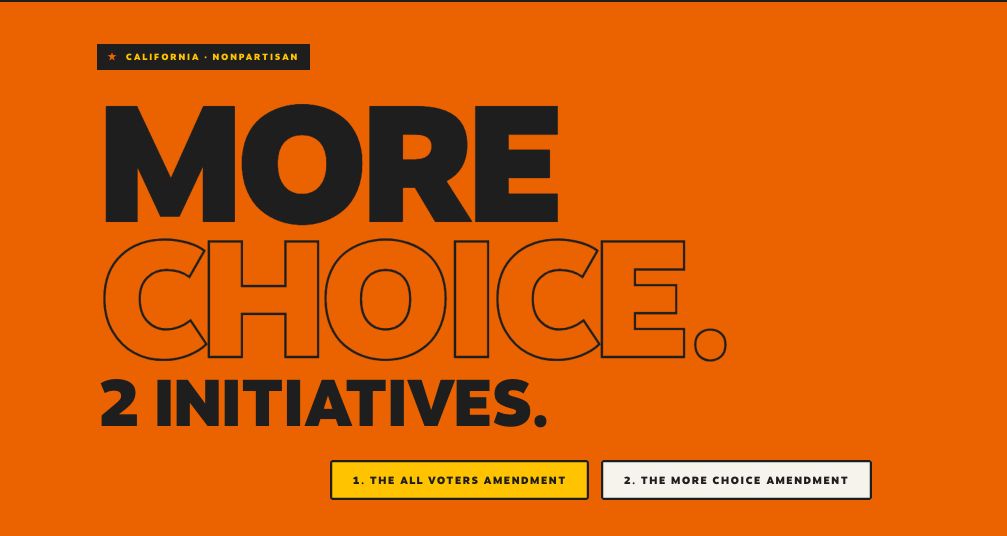
Editor's Note: IVN is co-published by Independent Voter Project, a leading participant in the More Choice California coalition.
Maryland
Gov. Wes Moore signed SB848/HB1448 on May 12, encoding ranked choice voting into Maryland law for the first time. Along with imposing new election administration procedures, the bill sets requirements for municipalities that want to use the voting system.
Check out this breakdown from FairVote of the bill and what it means for ranked choice voting in the state.
Hawaii and Montana
Hawaii and Montana are at the forefront of a fight against the Citizens United ruling that paved the way for near-unlimited spending in elections by outside groups and corporations. The innovative legislation would not run against Citizens United, but would instead limit corporate charters within the state to limit their powers to spend in elections.
Hawaii legislators passed SB2471 on May 8; the bill is now with the governor. Advocates in Montana are currently collecting signatures to get the issue on the ballot.
States Continue to Attempt to Raise the Bar on Initiatives and Amendments
After the success of several ballot measures in recent years, some of which adopted legislation or constitutional amendments against the preferences of state legislatures, a number of states are attempting to change the process, adding additional requirements or increasing success thresholds.
North Dakota Constitutional Measure 2 would require constitutional amendments to receive a 60% supermajority to pass, up from a simple majority. South Dakota’s Constitutional Amendment K would establish the same threshold. A similar measure in Utah would raise the requirement for any citizen-initiated ballot measure that creates new taxes, increases existing taxes, or creates a property tax.
Term Limits Are on the Ballot in North Dakota
Constitutional Measure 1 in North Dakota would establish term limits for the state legislature (four complete 4-year terms, regardless of chamber). The measure authorizes the legislature to amend term limitations.
(Ballot initiatives across the country are tracked in many places, including ballotpedia.)