
image courtesy SacramentoRiverDelta.net
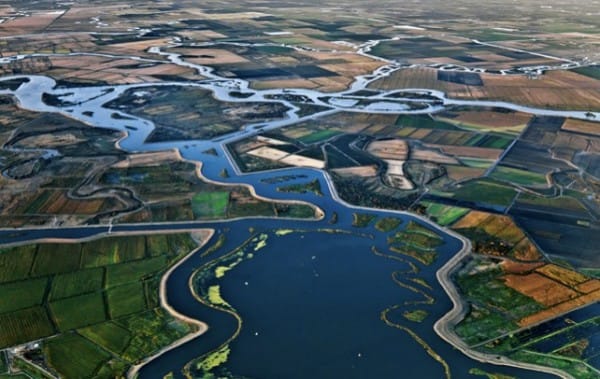
In a push to provide more water for agribusiness and residents of southern California, Governor Jerry Brown has proposed a pair of 40 mile tunnels to move water from the Sacramento River Delta to the town of Tracy, a project with a price tag anywhere from $24 to $50 billion in construction, conservation and operational costs. The tunnels are the centerpiece of the Bay Delta Conservation Plan, a program designed to balance the water needs of communities and ecosystems around the Bay with those of southern California. Considering that local pumping of the Delta has already been restricted in recent years due to impact on fisheries, how will such an increase in water demand impact the Delta, local economies both north and south and, overall, the State of California budget?
Environmental impact: Whence the fishes?
The current Delta tunnel plan is essentially a revision to the original “peripheral canal” that Brown proposed in his first term as governor, and that voters defeated in 1982. Growing urban water consumption and years of droughts have given the proposal a new lease on life, but it remains dogged by the same environmental concerns as before.
Perhaps most obvious is the impact of the tunnels, or “conveyance system,” on fish and wildlife; excessively draining the watershed poses an existential risk for recreational and commercial fisheries of Chinook and steelhead salmon as well as a threat to their related food chain. Throughout the conveyance system planning process, the California Department of Fish and Game, National Marine Fisheries Service and US Fish and Wildlife Service have warned that fisheries could be irreparably harmed by the new development, and have argued that the methodologies used by the Bay Delta Conservation Plan understate the tunnel’s fish footprint.
Nonetheless, the Brown administration maintains that the BDCP will not only spare the salmon from extinction, it will in fact “improve the status of a wide variety of listed species and species of concern under the Endangered Species Act.” To be fair, the plan for the conveyance system budgets $10 billion toward habitat restoration, so that claim might have some merit. However, the fact that the plan includes a 50-year exemption from the very same Endangered Species Act throws the BDCP’s credibility into question.
State agencies are currently working on an Environmental Impact Report for the BDCP in compliance with the California Environmental Quality Act and the National Environmental Protection Act. Results have not yet been released, but up until now almost every account holds that the conveyance system will have a net negative impact on the Delta ecosystem. So then, will the economic benefits of the Bay Delta Conservation Plan outweigh the environmental costs?