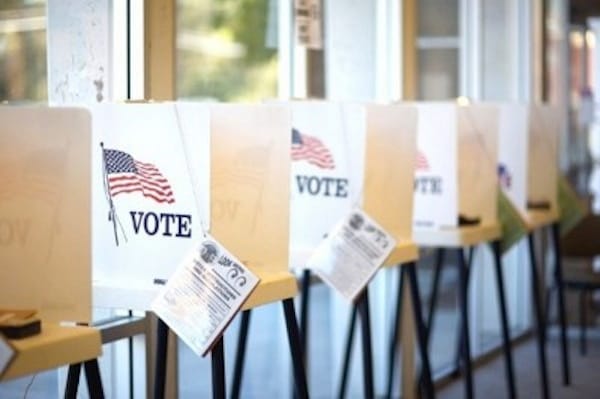
The voter registration process in America had remained relatively stolid, unaltered, and outdated until technology advanced enough for its progression. With the advent of the internet, automated databases, as well as same day registration, the registration process now technically allots for more lax deadlines. These methods are referred to as “Voter Registration Modernization,” or VRM, of which nearly every state has adopted some form.
Much like people, states tend to follow trends – once one state is on to something that works, others follow suit. Today, voters can still register the “old fashioned” way, but newer voter registration practices have made it simpler to register, even weeks out from elections.
As a result of a 2002 federal law, almost every state now has or will have a computerized voter registration database that would allow information to be shared with other government databases. According to the Brennan Center for Justice, in twenty-two states, including California; voter registration is automated through the DMV. This may seem basic, but ultimately streamlines the process, and it makes perfect sense. Not only do these DMVs use an automated system to register voters, but in thirty-eight states they sign up legal-aged men for selective service as well [Source: Brennan Center for Justice].
The shift to modernize the voter registration process is constantly progressing. As recently as May of 2012 The House of Representatives introduced the Voter Empowerment Act, which marks the first federal bill including a proposal for the modernization of voter registration.
The stated purpose of the Voter Empowerment Act is:
To modernize voter registration, promote access to voting for individuals with disabilities, protect the ability of individuals to exercise the right to vote in elections for Federal office, and for other purposes.
The internet has obviously played an important role in VRM. Sixteen states, including California, currently or will soon allow voters to register online. Also, thirty-four states provide an online voter information database, where voters can pull up their pertinent voting information [Source: Brennan Center for Justice]. Luckily for those who put off registering to vote until the last minute, ten states allow voters to register or update their information, while North Carolina, Ohio, and the District of Columbia allow same day registration.
How does one utilize methods of VRM in lieu of absentee voting?
Absentee voting is an unfamiliar process to most Americans. Voting as an absentee has also been greatly affected by this shift to VRM, as in the past the whole process would involve strictly the use of mail delivery for absentee ballot forms. Now citizens can log on to their state government's website from any location, foreign or domestic, to register to vote as an absentee pending access to the internet and a valid address. Once on the website, voters enter their personal information, which is typically on file from previous elections. After this is completed, absentee voters then mail their forms to a specific address typically no later than a few days before the election (varies nationwide).
VRM methods have proven to be very cost effective, as the prices for government hard copy forms become nonexistent. For one, it is a relatively modest investment that will save states thousands in the long run. The Brennan Center for Justice shows that:
Washington invested nearly $280,000 to switch to automated voter registration at the DMV, saving the Secretary of State’s office over $125,000. Delaware also made some major improvements to its electronic voter registration system at DMVs, which saved the state over $200,000 in one election budget.
Even Canada is jumping on board, which impressively gained its VRM costs in one election cycle.
State governments' movement towards VRM arguably allows access to more voters than traditional methods. With 245.2 million Americans using the internet (a close second to China's 513.1 million), it seems only natural for states to switch to technologically advanced voting. Utilizing all the methods mentioned prior, Voter Registration Modernization provides further insight to how voter registration shall progress with technology.