Skip to content
Subscribe

US Treasury Sells Last AIG Shares

Published:

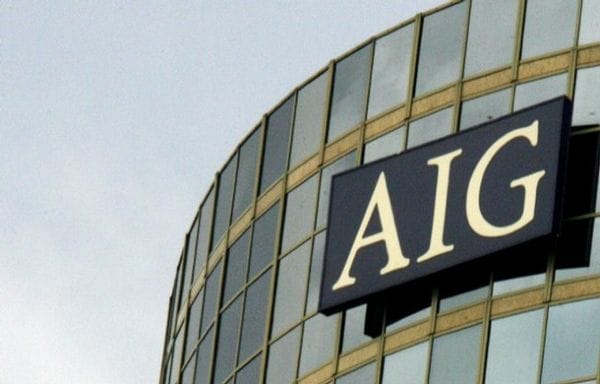
Released this morning, the US Treasury announced that it will sell its remaining 23.4 million shares of American International Group at $32.50 per share, totaling almost $7.6 billion. The sale confirms an overall return of $22.7 billion to the federal government, after the initial AIG bailout cost taxpayers $182.3 billion. As the government ends its 16% ownership of AIG, taxpayers are speculative of the institution's underlying fiscal health.

To address the issue, the Treasury department stated,

"Since the financial crisis, AIG has undertaken a dramatic restructuring effort, which put it in a stronger position to repay taxpayers. The size of the company has been cut nearly in half as it sold non-core assets and focused on its core insurance operations. AIG's Financial Products unit (AIGFP) is continuing to be wound down and has cut its legacy derivatives exposure by more than 93 percent to date."

The AIG bailout constituted about 43 percent of federal funds distributed under the Troubled Assets Relief Program (TARP). According to the Treasury, to date "more than 90 percent ($380 billion) of the $418 billion funds disbursed for TARP have already been recovered" from industry repayments and other income.

This marks a positive milestone for the program, which has undergone much public scrutiny since its enactment in 2008. In its annual report to congress regarding TARP, the Treasury found,

"... [T]he Troubled Asset Relief Program has worked: it helped stop widespread financial panic, it helped prevent what could have been a devastating collapse of our financial system, and it did so at a cost that is far less than what most people expected at the time the law was passed."

Alongside the Treasury's report, AIG President and CEO Robert H. Benmosche released a statement saying, "We are very pleased to repay 100 percent of all that America invested in AIG plus a total combined positive return or profit of $22.7 billion."

Although $38 billion in TARP funds remain to be paid back, the figure could be misleading. A Government Accountability Office report from March suggested that nearly half of capital purchase payments under TARP were from publicly-funded programs funneled through banks. "As of January 31, 2012, 341 institutions had exited CPP, almost half by repaying CPP with funds from other federal programs."

AIG's fiscal position appears to be fairly strong, especially when compared to several years ago. However, whether or not the TARP program has actually solved underlying institutional hazards, or simply papered over them remains debatable.

Adhere to the IVN etiquette

By posting a comment, you agree to adhere to our etiquette rules: No partisan attacks, no personal attacks, substantiate your sources, no self-promotion.

Contact IVN

Questions about this article or our coverage? Send us a message. A free IVN member account is required.

Message sent

Thanks, we’ll review it and get back to you if needed.

Message not sent

Sorry, something went wrong. Please try again.

Sign in to send a message

Messages are tied to your IVN member account. Signing in is free and takes a few seconds.

Republish this article

Republishing guidelines

Republish IVN articles for free. Independent Voter News articles may be republished online or in print under a Creative Commons BY-NC-ND 4.0 license, on these terms:

  1. Credit the author and IVN. Keep the byline ("By Author Name, Independent Voter News") and the attribution note at the end, which links to the original.
  2. Keep the meaning. You may update time and place references and apply your house style. You may trim for length, as long as the cuts don't change the meaning or misrepresent the author. Keep the headline. Mark any additions as your own (for example "Additional reporting by ...").
  3. Translations are welcome. Translate faithfully, add "Translated from English by [your outlet]", and tell us at editor@ivn.us.
  4. Keep the links, including the link to the original article.
  5. Keep the tracking image. The HTML includes a 1-pixel image that counts readers on your page. It collects no personal information.
  6. Photos and illustrations. Images credited to IVN may be used with this article only. Images credited to others (AP, Getty, Unsplash, Wikimedia and so on) stay under their owners' terms. Secure the rights or switch "Include images" off.
  7. Don't sell it. You can't sell our articles or sell ads specifically against them. Your normal site advertising is fine.
  8. No implied endorsement. Don't suggest that IVN or the author endorses you, your candidates or your causes, or that donations to you support IVN.
  9. Keep labels. Opinion or analysis pieces keep that label.
  10. Point search engines to the original. Where your CMS allows, set the canonical URL to the original IVN article.
  11. No bulk or automated republishing, and don't submit our articles to aggregators (Apple News, Google News, MSN) as your own.
  12. Corrections and removals. Update your copy when we correct it, and remove it promptly if we ask. We'll contact you at the email you give us.
  13. Questions or print republication: editor@ivn.us.

IVN staff: fill in who you're inviting above, then create the invite.

Preparing the article

US Treasury Sells Last AIG Shares

Choose a format
  • HTML
  • Email HTML
  • Markdown
  • Formatted (.docx)
  • Plain text
  • WordPress blocks
  • PDF
Choose a platform

Photos credited to others need their owners' permission.

To for

Republishing somewhere else? Questions? editor@ivn.us