Last week I traveled to Kansas for an appearance at the Robert J. Dole Institute of Politics at the University of Kansas. Nestled in the hills of Lawrence (seemingly the only hills in this flattest of states), the Institute building is a striking structure, framing a towering stained glass rendering of the American flag.
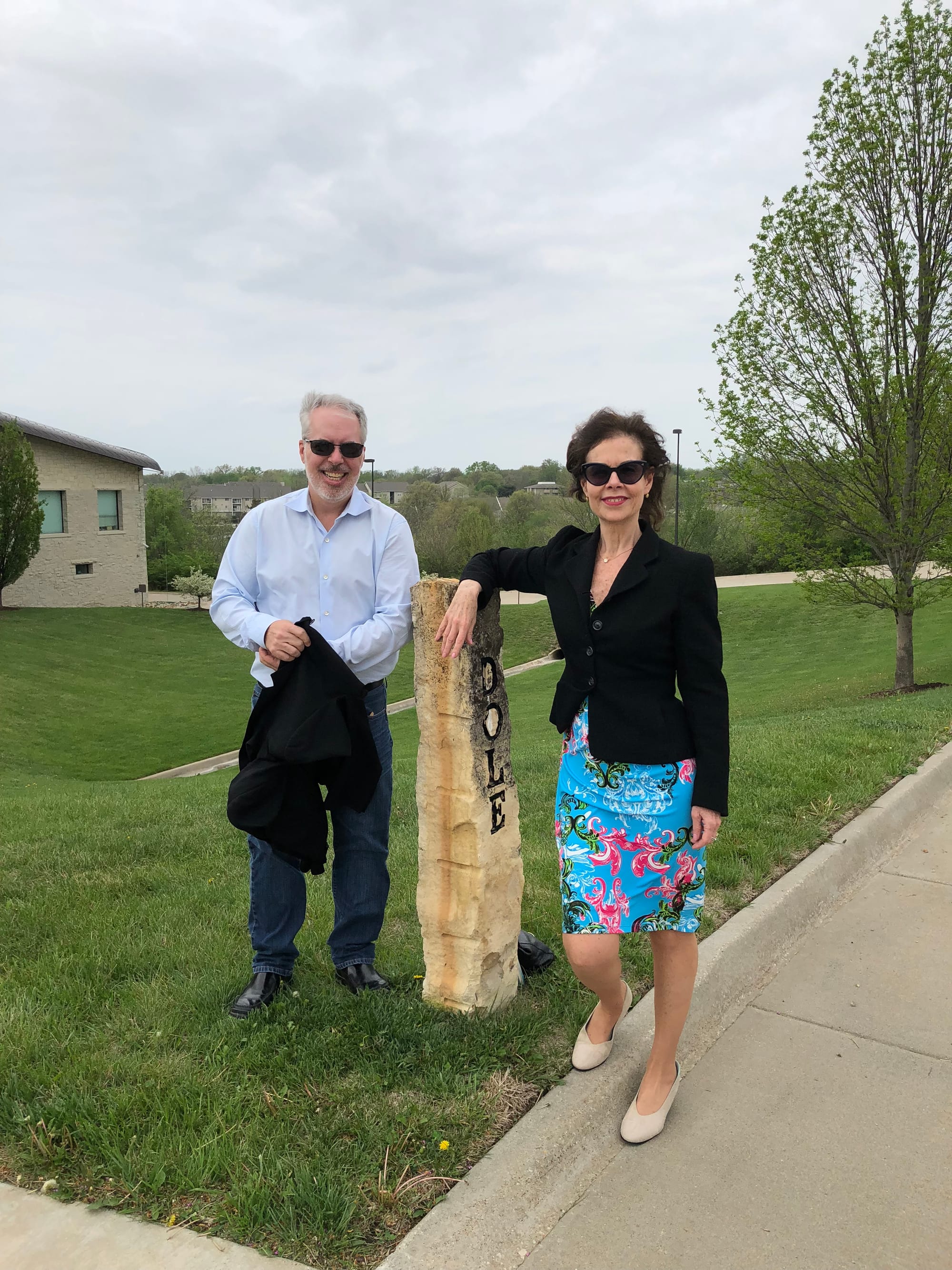
But for all its modernism, on the path to the main entrance, there is a four-foot stone hitching post from the original Dole ranch. The post is weathered, a clear reminder of the state’s deep agrarian roots, where the prairie was turned to farmland. Image: National Association of Nonpartisan Reformers Executive Director Jim Jonas (left), Independent Voting President Jackie Salit (right)
These roots intertwine with the state’s bloody anti-slavery history. It was known as Bleeding Kansas before the Civil War, and its citizens, especially in Lawrence, shed much blood to keep it a free, rather than slave, state.
The Dole Institute had commissioned Jim Jonas, a former Republican and now the Executive Director of the National Association of Nonpartisan Reformers, to curate and host a series of interviews under the title “Rise of the Independents” with figures in the movement to discuss the prospects for nonpartisan reform and independent politics.
I was among them, the last speaker in the series, and Jim Jonas was an engaging interviewer. Many thanks to the team at Dole for supporting Jim in pursuing these cutting-edge conversations about a new political frontier.
Later that day, perhaps prophetically, Jim and I were invited to visit the studios of Kansas Public Radio to tape a segment of “KPR Presents” with Kaye McIntyre. I say “prophetic” because the Dole Institute is aligned with conservative Republicanism (old-style, pre-Tea Party, pre-Trump) and KPR is aligned with the Democratic liberalism side of things.
The day was shaping up to be a microcosm of America’s political divide, but in this instance, the independents were fully present. Image: National Association of Nonpartisan Reformers Executive Director Jim Jonas (left), Independent Voting President Jackie Salit (right)
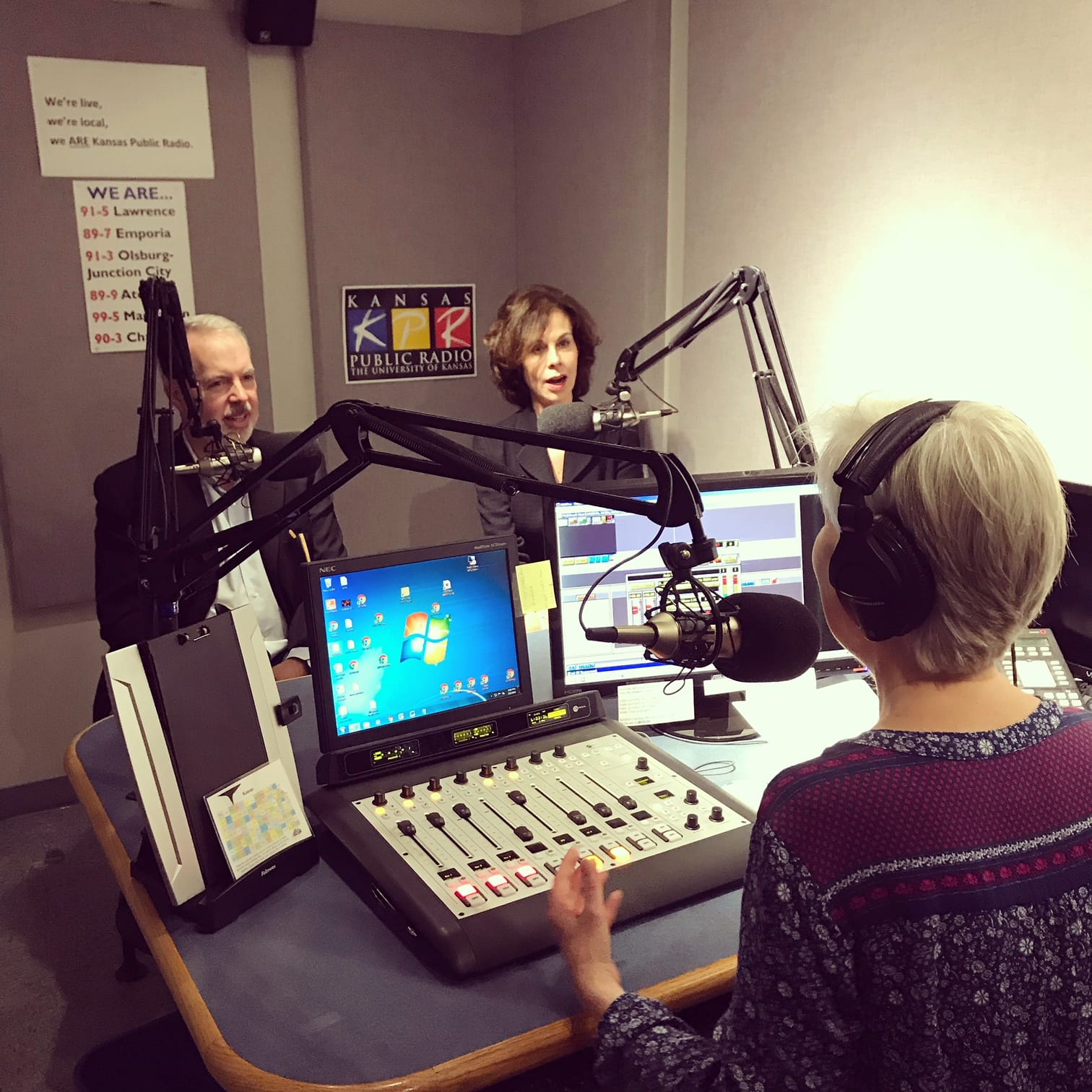
Once in the studio, Kaye McIntyre was dogged (truly in the best sense) in trying to unpackage the proposition that independents belong in the body politic and that the playing field should be leveled to make sure their participation matters.
In Kansas, for example, 30% of voters are non-aligned, but the state and the political parties ban these independents from voting in primaries. In a state as “red” as Kansas, most elections are decided in the primary, and so nearly a third of the electorate is marginalized.
Nationally, 44% of voters self-identify as independents. In 2016, over 25 million of them lived in states where you are required to join a party in order to cast a ballot in the first round of voting.
In spite of these barriers, the independent share of the electorate continues to grow. Jim and I painted a picture of how this voting rights gap had to be closed.
After a while, the KPR conversation turned to the topic of independent candidates and the difficulties they face in running competitive campaigns. Jim had been the campaign manager for Greg Orman’s nearly victorious U.S. Senate bid in 2014 and had firsthand experience with the legal and other barriers independents face.
He’d also dealt with the omnipresent media bias, the rampant attempts to paint Orman — a respected business leader and political independent — as a flake or a spoiler who stood for nothing.
I’d seen Orman that morning when Cathy Stewart, my colleague at Independent Voting, and I drove out to Olathe to visit with him. We spent some time talking about the newest versions of these attacks, now that Orman had announced his run for governor of Kansas as an independent.
Some Kansas Democrats were already insisting that any alternative to Trump and his Kansas protégé Kris Kobach (the possible Republican nominee) had to be a Democrat. With his eye for hypocrisy, Orman pointed to the record of the 111th Congress (January 2009-January 2011).
In his distinctly flat Kansas twang, Orman animatedly explained that the 111th — when Democrats controlled both houses and the White House — failed to pass comprehensive immigration reform or the Dream Act.
Why then, we felt, should anyone automatically defer to Democrats when there is an independent option? Anything that might stand in the way of a “blue wave” is frightening to the powers that be.
A big conversation in the independent movement these days is how to create the infrastructure necessary to capture an independent wave, and to channel it into a more powerful force.
In the KPR studios, Kaye McIntyre questioned us about this. Jim was ardent about the importance of creating the infrastructure — donors, databases, media experts, vendors — to aid independent candidates in winning. He’s currently the Executive Director of the National Association of Nonpartisan Reformers which aims to generate these tools.
I concurred with Jim’s prescription but added my own twist.
I told the story of Ross Perot’s appearance on the “Larry King Show” on CNN on February 20, 1992. The wiry billionaire Texan told King: “We’re the owners of this country, we don’t act like the owners, we act like white rabbits that get programmed with messages coming out of Washington.”
He dangled the idea of an independent presidential bid and said the American people would have to carry the ball to make it real. Millions of people called in the first 24 hours.
This is a story about building independent infrastructure, I explained. It isn’t an activity that belongs solely to professionals and entrepreneurs, however independent they might be.
It’s also a building process carved out by masses of people who — when they move in a particular direction — can create a vast infrastructure to support independent candidates, or voting reform, or any kind of disruption or reconstruction of the political system.
Look at what happened in 2016 with Bernie Sanders and Donald Trump. Think of what could happen when independents rise outside of the parties.
When the KPR interview was over, we left the building, heading out to dinner in downtown Lawrence. The sky was darkening behind the hills and the wind was whipping. We’d heard there was a tornado watch underway, and we hurried to Jim’s rental car.
I checked the sky as we drove toward Massachusetts Street, just barely ahead of the downpour rolling in from the east.
This time there were no twisters, as it turned out. But I found myself thinking, there could be a tornado coming. It could be the independent movement. And, when it comes, it will hit the ground like a storm.