Photo: Gage Skidmore
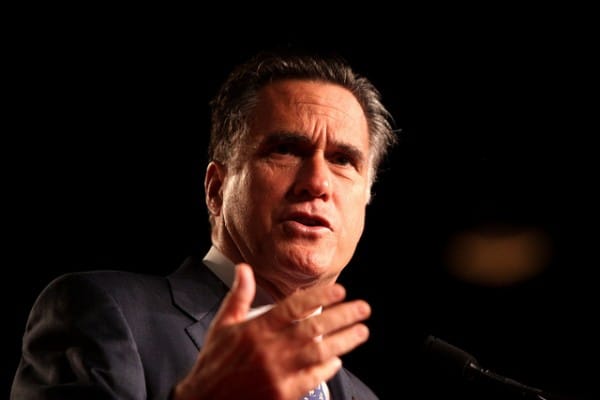
There are a number of things wrong with Mitt Romney’s now infamous suggestion that the 47 percent of Americans who don’t pay federal income tax will automatically support larger government, because those “who are dependent upon government, who believe that they are victims, who believe the government has a responsibility to care for them” can never be persuaded to “take personal responsibility and care for their lives.”
For one, as both Matt Yglesias and Ezra Klein note, the people who aren’t paying income tax are overwhelmingly either college-aged or elderly retirees who aren’t making much taxable income, not able-bodied layabouts in their 30s and 40s. In other words, they’re mostly not some distinct parasite class, but rather ordinary, hard-working people who either already have paid or will soon be paying quite substantial taxes.
The deeper mistake, however, is what social psychologists have dubbed the “fundamental attribution error”: the nigh universal human tendency to ascribe actions and outcomes to immutable personal characteristics rather than situational factors. We assume too quickly that someone behaves kindly or callously because they are a “kind person” or a “callous person”—yet research suggests that minor variations in circumstances can elicit either type of behavior from the very same people.
Presumably there are some people out there who really do just shun responsibility and think others should work to provide them with life’s necessities—but it’s hard to believe they’re more than a very tiny fraction of the millions who depend in some way on government benefits. Most of them are just responding rationally to the circumstances of the world they live in.
In a society where young people know they’ll soon be taxed to support educational subsidies, of course they’ll accept the government college loans they’ll later be expected to fund. In a society where the payroll taxes that support a government pension system leave workers with 15.3 percent less in their paychecks to save and invest for old age, of course they’re going to rely heavily on the system they’ve been paying into when they retire.
But to infer that this reveals something about people’s desire for big government is a little like wondering why 18th century Americans were so much fonder of agriculture than we are. People mostly live in the world that’s presented to them.
This is an equal opportunity observation, however. Progressives, after all, often make essentially the same fallacious argument as Romney, though usually not put quite as offensively: if you benefit from government largesse—whether in the form of direct supports like Social Security and Medicare, or because the state “generously” offers to spare your earnings through tax credits or deductions—then obviously you’re logically required to fall to your knees in gratitude, and you must be either confused or some kind of hypocrite if you perversely persist in supporting smaller government. Net recipients of government aid, in this view, ought to have the political commitments Romney wrongly ascribed to them.
All of this seems confused. People want goods like health care and financial security. In a social and political environment where those things are provided by government, people will accept them from government. In an environment where they’re provided by the private sector, people will acquire them privately. In the long run, the nature of the broader system will probably influence the frequency in the population of deeper character traits and dispositions like responsibility or resilience—but you can’t legitimately infer a whole lot about people’s preferences between systems from their behavior within systems.
–
This article, originally published at Cato at Liberty by Julian Sanchez, is reprinted with permission from the Cato Institute.
(More IVN coverage on the secretly-taped Mitt Romney fundraiser video here.)