Skip to content
Subscribe

Student Loan Forgiveness and Economic Stimulation

Published:

Credit: rhl.org

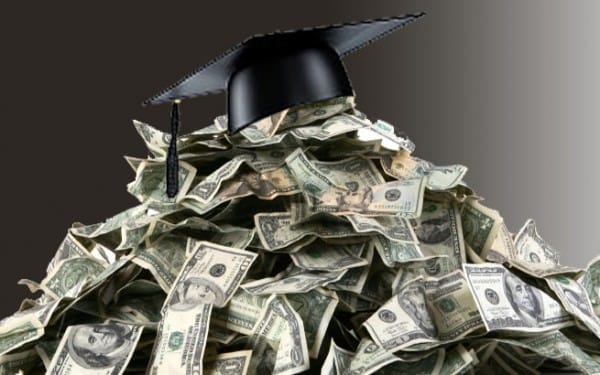
Rising tuition costs are weighing down college students. Financial aid such as grants, scholarships and loans are available for students who apply and receive the awards. However, the "free" money given to pay for college is sometimes not enough and students turn to loans to cover the ever rising costs. Relieving student debt has consistently reached the political debate and the Student Loan Forgiveness Act continues the debate.

Rep. Hansen Clarke of Michigan authored the Student Loan Forgiveness Act of 2012 (H.R. 4170). The main provision of the bill is the 10/10 Repayment Plan, which caps monthly payments at 10% of the debtors' discretionary income. If payments are made for 10 years, then loan forgiveness can be granted. One stipulation is that the forgiveness must not exceed $45,520 plus its interest. The bill will also freeze federal student loan interest rates at 3.4 percent. President Barack Obama has recently extended the interest rate cap for another year. US News made a detailed analysis of the bill.

Rep. Hansen Clarke himself drew a comparison to the housing market crisis,

Students who studied hard, played by the rules, and are now desperate to find work are being denied basic opportunities and are, accordingly, falling behind on payments. They are finding that their degrees, like homes at the height of the real estate bubble, were vastly mispriced assets that are now hard to finance.

John Shinal of the Wall Street Journal's Market Watch advocates student loan forgiveness as a way to stimulate the economy. The relief would be comparable to a tax cut, where the increased money in people's pockets will stimulate the economy. Shinal acknowledges that its effectiveness relies on consumer spending. The spending would bring a struggling economy back to its feet and open up more jobs, which are jobs graduates can excel in. This logic is not ground-breaking or new. However, he takes the perspective of a stock investor and makes the comparison of student loan forgiveness to bailing out major banks.

It’s worth pointing out that students who are working but can’t pay their loan bills are no more at fault for their predicament than all the investment managers at commercial banks that bought toxic derivatives from Wall Street. If those banks deserved a bailout by the U.S. taxpayer, surely the young people of America who’ve earned a college degree deserve the same consideration.

Student debt is not just a problem in the United States. Chilean students have taken an aggressive stance for their education. The National Turk compiled protests and riots in an article, concluding 3 buses were burned and 49 police officers were injured. The article states,

Student leaders want to change the tax system so the rich pay more. They also want the state back in control of the mostly privatized public universities to ensure quality. They say change will come only when the private sector is regulated and education is no longer a for-profit business.

Total student debt in the United States is at around $900 billion. Just seven years ago, that number was $360 billion. The rise in total student debt grew at a faster rate that mortgage balances from 1999 to 2006.

Pursuing higher education may lose its appeal considering its concurrent burdens. In a struggling economy where jobs are scarce and student debt is high, perhaps something must be done to assist our successful students.

Adhere to the IVN etiquette

By posting a comment, you agree to adhere to our etiquette rules: No partisan attacks, no personal attacks, substantiate your sources, no self-promotion.

Contact IVN

Questions about this article or our coverage? Send us a message. A free IVN member account is required.

Message sent

Thanks, we’ll review it and get back to you if needed.

Message not sent

Sorry, something went wrong. Please try again.

Sign in to send a message

Messages are tied to your IVN member account. Signing in is free and takes a few seconds.

Republish this article

Republishing guidelines

Republish IVN articles for free. Independent Voter News articles may be republished online or in print under a Creative Commons BY-NC-ND 4.0 license, on these terms:

  1. Credit the author and IVN. Keep the byline ("By Author Name, Independent Voter News") and the attribution note at the end, which links to the original.
  2. Keep the meaning. You may update time and place references and apply your house style. You may trim for length, as long as the cuts don't change the meaning or misrepresent the author. Keep the headline. Mark any additions as your own (for example "Additional reporting by ...").
  3. Translations are welcome. Translate faithfully, add "Translated from English by [your outlet]", and tell us at editor@ivn.us.
  4. Keep the links, including the link to the original article.
  5. Keep the tracking image. The HTML includes a 1-pixel image that counts readers on your page. It collects no personal information.
  6. Photos and illustrations. Images credited to IVN may be used with this article only. Images credited to others (AP, Getty, Unsplash, Wikimedia and so on) stay under their owners' terms. Secure the rights or switch "Include images" off.
  7. Don't sell it. You can't sell our articles or sell ads specifically against them. Your normal site advertising is fine.
  8. No implied endorsement. Don't suggest that IVN or the author endorses you, your candidates or your causes, or that donations to you support IVN.
  9. Keep labels. Opinion or analysis pieces keep that label.
  10. Point search engines to the original. Where your CMS allows, set the canonical URL to the original IVN article.
  11. No bulk or automated republishing, and don't submit our articles to aggregators (Apple News, Google News, MSN) as your own.
  12. Corrections and removals. Update your copy when we correct it, and remove it promptly if we ask. We'll contact you at the email you give us.
  13. Questions or print republication: editor@ivn.us.

IVN staff: fill in who you're inviting above, then create the invite.

Preparing the article

Student Loan Forgiveness and Economic Stimulation

Choose a format
  • HTML
  • Email HTML
  • Markdown
  • Formatted (.docx)
  • Plain text
  • WordPress blocks
  • PDF
Choose a platform

Photos credited to others need their owners' permission.

To for

Republishing somewhere else? Questions? editor@ivn.us