Skip to content
Subscribe

States Strike Back: CA Takes Action on Home Foreclosures

Published:

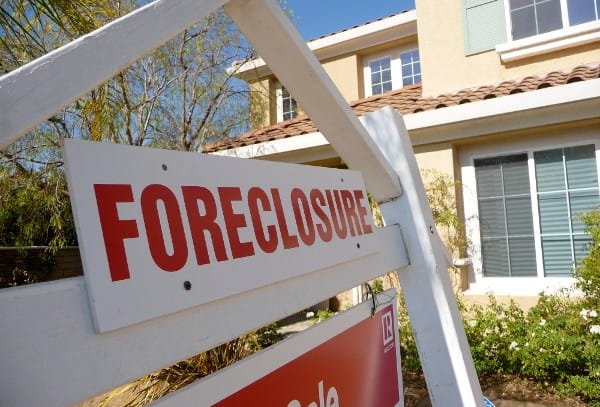
The California legislature passed a landmark bill Monday strongly regulating how banks handle home foreclosures. The legislation bans dual tracking, the odious practice where lenders pursue home foreclosure while negotiating with homeowners about modifying mortgage terms. Robo-signing-- falsifying signatures-- on mortgage documents is now illegal. The state and private citizens can now sue financial institutions for violating the law. Finally, loan servicers and banks must provide a single point of contact for clients.

These are badly needed regulations. Dual tracking too often was just a pretext. The loan servicer would pretend to be negotiating with the homeowner while instead focusing on foreclosure. That deceptive maneuver is now prohibited. Robo-signing, the deliberate use of fraudulent signatures in thousands of documents should have been and probably always was illegal. But the new California law makes it bluntly clear and mandates criminal penalties. That such a law needed to be spelled out so clearly simply shows how evasive, uncooperative, and sometimes criminal our financial institutions have been in the home foreclosure crisis.

Banks often do not want distressed properties to be sold or foreclosed. Through a number of quite legal transactions, they can transfer ownership to a subsidiary, sometimes by a deed in lieu of foreclosure:

"In general, banks have devised ways to perform financial alchemy," said Ken Thomas, a Miami economist and bank analyst. "They take a problem loan and, through different legal actions, turn it into a non-problem loan."

In the wake of the financial crisis, FASB suspended mark-to-market and allowed values based on cash flows, leading some to call such a practice “mark-to-fantasy” and “pretend and extend” because it doesn’t solve the underlying issues.

The California legislation, which has not yet been signed by Gov. Brown, makes this process more difficult for banks to do.  Banks must either negotiate terms or foreclose. They cannot do both. Further, oversight has been increased, with penalties for dodgy behavior.

Many other states are considering tougher mortgage regulation too, a process strongly resisted by banks who say it will raise costs for all:

"Should all 50 states decide to go down their own path, lenders are going to have multiple processes, each with their own little nuances, and every single penny of that cost will be borne by tomorrow's borrowers," said David Stevens, chief executive of the Mortgage Bankers Association.

But the individual states already have individual laws on mortgages and costs are often absorbed by corporations in order to remain competitive. So this is really a non-argument.

Our entire financial system is in need of reform. The California mortgage reform bill is an important first step.

Adhere to the IVN etiquette

By posting a comment, you agree to adhere to our etiquette rules: No partisan attacks, no personal attacks, substantiate your sources, no self-promotion.

Contact IVN

Questions about this article or our coverage? Send us a message. A free IVN member account is required.

Message sent

Thanks, we’ll review it and get back to you if needed.

Message not sent

Sorry, something went wrong. Please try again.

Sign in to send a message

Messages are tied to your IVN member account. Signing in is free and takes a few seconds.

Republish this article

Republishing guidelines

Republish IVN articles for free. Independent Voter News articles may be republished online or in print under a Creative Commons BY-NC-ND 4.0 license, on these terms:

  1. Credit the author and IVN. Keep the byline ("By Author Name, Independent Voter News") and the attribution note at the end, which links to the original.
  2. Keep the meaning. You may update time and place references and apply your house style. You may trim for length, as long as the cuts don't change the meaning or misrepresent the author. Keep the headline. Mark any additions as your own (for example "Additional reporting by ...").
  3. Translations are welcome. Translate faithfully, add "Translated from English by [your outlet]", and tell us at editor@ivn.us.
  4. Keep the links, including the link to the original article.
  5. Keep the tracking image. The HTML includes a 1-pixel image that counts readers on your page. It collects no personal information.
  6. Photos and illustrations. Images credited to IVN may be used with this article only. Images credited to others (AP, Getty, Unsplash, Wikimedia and so on) stay under their owners' terms. Secure the rights or switch "Include images" off.
  7. Don't sell it. You can't sell our articles or sell ads specifically against them. Your normal site advertising is fine.
  8. No implied endorsement. Don't suggest that IVN or the author endorses you, your candidates or your causes, or that donations to you support IVN.
  9. Keep labels. Opinion or analysis pieces keep that label.
  10. Point search engines to the original. Where your CMS allows, set the canonical URL to the original IVN article.
  11. No bulk or automated republishing, and don't submit our articles to aggregators (Apple News, Google News, MSN) as your own.
  12. Corrections and removals. Update your copy when we correct it, and remove it promptly if we ask. We'll contact you at the email you give us.
  13. Questions or print republication: editor@ivn.us.

IVN staff: fill in who you're inviting above, then create the invite.

Preparing the article

States Strike Back: CA Takes Action on Home Foreclosures

Choose a format
  • HTML
  • Email HTML
  • Markdown
  • Formatted (.docx)
  • Plain text
  • WordPress blocks
  • PDF
Choose a platform

Photos credited to others need their owners' permission.

To for

Republishing somewhere else? Questions? editor@ivn.us