Credit: cpcml.ca
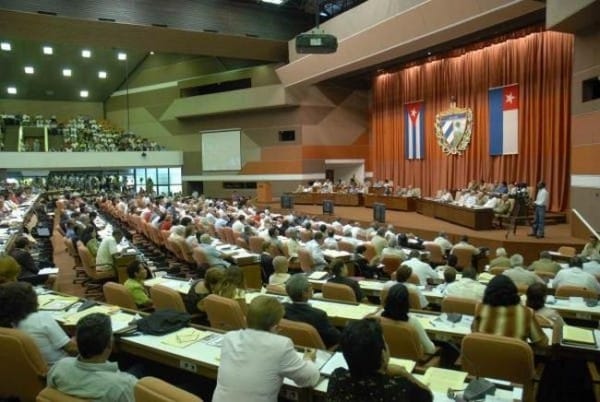
Easing economic sanctions on foreign countries like Cuba and North Korea could be a potential solution to the struggling US economy while fostering international cooperation and good will abroad.
Economic sanctions, or embargoes, are a step below war with another country and a step above normal, collaborative diplomacy. They represent the use or threat of military or police action to enforce a blockade against a country's economy or parts of its economy, preventing the free trade of goods and services between the people and businesses of the target nation and those of the nation or nations enforcing the embargo.
Sanctions are used to pressure governments into adopting certain policy reforms desired by the sanctioning country, and currently the United States has sanctions in place against Iran, North Korea, and its neighbor, Cuba, among others. The problem is that in unambiguous cost-benefit terms, the results show that sanctions are massive policy failures, ineffective at accomplishing their objectives, and humanitarian disasters.
According to a year 2000 UN-commissioned report for instance:
"The theory behind economic sanctions is that economic pressure on civilians will translate into pressure on the government for change. This theory is bankrupt both legally and practically."
The Free Trade Petition to the G20 Conference circulated by the Atlas Economic Research Foundation compellingly sums up the failure of trade barriers as instruments of foreign policy:
"A great deal of rigorous empirical research supports the proposition that trade promotes peace. Perhaps the most tragic example of what happens when that insight is ignored is World War II.International trade collapsed by 70 percent between 1929 and 1932, in no small part because of America’s 1930 Smoot-Hawley tariff and the retaliatory tariffs of other nations. Economist Martin Wolf notes that 'this collapse in trade was a huge spur to the search for autarky and Lebensraum, most of all for Germany and Japan.'The most ghastly and deadly wars in human history soon followed.By reducing war, trade saves lives."
Barriers to international trade fail to produce desired policy outcomes, tend to rally a country's people around their repressive governments against what they perceive as US hostility, lead to poverty and starvation among the poorest classes of targeted nations, foster ill-will against the United States, are historically precursors to more open military hostility, and are even bad for the economy of the sanctioning country...
According to data from the White House's export council in 2000:
"...the United States has imposed more than 40 trade sanctions against about three-dozen countries since 1993......those sanctions have cost American exporters $15 billion to $19 billion in lost annual sales overseas and caused long-term damage to U.S. companies-- lost market share and reputations abroad as unreliable suppliers."
Moving to ease sanctions on foreign countries and establish permanent normal trade relations with countries currently under economic blockade could go a long way toward fostering international good will while opening up valuable markets and economic opportunities for trade, stimulating growth and job creation in the US. It would be like a multi-billion dollar economic stimulus package that taxpayers wouldn't have to pay for and the US government wouldn't have to borrow money to finance, and its effects wouldn't be temporary, they would be permanent, systemic, and structural.
That stimulus of potentially tens of billions of dollars would come in year after year by way of free and undirected economic trade between the people of the United States and those of nations currently under an embargo. The structural and systemic nature of the policy reform, rather than a temporary shot in the arm like a giant borrow-and-spend appropriation from Congress (e.g. 2009's $800 billion "Stimulus Package"), would permanently shift economic behavior, inject some confidence in jittery markets, allow capital to flow to investments that will be the most productive, and create jobs that are more sustainable over the long term.
Independents can lead the way on a reevaluation of US sanctions as instruments of foreign policy because it's a policy solution that isn't frequently discussed in polarized, partisan media platforms. Where Americans don't agree ideologically, parties, organizations, and voters are gridlocked in a never-ending fight, but by examining certain policies on a non-ideological, cost-benefit basis, and taking a scientific, empirics-based approach, independents can show Americans a way forward with policy approaches we might all be able to support.