Photo: usnews.com
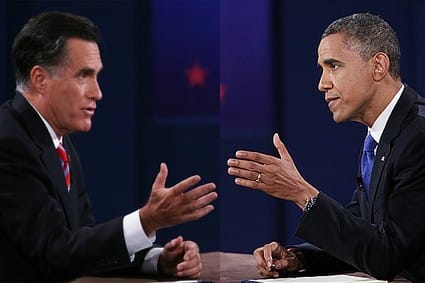
Tuesday morning, all the partisan commentariat is abuzz with differing interpretations and spin on the presidential foreign policy debate last night. Mr. Obama's sympathizers more or less, say he clearly won the debate. Mr. Romney's sympathizers say he won. One post debate poll shows Obama with a two-to-one lead over Romney. Another shows Obama leading, but by much less.
The problem is, there wasn't much of a debate for either candidate to win. It was more of a televised "agreement" than a televised debate. For all the talk of polarization, the foreign policy consensus between Washington's two biggest party establishments and their presidential candidates is so tight that there is substantively little to no difference on foreign policy between Barack Obama and Mitt Romney.
Though the struggle and clash between the two candidates is more entertaining, so most mainstream media sources are going to great lengths to emphasize it even where it doesn't really exist, in one pre-debate analysis at Politico, the writers were refreshingly on point:
the differences between the two men on many of the highest-profile issues — ending the Afghan war and the bloodshed in Syria — are too slight to draw sharp distinctions."
Their prediction turned out to be all-too-true. Glenn Greenwald's live blog of the foreign policy presidential debate tells the story:
"9.27pm: It's 27 minutes into the debate, and so far the two have agreed on far, far more than they've disagreed. In fact, I'm not certain that they have actually disagreed on anything yet."
Then seven minutes later:
Both candidates are eager to ignore the topic of this debate - foreign policy - in order to talk about the economybecause they don't really have much to disagree in the foreign policy area. And so they are now dispensing with any pretense and regurgitating their economics debate.
And halfway into the debate:
"9.43pm: Obama boasts of the massive amount of military spending under his presidency. Romney then says he wants to spend more. It is inconceivable that anyone would suggest that spending almost more than all other countries on the planet combined is excessive. That is the election in a nutshell."
Iran, Israel, Egypt, Syria, drones, DOD spending, US global hegemony as foreign policy... on down the list of foreign policy issues and zooming out for a broader look at US foreign policy in general, throughout this "debate," the candidates were eagerly competing, not for voters' support of differing foreign policies, but for voters' belief in each candidate's unwavering fealty to the exact same foreign policy consensus.
The debate wasn't about whose ideas are better, it was about who is better committed to the same idea, an idea that politicians and journalists treat as unquestionable, not up for serious debate. That's one reason why candidates like Jill Stein and Gary Johnson, who do have substantively differing foreign policy ideas, are not allowed into the televised presidential debates of the CPD despite appearing on enough states' ballots that they could actually win in November if enough voters heard and liked their message.
The purpose of this editorial isn't to take sides in the debate over foreign policy, but simply to point out that there should be a debate, that more than one side should be heard, and that the more ideas that are welcome to the table, the more dynamic our political process will be and the better policy results Americans will get.
Obama and Romney may be right about Iran, Israel, Egypt, and Syria. Their consensus on US foreign policy may be correct. But pretending that there isn't an actually rather tight foreign policy consensus between the two is pointless and unhelpful, except for media advertising dollars. And how will voters know for sure that the Obama / Romney consensus is correct unless the media allots competing ideas more than a token amount of usually derisive attention?