
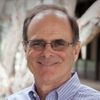
Rumors are circulating that San Jose Mayor Matt Mahan may enter the race for California governor. If the recently elected Democratic mayor makes the move, he could jolt a contest that, to date, has been remarkably sleepy.
With the 2026 candidate filing deadline only weeks away, and despite the entry of more than a dozen contenders, no one has managed to separate from the pack. Even Tom Steyer’s massive television and social media rollout appears to have landed with a thud. Multiple polls show only marginal gains into the low double digits, almost all of it coming at the expense of two fellow Democrats, Katie Porter and Eric Swalwell.
At this stage, polling reflects little more than name recognition and a massive bloc of undecided voters. The more active speculation in Sacramento is not about momentum, but about whether California’s Top Two primary could again produce two candidates from the same party in November.
That question matters because our increasingly hostile and dysfunctional national politics are not accidental. They are the product of behind-the-scenes partisan interests colliding with the perverse incentives baked into modern communication algorithms. Outrage travels faster than solutions.
California’s nonpartisan primary remains one of the most powerful tools voters have to push back against these dynamics. It weakens insider control and creates space, at least in theory, for candidates who can appeal beyond hardened ideological camps.
California has deep roots in this kind of political culture. The Progressive Era of the early twentieth century, led by Republican Governor Hiram Johnson, and the era of expansive public investment in education and infrastructure under Democratic Governor Edmund G. “Pat” Brown, helped build the most robust and diverse middle class in the world through the end of the twentieth century.
Over time, those reforms eroded. Special interests reasserted themselves. Infrastructure decayed through neglect. The social safety net became overwhelmed by inefficiency, inequity, and corruption.
Today, California leads the nation in the growth of poverty. We suffer from the highest unemployment rate in the country. The cost of living has crushed the middle class.
The first step toward fixing this is acknowledging that California was not always this way.
At its core, California is simply too expensive. The solution will not be simple or immediate, but it does require prioritization.
Housing costs overwhelm working-class family budgets. Every young person must be able to see a realistic path to homeownership, because homeownership remains the backbone of economic stability.
Energy costs are also too high. A rational climate policy does not require embracing a Silicon Valley mentality of moving fast and breaking things. We can transition responsibly from the past to the future while reducing dependence on costly, fire-prone transmission systems, without enriching speculators and impoverishing residents.
Finally, we must confront the link between unemployment, underemployment, and a state budget in persistent deficit. The only sustainable way to increase public revenue is through private-sector job growth. The businesses of tomorrow must want to locate here, and workers must be able to afford to live here.
This is a triage operation. We must stabilize the present urgently so we can address the larger questions we should already be debating. What should the work week look like as technology reshapes labor demand? How do we simplify health care delivery? How do we modernize education, job training, and childcare? Instead, we remain distracted by partisan efforts to divide us.
It should not be controversial to say we can walk and chew gum at the same time. We can protect every citizen’s right to vote while supporting reasonable voter identification requirements. We can enforce the border and deport criminal offenders while expanding guest worker programs, expediting DACA naturalizations, and offering a path to legal status for long-time, law-abiding residents. A functioning political environment allows room for disagreement, debate, and compromise.
Ultimately, the strength of a successful gubernatorial candidate will not be defined by what they are for or against. It will rest on who they are and how well they listen. If Mayor Mahan enters the race, his natural lane is substance and thoughtfulness, not left, right, or center.
There is no meaningful constituency in California for a mushy middle, and the lanes fueled by hysteria are already overcrowded. But there is real demand for a candidate who can fix things. Political consultants may cringe, but California has a long history of governors once dismissed as boring, including George Deukmejian, Pete Wilson, and Gray Davis.
Mayor Mahan has already positioned himself in this pragmatic lane during his campaign for mayor against a fellow Democrat. His short tenure has been viewed favorably by many locals. Still, he is largely unknown statewide and comes from the Silicon Valley business world that many blame for the very culture of disruption that now distorts political discourse. Tom Steyer’s muted reception should serve as a cautionary tale about mistaking money and momentum for authenticity.
Most important of all, the tone of any statewide campaign must be an authentic reflection of who Matt Mahan actually is.
If he declines to run and the field remains as it stands, the dark-horse candidates are not hard to identify. Two Republicans appear locked in. On the Democratic side, former Los Angeles Mayor Antonio Villaraigosa, State Controller Betty Yee, and former Assembly Majority Leader Ian Calderon each bring experience that could, in theory, be shaped into the kind of message that appeals to voters currently parked in the “none of the above” column.
However this race unfolds, one conclusion is already clear. It's time for More Choice in California. Nonpartisan top-four (or five) primaries that allow voters to rank more candidates in the general election are the next great nonpartisan reform as we fight to empower every voter, regardless of their party affiliation.