Skip to content
Subscribe

Kidnapping and Church Bombing Mark Libyan Violence

Published:

(Credit: printableworldflags.com)
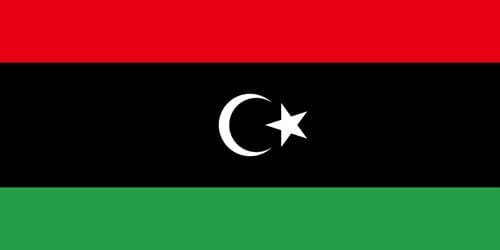
(Credit: printableworldflags.com)

Until the murder of US ambassador Christopher Stevens on September 11, 2012, many Americans had paid little attention to Libya since Moammar Gaddafi was deposed.

However, nearly two years after the start of the uprising that led to the strongman's ouster, and after a recent kidnapping and church bombing, the situation in Libya, although not front page stories in American media, reflects upon the environment that was introduced by the US decision to intervene.

The 2012 elections, the first in Libya in 40 years, produced a near-majority of thirty-nine parliamentary seats for the liberal coalition, out of eighty possible, and only seventeen seats for the Muslim Brotherhood's Justice and Construction Party. As such, many supporters of the NATO intervention believed that extremists would not have much influence in Libya.

However, militias still dot the landscape by operating in virtually independent fiefdoms, refusing to abandon their arms and support the government.

Libyan National Congress President Mohammed el-Megarif recently declared the southern half of Libya a "military zone" because of drug, people, and arms trafficking stemming from the civilian government's lack of  authority there.

South Libya borders Algeria and Niger and is near Mali, whose military coup last year and the severing of the northern end of the country to jihadists is traceable to the chaos created in Libya. A UN-approved and African-led intervention is in the works to oust the rebels there.

Right before Christmas, a report obtained by the UK Telegraph revealed that Christianity in the Middle East "was close to extinction" and "claims politicians have been 'blind' to the extent of violence faced by Christians in Africa, Asia, and the Middle East." The fear for many Christians in Libya is that with the lack of central authority to protect them, they will be among the first to face sectarian retribution by Islamists.

So, just before the new year, the bombing of a stone church in Dafniya, a village near Misrata, one of the areas where militias dominate, fulfilled some of those fears when two Coptic Christians were killed. This was the first acknowledged attack against Christians in Libya, a religious minority who are about three percent of the population, but whose presence in the country dates back to the Roman Empire.

After the bombing, the U.S. State Department issued a warning that "sporadic episodes of civil unrest have occurred throughout the country" and "U.S. citizens should avoid areas of demonstrations and exercise caution if in the vicinity of any large gatherings, protests, or demonstrations, as even demonstrations intended to be peaceful can turn confrontational and escalate into violence."

Also following the church bombing, and in a painfully transparent sign that the central government is weak, was the kidnapping of Benghazi police captain and investigative chief Abdel-Salam al-Mahdawi.

Al-Mahdawi was abducted at gunpoint and his current location is unknown. This is the second major security lapse for the Benghazi police hierarchy in the last two months. In November, Police Chief Faraj al-Deirsy was shot multiple times by unknown assailants and died.

Although most Americans are aware of the security situation that led to the demise of Ambassador Stevens last September, Libya, with the kidnapping and church bombing, still endures the consequences of the Western intervention nearly two years later.

Adhere to the IVN etiquette

By posting a comment, you agree to adhere to our etiquette rules: No partisan attacks, no personal attacks, substantiate your sources, no self-promotion.

Contact IVN

Questions about this article or our coverage? Send us a message. A free IVN member account is required.

Message sent

Thanks, we’ll review it and get back to you if needed.

Message not sent

Sorry, something went wrong. Please try again.

Sign in to send a message

Messages are tied to your IVN member account. Signing in is free and takes a few seconds.

Republish this article

Republishing guidelines

Republish IVN articles for free. Independent Voter News articles may be republished online or in print under a Creative Commons BY-NC-ND 4.0 license, on these terms:

  1. Credit the author and IVN. Keep the byline ("By Author Name, Independent Voter News") and the attribution note at the end, which links to the original.
  2. Keep the meaning. You may update time and place references and apply your house style. You may trim for length, as long as the cuts don't change the meaning or misrepresent the author. Keep the headline. Mark any additions as your own (for example "Additional reporting by ...").
  3. Translations are welcome. Translate faithfully, add "Translated from English by [your outlet]", and tell us at editor@ivn.us.
  4. Keep the links, including the link to the original article.
  5. Keep the tracking image. The HTML includes a 1-pixel image that counts readers on your page. It collects no personal information.
  6. Photos and illustrations. Images credited to IVN may be used with this article only. Images credited to others (AP, Getty, Unsplash, Wikimedia and so on) stay under their owners' terms. Secure the rights or switch "Include images" off.
  7. Don't sell it. You can't sell our articles or sell ads specifically against them. Your normal site advertising is fine.
  8. No implied endorsement. Don't suggest that IVN or the author endorses you, your candidates or your causes, or that donations to you support IVN.
  9. Keep labels. Opinion or analysis pieces keep that label.
  10. Point search engines to the original. Where your CMS allows, set the canonical URL to the original IVN article.
  11. No bulk or automated republishing, and don't submit our articles to aggregators (Apple News, Google News, MSN) as your own.
  12. Corrections and removals. Update your copy when we correct it, and remove it promptly if we ask. We'll contact you at the email you give us.
  13. Questions or print republication: editor@ivn.us.

IVN staff: fill in who you're inviting above, then create the invite.

Preparing the article

Kidnapping and Church Bombing Mark Libyan Violence

Choose a format
  • HTML
  • Email HTML
  • Markdown
  • Formatted (.docx)
  • Plain text
  • WordPress blocks
  • PDF
Choose a platform

Photos credited to others need their owners' permission.

To for

Republishing somewhere else? Questions? editor@ivn.us