Skip to content
Subscribe

JPMorgan Investigated for Gaming California Energy Market

Published:

Credit: commons.wikimedia.org
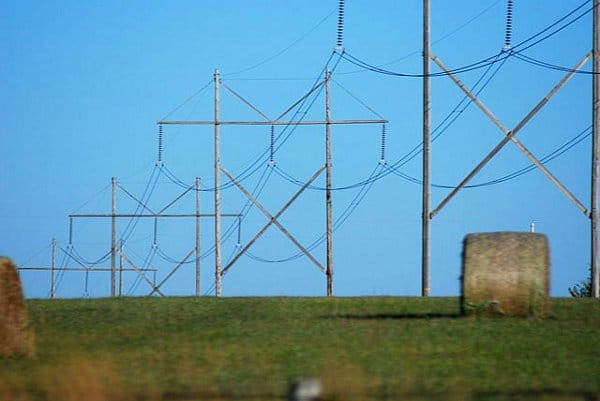
California has recovered $20 million of $73 million in profits that JPMorgan made by exploiting loopholes in the California energy market and seeks to recover the remaining $53 million. The Federal Energy Rregulatory Commission (FERC) is now investigating for the state. JPMorgan said they did nothing wrong. The current system is supposed to provide free and open competition for energy purchases and sales. Yet it clearly can be manipulated and gamed. But that’s not supposed to happen with transparent and open marketplaces.

The California Independent Service Operator (CAISO) runs the state-wide transmission grid and provides an electronic marketplace for energy.  It sells power one day in advance in the “day ahead” market as well as selling it in a separate market for immediate use.  JPMorgan has a subsidiary that had contracts with energy providers.  They would sell deliberately electricity cheaply in the day-ahead market while raising the price high in the spot market so few would buy. They profited from with “make-whole” agreements whereby power generators are paid to remain on a standby basis.

One of the techniques described in  CAISO’s complaint to FERC, which doesn’t directly mention JPMorgan (even though FERC confirmed the bank was the party in question), showed how the bid-cost recovery mechanism was gamed in a way so as to trigger overpayments in excess of 50%.  The bid-cost recovery mechanism is supposed to provide make-whole payments that cover start-up and minimum load costs for parties requesting electric energy.

This gaming of the system results in higher energy costs for end users of energy.  That means you and I pay more for electricity when the system is exploited.

JPMorgan is refusing to turn over 25 emails to FERC related to the energy market gaming, claiming they are privileged as they contain advice from lawyers. Yet they earlier turned over 28 other related emails after initially claiming the same privilege.

JPMorgan made identical attorney-client privilege claims for 28 other e-mails that were later turned over to regulators. Some of the earlier e-mails that JPMorgan claimed contained legal advice were messages that said “Great job compliance,” “Are you being sarcastic?” and “Plse call ASAP,” according to the filing.

The free market energy system is supposed to be transparent and encourage competition. But situations like these more resemble the action of parasites than of capitalist competition. JPMorgan’s actions in this case extracted value for them with no concern for the system as a whole, and gave nothing in return.

The best way to handle situations like these is to ban offending entities from participating in CAISO for several years.

Adhere to the IVN etiquette

By posting a comment, you agree to adhere to our etiquette rules: No partisan attacks, no personal attacks, substantiate your sources, no self-promotion.

Contact IVN

Questions about this article or our coverage? Send us a message. A free IVN member account is required.

Message sent

Thanks, we’ll review it and get back to you if needed.

Message not sent

Sorry, something went wrong. Please try again.

Sign in to send a message

Messages are tied to your IVN member account. Signing in is free and takes a few seconds.

Republish this article

Republishing guidelines

Republish IVN articles for free. Independent Voter News articles may be republished online or in print under a Creative Commons BY-NC-ND 4.0 license, on these terms:

  1. Credit the author and IVN. Keep the byline ("By Author Name, Independent Voter News") and the attribution note at the end, which links to the original.
  2. Keep the meaning. You may update time and place references and apply your house style. You may trim for length, as long as the cuts don't change the meaning or misrepresent the author. Keep the headline. Mark any additions as your own (for example "Additional reporting by ...").
  3. Translations are welcome. Translate faithfully, add "Translated from English by [your outlet]", and tell us at editor@ivn.us.
  4. Keep the links, including the link to the original article.
  5. Keep the tracking image. The HTML includes a 1-pixel image that counts readers on your page. It collects no personal information.
  6. Photos and illustrations. Images credited to IVN may be used with this article only. Images credited to others (AP, Getty, Unsplash, Wikimedia and so on) stay under their owners' terms. Secure the rights or switch "Include images" off.
  7. Don't sell it. You can't sell our articles or sell ads specifically against them. Your normal site advertising is fine.
  8. No implied endorsement. Don't suggest that IVN or the author endorses you, your candidates or your causes, or that donations to you support IVN.
  9. Keep labels. Opinion or analysis pieces keep that label.
  10. Point search engines to the original. Where your CMS allows, set the canonical URL to the original IVN article.
  11. No bulk or automated republishing, and don't submit our articles to aggregators (Apple News, Google News, MSN) as your own.
  12. Corrections and removals. Update your copy when we correct it, and remove it promptly if we ask. We'll contact you at the email you give us.
  13. Questions or print republication: editor@ivn.us.

IVN staff: fill in who you're inviting above, then create the invite.

Preparing the article

JPMorgan Investigated for Gaming California Energy Market

Choose a format
  • HTML
  • Email HTML
  • Markdown
  • Formatted (.docx)
  • Plain text
  • WordPress blocks
  • PDF
Choose a platform

Photos credited to others need their owners' permission.

To for

Republishing somewhere else? Questions? editor@ivn.us