Americans pay taxes on items they buy, they pay taxes on their income, and with the Supreme Court's decision to uphold the Affordable Care Act, Americans will now be paying taxes on what they don't buy as well.
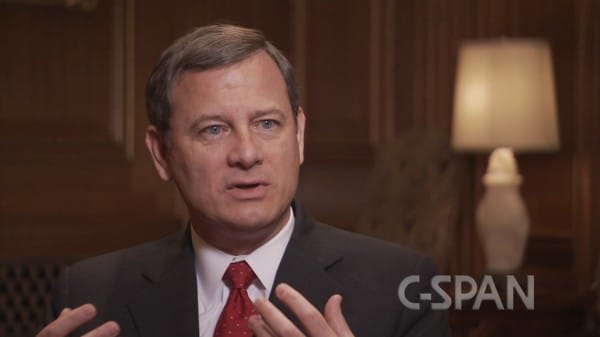
For a generation, Republicans have relied upon a stealth judicial strategy by telling their voters that they must support the GOP so they can appoint good justices to reverse court rulings that codified cultural liberalism. For a generation, rank-and-file Republicans have obeyed. But with even Chief Justice John Roberts ruling in favor of the controversial health care law, will this be the election when Republican voters finally call their party's bluff?
This scenario isn't too likely. Since abortion-on-demand became law in 1973, Republicans have used a carrot-and-stick approach that by appointing enough pro-life, strict constructionist judges, Roe v. Wade could be overturned. But this strategy has produced some murky results. The last three Republican presidents have appointed a grand total of seven Supreme Court justices and these appointees have been very hit-and-miss: Sandra Day O'Connor, Antonin Scalia, Anthony Kennedy, Clarence Thomas, David Souter, John Roberts, and Samuel Alito. Of course, it was also a Republican-appointed chief justice, Warren Burger, who carried out the controversial Roe v. Wade decision.
But the judicial strategy was always a ruse. Republicans are no more anxious than Democrats to overturn Roe v. Wade, albeit for different reasons. If the abortion ruling did manage to land in the history books the Republicans would be losing their carrot-and-stick strategy, although Democrats might be gaining one.
But what if Republicanvoters, this time noticing that a GOP-appointed justice saved a Democratic president's milestone domestic achievement, decided that the stealth judicial strategy was at best a failure and at worst has only strung them along?
Even though the court's decision disappointed Republicans it may have actually been a Pyrrhic victory for President Obama. Instead of creating a new entitlement, Obama has given Americans a new tax and a new tax is not what a recession-presiding president needs on his resume. As historian and author of James Madison and the Making of America Kevin Gutzman noted:
"Some have speculated in the days since the decision's announcement that Roberts joined the liberals in order to provide a limitation on the Commerce Clause power. Now that the Court has officially rejected President Obama's contention that the individual mandate is not a tax, the story goes, he will have a hard time on the hustings betwixt now and November. Perhaps."
I can't say that I entirely agree with Chad Peace's recent contribution that Chief Justice Roberts' ruling was a long-term conservative opinion because it limited the power of the Commerce Clause. On the one hand Roberts did find limitations for the Commerce Clause. On the other hand he upheld an unlimited power to tax-- even a tax on something not bought nor earned. Trading one unlimited power for another is hardly a bargain for those who want to restrict the federal government's role in our lives.
But the situation still plays into the hands of Mitt Romney. Immediately pouncing on the significance of the ruling, the Republican presidential candidate said, "Our mission is clear. If we want to get rid of 'Obamacare,' we're going to have to replace President Obama."
For Romney this is really the best of both worlds. He has a campaign talking point where he can accurately accuse the president of raising taxes during a recession. He can also promise to repeal ObamaCare, but without majorities in both houses, which he isn't likely to get, the man behind Massachusetts health care reform can say that he wanted to repeal it, but didn't have the numbers to do so. It is the judicial strategy in different form: keep voting for Republicans and maybe someday they'll overturn a monstrosity.
In all, the ObamaCare ruling is a mixed one. It's technically not over because it can still be repealed. But as they have done with the judicial strategy, Republicans are still choosing a conventional political strategy for the execution of their agenda. Should it be any surprise if this one comes up short too?