Skip to content
Subscribe

Hatch Act Reform Passes Unanimously in the Senate

Published:

Photo: The Office of Senator Akaka
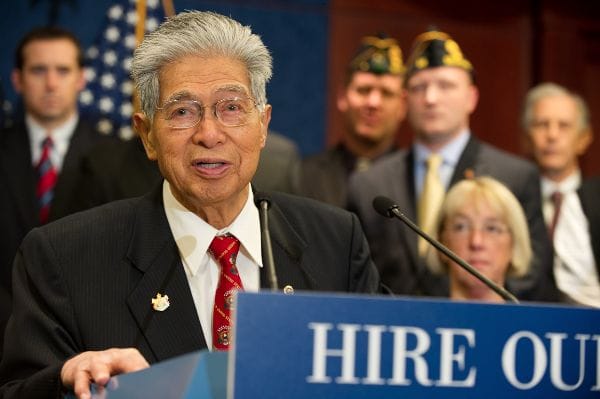
The Hatch Act Modernization Act of 2012 passed the Senate with unanimous consent on November 30th. The Hatch Act, passed in 1939, bars civil servants from running for partisan elective office and from engaging in biased, partisan-promoting activities. The Hatch Act reform abridges the original legislation. If signed into law, the update would allow federal employees to run for partisan elective office, create other applicable punishments aside from automatic removal from a position, and extends exemptions to the act currently enjoyed by state and local government employees, to those in the District of Columbia.

Proponents like S.2170’s sponsor Senator Daniel Akaka (D-Hawaii) contend the corrective legislation will give federal employees greater opportunity and level the political playing field. In a press release announcing the bill's success, Sen. Akaka said:

"I am pleased the Senate approved this important legislation, which will allow more Americans the right to run for public office and serve their communities, and treat federal employees and employees of the District of Columbia more fairly.  I look forward to working with my colleagues in the House to pass the bill."

Senator Mke Lee (R-Utah) pointed out how the original intention of the act was not being upheld,

"The law was meant to prevent federal employees from engaging in partisan politics. Unfortunately, it has been used to prevent state and local employees whose organizations may receive some federal funding from running for elected office.”

The Hatch Act has gotten numerous federal employees in hot water. Just recently, US Attorney Laura Duffy and Obama’s Health and Human Services Secretary Kathleen Sebelius faced charges of ethics violations under provisions in the Hatch Act. Though the Hatch Act Modernization Act of 2012 would likely not affect those two cases in particular, it demonstrates the frequency with which federal employees are scrutinized by it.

So frequently in fact, the Office of Special Council receives about 2,000 inquiries annually. The murkiness associated with what exactly constitutes political activity prompted the government to create a website to instruct federal employees as to the ins and outs of the Hatch Act itself. Supporters of the reform highlight the original legislation's cumbersomeness, as it often prevents qualified candidates from running for office or severely reprimands employees that floundered in the broad definition of political activity.

To become law, the bill still needs to pass in the House of Representatives.

Adhere to the IVN etiquette

By posting a comment, you agree to adhere to our etiquette rules: No partisan attacks, no personal attacks, substantiate your sources, no self-promotion.

Contact IVN

Questions about this article or our coverage? Send us a message. A free IVN member account is required.

Message sent

Thanks, we’ll review it and get back to you if needed.

Message not sent

Sorry, something went wrong. Please try again.

Sign in to send a message

Messages are tied to your IVN member account. Signing in is free and takes a few seconds.

Republish this article

Republishing guidelines

Republish IVN articles for free. Independent Voter News articles may be republished online or in print under a Creative Commons BY-NC-ND 4.0 license, on these terms:

  1. Credit the author and IVN. Keep the byline ("By Author Name, Independent Voter News") and the attribution note at the end, which links to the original.
  2. Keep the meaning. You may update time and place references and apply your house style. You may trim for length, as long as the cuts don't change the meaning or misrepresent the author. Keep the headline. Mark any additions as your own (for example "Additional reporting by ...").
  3. Translations are welcome. Translate faithfully, add "Translated from English by [your outlet]", and tell us at editor@ivn.us.
  4. Keep the links, including the link to the original article.
  5. Keep the tracking image. The HTML includes a 1-pixel image that counts readers on your page. It collects no personal information.
  6. Photos and illustrations. Images credited to IVN may be used with this article only. Images credited to others (AP, Getty, Unsplash, Wikimedia and so on) stay under their owners' terms. Secure the rights or switch "Include images" off.
  7. Don't sell it. You can't sell our articles or sell ads specifically against them. Your normal site advertising is fine.
  8. No implied endorsement. Don't suggest that IVN or the author endorses you, your candidates or your causes, or that donations to you support IVN.
  9. Keep labels. Opinion or analysis pieces keep that label.
  10. Point search engines to the original. Where your CMS allows, set the canonical URL to the original IVN article.
  11. No bulk or automated republishing, and don't submit our articles to aggregators (Apple News, Google News, MSN) as your own.
  12. Corrections and removals. Update your copy when we correct it, and remove it promptly if we ask. We'll contact you at the email you give us.
  13. Questions or print republication: editor@ivn.us.

IVN staff: fill in who you're inviting above, then create the invite.

Preparing the article

Hatch Act Reform Passes Unanimously in the Senate

Choose a format
  • HTML
  • Email HTML
  • Markdown
  • Formatted (.docx)
  • Plain text
  • WordPress blocks
  • PDF
Choose a platform

Photos credited to others need their owners' permission.

To for

Republishing somewhere else? Questions? editor@ivn.us