Skip to content
Subscribe

Fighting Crime in the Age of Social Media

Published:
Law Enforcement social media

The emergence of social media has heightened the influence of the Internet in our communities. Users of social media have eagerly taken advantage of opportunities to share their personal information on any applicable site -- from Facebook, to Twitter, to Foursquare. Our ability to constantly share photos, videos, and ideas has synthesized a dynamic setting for immediate communication. The influence of social media has long been recognized by law enforcement agencies, with many departments already using social media to detect crime.

How law enforcement uses social media:

Social media is designed to provide an overview of an individual's personality and daily life. Like other users, most criminals on social media use it to discuss their accomplishments (for example, his or her latest robbery) and lives (for example, his or her plans for later that day).

Therefore, social media is a convenient method for law enforcement to track individuals and detect and/or deter crimes. Additionally, sites like Facebook and Instagram provide the opportunity for police to use advanced facial recognition programs to identify potential matches of suspected criminals, as previously reported on IVN.

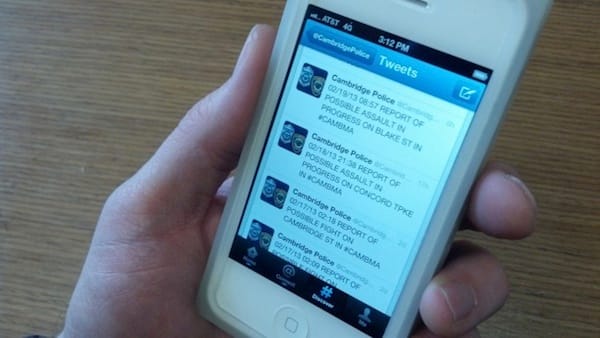
Furthermore, the Internet creates a curtain of anonymity between users, allowing citizens to report on crimes or suspicious activity they perviously would have ignored. Individuals feel more inclined to report crimes, as well as provide helpful knowledge about a case.  Sites like Twitter allow instant dialogue between police officers and citizens, and have empirically helped police departments obtain important facts about criminal investigations.

How criminals use social media:

Just as police use social media to catch criminals, criminals have reportedly used social media to plot future crimes. Earlier in the year, IVN reported on how criminals are using social media sites to gather intelligence on their victims. Individuals who post pictures of their lavish lives or brag about possessions are desirable victims of criminal activity.

Moreover, social networking sites, smart phones, and tablets all possess a GPS component that has the capacity to share current locations at any time. This "check-in" feature provides burglars information on when their potential victims will be out of their house, essentially aiding them in theft.

More commonly, criminals use social media to gain insight about their victims in order to commit identity theft: birth dates, family history, employment, and social security numbers.

Whether you're a police officer or criminal, law enforcement and crime prevention has been revolutionized in the age of social media.

The take-away: Be careful what you tweet, because it can be used against you.

Adhere to the IVN etiquette

By posting a comment, you agree to adhere to our etiquette rules: No partisan attacks, no personal attacks, substantiate your sources, no self-promotion.

Contact IVN

Questions about this article or our coverage? Send us a message. A free IVN member account is required.

Message sent

Thanks, we’ll review it and get back to you if needed.

Message not sent

Sorry, something went wrong. Please try again.

Sign in to send a message

Messages are tied to your IVN member account. Signing in is free and takes a few seconds.

Republish this article

Republishing guidelines

Republish IVN articles for free. Independent Voter News articles may be republished online or in print under a Creative Commons BY-NC-ND 4.0 license, on these terms:

  1. Credit the author and IVN. Keep the byline ("By Author Name, Independent Voter News") and the attribution note at the end, which links to the original.
  2. Keep the meaning. You may update time and place references and apply your house style. You may trim for length, as long as the cuts don't change the meaning or misrepresent the author. Keep the headline. Mark any additions as your own (for example "Additional reporting by ...").
  3. Translations are welcome. Translate faithfully, add "Translated from English by [your outlet]", and tell us at editor@ivn.us.
  4. Keep the links, including the link to the original article.
  5. Keep the tracking image. The HTML includes a 1-pixel image that counts readers on your page. It collects no personal information.
  6. Photos and illustrations. Images credited to IVN may be used with this article only. Images credited to others (AP, Getty, Unsplash, Wikimedia and so on) stay under their owners' terms. Secure the rights or switch "Include images" off.
  7. Don't sell it. You can't sell our articles or sell ads specifically against them. Your normal site advertising is fine.
  8. No implied endorsement. Don't suggest that IVN or the author endorses you, your candidates or your causes, or that donations to you support IVN.
  9. Keep labels. Opinion or analysis pieces keep that label.
  10. Point search engines to the original. Where your CMS allows, set the canonical URL to the original IVN article.
  11. No bulk or automated republishing, and don't submit our articles to aggregators (Apple News, Google News, MSN) as your own.
  12. Corrections and removals. Update your copy when we correct it, and remove it promptly if we ask. We'll contact you at the email you give us.
  13. Questions or print republication: editor@ivn.us.

IVN staff: fill in who you're inviting above, then create the invite.

Preparing the article

Fighting Crime in the Age of Social Media

Choose a format
  • HTML
  • Email HTML
  • Markdown
  • Formatted (.docx)
  • Plain text
  • WordPress blocks
  • PDF
Choose a platform

Photos credited to others need their owners' permission.

To for

Republishing somewhere else? Questions? editor@ivn.us