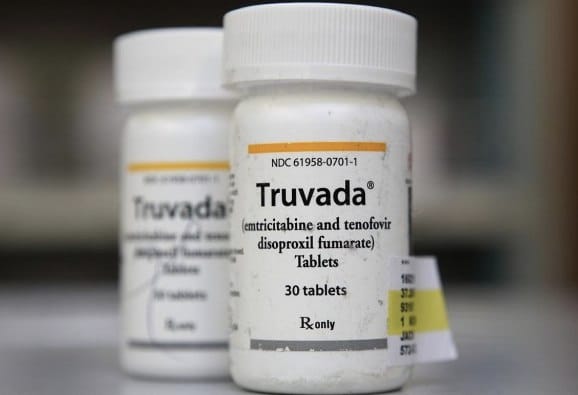
The FDA approved the use of a drug designed to prevent at-risk adults from attaining HIV for the first time. Truvada, an antiretroviral medication, was FDA approved in 2004 for the usage to help control HIV in already infected patients. However, studies prove uninfected partners of people with HIV who take Truvada, reduce the possibility of transmission of the virus up to 96%.
Despite Truvada’s significant findings, health professionals insist that Truvada alone is not the answer to the prevention of HIV infection. Usage of Truvada should be in combination with other safe sex practices.
Dr. Anthony Fauci, the director of the National Institute for Allergy and infections Diseases at the National Institutes of Health, believes the FDA approval monumental in HIV treatment and research, but also is wary of potential public interpretation of the drug.
“The approval of Truvada to prevent HIV infection in uninfected individuals who are at high risk of sexually acquired HIV infection is a significant development, providing an important addition to our toolkit of HIV prevention interventions," he said.
"However, it is critical to stress that Truvada as ‘pre-exposure prophylaxis’ should not be considered a stand-alone method, but should be used in conjunction with other proven HIV prevention strategies such as condom use, risk-reduction counseling, and frequent HIV testing.”
Gilead Sciences Inc., the corporation accredited with producing Truvada, says the drug is the “most-prescribed antiretroviral medication in the country.”
Norbert Bischofberger, Executive Vice President, Research and Development and Chief Scientific Officer of Gilead Sciences, Inc., made a statement to CNN about the FDA’s approval:
“Today’s decision is the culmination of almost 20 years of research involving investigators, academic and medical institutions, funding agencies and nearly 20,000 trial participants around the world, and Gilead is proud to have been a partner in this effort.”
Despite Truvada’s emergence as a preventative HIV treatment, the AIDS Healthcare Foundation made a statement disapproving of the FDA’s recent decision:
“From the beginning, we believe there was a rush to judgment by government officials and others in favor of such approval despite decidedly mixed studies offered in support."
Critics also cite the steep cost of the drug, one year's supply can $11,000, as an additional hurdle.
Despite this, Truvada is an immense step in treatment options for HIV, and has many wondering if a future ‘cure’ is plausible at this point in time.
Frontline recently debuted, Endgame: AIDS in Black America, a televised documentary piece, revisiting the historical roots of AIDS in the United States, the importance of awareness still, and the projected future of the virus and treatment. Moreover, the piece reveals keen insight in how HIV/AIDS has majorly impacted black America.
Aids.gov, the United States government’s official information HIV/AIDS websites reports current statistics. A sometimes, common misconception that HIV/AIDS used to be a problem, is wrong. Today, AIDS still affects millions of Americans as well as millions worldwide.
- Every 9.5 minutes someone in the United States is infected with HIV
- More than one million people are living with HIV in the U.S.
- 1 in 5 (20%) living with HIV are unaware of their infection
- Gay and bisexual men of all races are the most severely affected by HIV
- Among racial/ethnic groups, African Americans face the most severe burden of HIV in the U.S.
- Blacks represent approximately 14% of the U.S. population, they accounted for almost half (46%) of people living with HIV in the U.S. in 2008, as well as an estimated 44% of new infections in 2009. HIV infections among blacks over have been roughly stable since the early 1990s.
- More than 17,000 people with AIDS in the U.S. died in 2009 and more than 619,000 people with AIDS the U.S. have died since the epidemic began.
According to PBS Newshour, in Tanzania and three other African sites, the United States and its African partners will be launching a “combination of coordinated HIV prevention tools and strategies in the coming months that will test what President Obama and Secretary of State Hillary Clinton have been telling the world: An AIDS-free generation is now possible because the tools to prevent HIV infection are at hand.”
Recently the Government Accountability Office report released findings indicating AIDS funding has decreased.
In regard to diminished Federal government AIDS funding, Frontline cited:
“The report comes as advocates and officials have said that despite increases in federal funding for HIV/AIDS, there still isn’t enough money to ensure everyone in the U.S. gets care. Federal and state budgets, already hammered by the recession, have been stretched as more people are living longer with the disease and more become infected.”
Recent research advancements in HIV/AIDS treatment, such as the new found use for the drug Truvada, optimistically suggests better treatment and medical options are to come. However, funding, and continuous ongoing spread of the HIV infection remains fact. The end may be in sight, but there are still existing challenges in how that ‘end’ is achieved.