Photo: nsba.biz
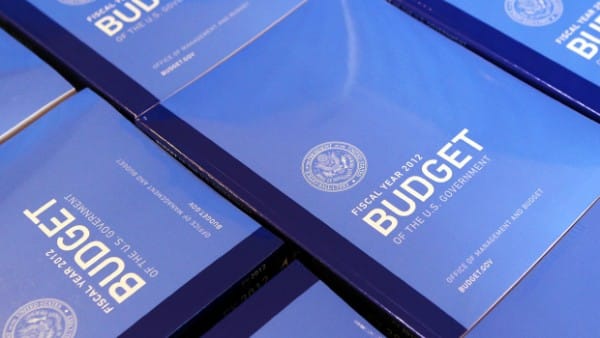
A comparison of presidential candidates' budget plans is a surefire method of understanding their political priorities. A certain amount of compromise is necessary to pass a budget, but in general a candidate's spending plan represents his or her priorities. If it isn't too vague, a federal budget proposal is a relatively concise summary of which public policies the candidate finds important, and which ones they consider less important.
This election cycle, voters have been barraged with budget proposals that can only be described as vague. In fact, despite the eventuality of Gov. Mitt Romney's nomination this week and the revelation that Rep. Ron Paul will not even be speaking at the Republican National Convention, the "Ron Paul Plan to Restore America" budget proposal contains the most specifics of any budget submitted thus far.
Ron Paul's budget plan would cut federal spending by $1 trillion in 2013 during the first year of a Paul Administration. He would achieve this colossal number by cutting wide swaths through the federal government, eliminating entire cabinet-level departments such as Energy, Housing and Urban Development, Commerce, Interior, and Education. Paul's budget plan would also abolish the Transportation Security Administration, end corporate subsidies, end Washington's foreign wars, and cancel foreign aid, all in an attempt to reduce federal spending to 2006 levels.
Aside from these measures to reduce the deficit, Paul's plan would give entitlement programs back to the individual states in addition to giving younger workers the choice to opt out of several of these programs. In a more extreme part of his plan, Paul's budget would also cut the federal work force by 10%. Considering that federal government employees number in the millions, that means very early on in a Paul presidency, around 300,000 people would lose their jobs. Certainly that isn't a number to be ignored in rough economic times.
So how does the "Plan to Restore America" stack up to the Obama budget and the Ryan budget? The Ryan budget, titled "The Path to Prosperity," has several major elements, including a simplification and reform of the current tax code, and if Romney were elected, it is safe to assume we would see a budget plan that is some amalgamation of Ryan's budget and Romney's. The Ryan budget would essentially create two tax brackets: 10% and 25%. It would lower taxes on the wealthiest Americans drastically, and pay for the tax cuts with major cuts to entitlement programs, in addition to widening the total tax base.
But this is where the lack of budget specifics arises. The math on these figures does not balance out. Cutting taxes so drastically for the wealthiest Americans would create a large deficit. Ryan's solution for this is to "close tax loopholes," but he has not yet specified which loopholes he would close, and critics say there are simply not enough loopholes to make up for this deficit.
Under the Ryan plan, Medicare would become a voucher system in which patients can choose for themselves which provider they want to use, although critics say that this plan does not account for inflation and as the cost of health services rises, these vouchers would pay for ever-decreasing amounts of coverage every year. Another controversial choice would be to cut billions from the Federal Pell Grant program, which would drop one million students from their previously available financial aid.
Compare that to the president's budget, of which the Patient Protection and Affordable Care Act ("Obamacare") is a central tenant, and the differences couldn't be more stark. Though Obamacare has been criticized by the president's opponents for adding too much to the federal deficit, it makes similar reductions in Medicare spending to the Ryan plan, while taking them from other parts of the program so it can remain structurally the same. This is in addition to a recent report from the Congressional Budget Office stating that the act itself will reduce the federal deficit over a ten year period.
The similarities end with the proposed Medicare cuts. While the Paul and Romney plans would aim for immediate and drastic deficit reduction, President Obama opts for a more graduated deficit reduction plan, dotted with stimulus measures aimed at job creation. The president would also close corporate tax loopholes, and end the Bush era tax cuts for the wealthiest Americans to help pay for more spending in education and infrastructure.
In short, Ron Paul's budget would cut the most from the federal deficit and has the most detailed plan to reduce federal spending through specific cuts to a wide variety of federal programs and departments. The Romney/Ryan plan would make major spending cuts to entitlement programs in an effort to reduce the deficit, while still lowering taxes for top income earners and corporations, but promises to close tax loopholes to pay for it.
The Obama budget would be similar to the budget of the last four years, reducing the deficit over a longer period of time through more modest spending cuts and by taxing the wealthiest Americans, while reforming the health care industry and maintaining the current overall structure of entitlement programs.
In the coming weeks, many spending comparisons will be drawn between the candidates. At the Republican National Convention taking place this week, federal spending is going to be a major focus for many of the speakers. Attack ads will be launched, stump speeches will be made, and rallies will be organized, which all adds to the noise and confusion on the political stage, but as Vice President Joe Biden commented on the matter, "Don't tell me what you value, show me your budget and I'll tell you what you value."