Skip to content
Subscribe

City Council Adjourned This Week: Return to Discuss TJ Sewage

Published:

Photo credit: sergededina.com
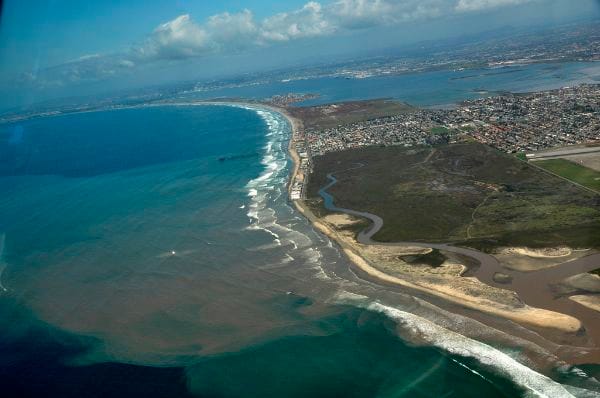
As most know, San Diego City Council typically meets every Monday at 10am, and every Tuesday at 2pm. For those who cannot take several hours off work to attend, council live streams all meetings here, which is a beneficial tool for transparency in government. Though they will not meet today, Council President Todd Gloria released the docket for a special meeting of council to be held on Monday, December 17. The consent agenda for this meeting seems to be the heaviest since Bob Filner took office. As the first order of business, council will publicly address the continued state of emergency regarding the discharge of raw sewage from Tijuana, Mexico.

In 1983, the International Boundary and Water Commission (IBWC) "stepped in" and constructed a more comprehensive sewage collection system in Tijuana. This was in response to 1970s water pollution in the city, where up to 10 million gallons of raw sewage were discharged into the Tijuana River daily. During this time, San Diego experienced some difficulty in dealing with the untreated sewage, and spent countless hours quarantining beaches in Imperial Beach and north Coronado. When the IBWC created the collection system, they placed their emphasis on building a holding pond for the Tijuana main pump station.

The system was ultimately completed in 1987, with the new system entailing a single pump station, and a treatment plant with a capacity of 17 million gallons a day. Even though the new system proved to "outdo" the old one, raw sewage continued to pour into the river from "un-sewered communities."

Fast forward to 1990, when failures in the new collection system caused up to 20 million gallons of raw sewage were discharged back into the Tijuana River Valley. This truly galvanized citizens on the US side of the border. As a result, in 1997 the IBWC set into operation the International Treatment Plant with the capacity to treat 25 million gallons of Tijuana sewage daily.

This is still a major issue for San Diego, as large amounts of untreated sewage still heavily contaminates the water every year or so. Even with the relatively new International Treatment Plant, sewage from un-sewered communities in Tijuana continues to slip through the cracks. Many concepts are on the table for solving this problem, and it should prove interesting to see how the newly-formed council works out this issue.

Not only will council be discussing this issue (among several others), but will be selecting their new mayor pro tem at the meeting next Monday as well.

Adhere to the IVN etiquette

By posting a comment, you agree to adhere to our etiquette rules: No partisan attacks, no personal attacks, substantiate your sources, no self-promotion.

Contact IVN

Questions about this article or our coverage? Send us a message. A free IVN member account is required.

Message sent

Thanks, we’ll review it and get back to you if needed.

Message not sent

Sorry, something went wrong. Please try again.

Sign in to send a message

Messages are tied to your IVN member account. Signing in is free and takes a few seconds.

Republish this article

Republishing guidelines

Republish IVN articles for free. Independent Voter News articles may be republished online or in print under a Creative Commons BY-NC-ND 4.0 license, on these terms:

  1. Credit the author and IVN. Keep the byline ("By Author Name, Independent Voter News") and the attribution note at the end, which links to the original.
  2. Keep the meaning. You may update time and place references and apply your house style. You may trim for length, as long as the cuts don't change the meaning or misrepresent the author. Keep the headline. Mark any additions as your own (for example "Additional reporting by ...").
  3. Translations are welcome. Translate faithfully, add "Translated from English by [your outlet]", and tell us at editor@ivn.us.
  4. Keep the links, including the link to the original article.
  5. Keep the tracking image. The HTML includes a 1-pixel image that counts readers on your page. It collects no personal information.
  6. Photos and illustrations. Images credited to IVN may be used with this article only. Images credited to others (AP, Getty, Unsplash, Wikimedia and so on) stay under their owners' terms. Secure the rights or switch "Include images" off.
  7. Don't sell it. You can't sell our articles or sell ads specifically against them. Your normal site advertising is fine.
  8. No implied endorsement. Don't suggest that IVN or the author endorses you, your candidates or your causes, or that donations to you support IVN.
  9. Keep labels. Opinion or analysis pieces keep that label.
  10. Point search engines to the original. Where your CMS allows, set the canonical URL to the original IVN article.
  11. No bulk or automated republishing, and don't submit our articles to aggregators (Apple News, Google News, MSN) as your own.
  12. Corrections and removals. Update your copy when we correct it, and remove it promptly if we ask. We'll contact you at the email you give us.
  13. Questions or print republication: editor@ivn.us.

IVN staff: fill in who you're inviting above, then create the invite.

Preparing the article

City Council Adjourned This Week: Return to Discuss TJ Sewage

Choose a format
  • HTML
  • Email HTML
  • Markdown
  • Formatted (.docx)
  • Plain text
  • WordPress blocks
  • PDF
Choose a platform

Photos credited to others need their owners' permission.

To for

Republishing somewhere else? Questions? editor@ivn.us