Credit: ca.gov
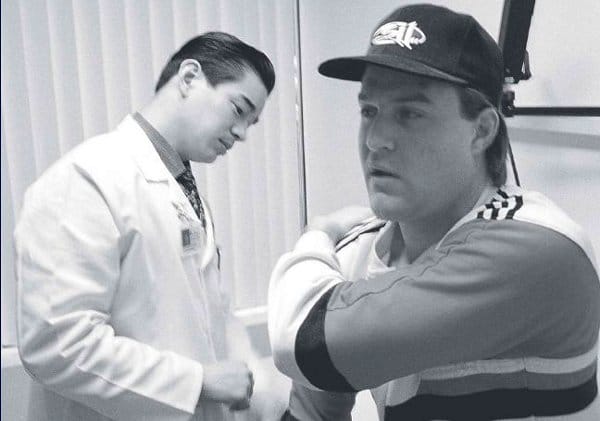
California's Workers' Compensation is facing major changes if a bill scheduled for this week comes up for debate and then passes. Veteran Sacramento Bee columnist Dan Walters says renegotiating of workers' comp benefits for injured workers happens about every ten years with the current battle no different from the divisive fight in 2004. However, this time, at least part of big labor is supporting reductions in benefits. Further, some stakeholders are not allowed at the negotiations.
meeting quietly
Workers' Comp lawyers and representatives of injured workers have not been invited either. I asked a workers' compensation attorney with thirty years experienced defending injured workers for his thoughts via email. IVN invites responsible comments by those with differing views.
The negotiations are happening without all concerned parties being involved. What are your thoughts on this?
As of 08/26/2012, five days before the end of the legislative session, the bill is not available for comment to the public, or even to attorneys who do nothing but represent injured workers.
The injured workers’ organization, Voters Injured at Work, and the California Applicants Attorney Association, who represent injured workers, were not involved in the creation of this bill. Apparently, neither is considered a “stakeholder.” The people who were involved do know of our concerns but do not seem to care.
Why are some big unions apparently supporting workers comp changes that might adversely affect their members?
One does wonder whether unions care about workers who are too disabled to return to work and therefore too disabled to pay dues. However, unions are often in the position of having to accept less than what they have to give up, just to survive. Between the very large employers and the very large insurance companies, the money is clearly not on the side of the worker.
Look at the comments after Dan Walters’ article. People are told there are no real work injuries, only people who pretend to be injured because they are lazy. Sit at my desk and interview truly injured people who tell you they are not like those other claimants, they are really injured, to understand how deeply ingrained this attitude has become, due to constant pounding by the insurance industry and the press.
Do you think the legislature will do what they did in 2004 and vote to pass a bill that no one has read, because someone tells them it is a compromise package?
Hardly any legislators now were there in 2004. Term limits allows the same mistakes to be repeated. You have to visit the State Legislature to realize how many things get legislated and how little time the legislators have to deal with the issues.
Why do we keep going through these big changes in workers’ compensation?
Workers’ compensation law is complicated and affects employers all the time and workers randomly. When a new law is written, especially when it is jammed through at the end of the session, it requires interpretation. Situations arise that were not considered by the legislators. There are different opinions about how the law applies. Workers compensation judges, appeals courts and the Supreme Court have to consider how the law should be applied. It takes a while for a situation to arise and longer for it to find its way through the courts. When there is finally a Supreme Court decision, then there is clarity and people know what to do on that one issue. Practically every section of a law has to go through this process.
If there were legislators who had been around a long time and were recognized as experts on workers’ compensation and other legislators looked to them for guidance, then the law could be gradually improved annually. Of course, this would require cooperation and consultation, something that seem to be lost arts in our current political world.
What would the proposed workers comp changes mean for injured workers?
From the point of view of someone injured at work, there is no real good news in this bill.
I have seen what purports to be a draft. It would create a new layer of medical bureaucracy to deal with the utilization review bureaucracy created by earlier reforms. Disputes created by the old bureaucracy will be submitted to the new bureaucracy where anonymous medical reviewers who do not see the patient will make a final decision. Therefore, you end up with treatment recommendations by renowned experts denied by two layers of doctors, some of whom do not actually doctor anyone.
The alleged raise in benefits seems to have been reduced from the reports of the original proposal. I am not sure what Dan Walters is referring to when he says benefits were raised from $400 to $800 a week. Current weekly payments for Permanent Disability are $230 and $270 (Temporary disability can be higher but it is limited to 2/3 of weekly earnings). Some cases now seem to qualify for $290 per week in permanent disability. Corresponding changes make this raise equivalent to getting a raise in your hourly rate of pay at the same time you lose all overtime, vacation time, and sick time. One hand pretends to give while the other hand takes away.
The version I saw allowed the State of California to set up an Alternate Dispute Resolution system, which would take them out of the State of California’s Workers’ Compensation court system. It took away the speedy system of medical review for proposed spinal surgery and threw those into the bureaucracy with the rest of the injuries.
There is no fix for the problem of people who need temporary disability for more than two years, the current maximum. If you have a second or third back surgery 23 months after your injury, you still stop getting temporary disability after 24 months. There are some exceptions but nothing for traumatic brain injury or multiple spinal surgeries. That is something we attorneys have been talking about, but we were not invited to the secret negotiations.
You still are legally limited to 24 physical therapy treatments per injury, despite what your doctor recommends.
Even if the parties agree on a neutral doctor, they are prevented from resolving medical treatment issues, including whether an injured worker needs surgery. So a World Renowned California Surgeon can be overruled by an Out Of Work Doctor from Elsewhere .
The “voucher” for training expenses, which takes the place of actual rehabilitative help, is still not available until there is a determination of the exact level of disability, despite the fact that it might be months or years after you are released by your doctor to return to work that you can no longer do.
If you end up with chronic pain or serious physical disability and that causes you to have psychological problems, like depression or anxiety, or loss of sexual function, you will no longer be compensated for that.
This bill is not good for injured workers.