
 Shawn Griffiths
SAN DIEGO, Calif. - California voters have already received ballots for the June 2 primary, and the message they have going into these elections may not be what the political class wants to hear: They are not thrilled with either major party.
A recent analysis from the Public Policy Institute of California (PPIC) found that majorities of likely voters have unfavorable views of both parties—61% unfavorable toward the Democratic Party and 70% unfavorable toward the Republican Party.
There were only a quarter of respondents who said the two major parties do an adequate job representing the American people, while roughly 3-in-4 said the parties do such a poor job that a third major party is needed.
Notably, this doesn’t just mean any third party.
Third party registration in California only reaches about 5% of the electorate. This is counting the American Independent Party, which has many voters registered who did not mean to declare a party preference.
What voters want is representation that is beholden to them, not party leadership. They want candidates who prioritize the needs of the electorate, not the clamoring of shrinking party bases and monied interests aligned with the parties.
That should matter in any election. In California’s June 2 primary, it matters even more.
Unlike traditional party primaries, California’s nonpartisan primary system does not belong to the Democratic or Republican Party. For statewide offices, legislative races, and congressional contests, all candidates appear on the same ballot, and all voters can choose any candidate, regardless of party. The two candidates who receive the most votes move on to November.
In other words, California voters who are frustrated with both parties are not locked out of the process. They own the process.
This is especially true of independent voters (many of whom are registered No Party Preference in California). The campaigns like to treat them like spectators, and while there is a noticeable turnout gap, if they participated, they would become the most powerful voting bloc.
 Independent Voter Project
The problem is whether enough voters know that.
The word “primary” carries baggage. In many states, it means party members choosing party nominees. In California, it's not about picking party nominees but picking the top candidates, regardless of party.
The difference is party control versus voter control. And it is why California's nonpartisan primary is called a voter-nominated system.
California adopted the Top Two primary under Proposition 14 in 2010. Supporters argued that all voters should be able to choose any candidate, regardless of party, and that independent voters should have a meaningful say in the process.
At the time, 54% of voters approved the reform, which went into effect for the 2012 election cycle. More than a decade later, the system is once again at the center of political debate.
Early polling in the 2026 governor’s race raised the possibility of two Republicans advancing in California because of a crowded Democratic field. As noted on IVN, this was when a quarter of the electorate was still undecided.
Party insiders have since used anxieties around this to push for Top Two repeal.
Steve Peace
They don’t want to upgrade the system, as the More Choice Coalition has offered to advance more candidates to November and use ranked choice ballots. They want to return to a system of party control and independent voter suppression.
As we near primary election day, polls show the odds of a two-Republican general election have all but evaporated (as we said it would).
California’s nonpartisan primary can produce outcomes party leaders don’t like. It can advance candidates who do not have the blessing of party leadership. It can also advance two candidates of the same party in a state that already leans heavily Democrat.
The question the parties don’t want voters to ask is: What is the worst that happens if two Democrats advance to November?
Democratic registration is at 45% of the electorate and PPIC has found that 40% of independents lean Democrat.
So again, what happens if two Democrats advance to the general election in the governor’s race?
The distinctions between the candidates suddenly matter more and they need to compete for broader support. Especially since the voters who choose the winner will be outside the party.
What happens if a Democrat goes up against a MAGA-aligned Republican? The Democrat wins in a landslide.
The original sponsors of California’s nonpartisan primary system assert that the point of Top Two was never that any party was entitled to a spot in November. The point was that they have to earn that spot by getting voter support.
Further, party candidates have to earn a win.
That is what it means to have a voter-nominated system. This is not a flaw to voters who are tired of partisan gatekeeping. That is the feature. And if voters look at the data, Californians have been mostly satisfied with the results.
According to PPIC:
“After the 2012 election cycle, 59% of likely voters said that Proposition 14 turned out to be ‘mostly a good thing’ for California, with similar responses in 2017 (60%), 2022 (62%), and 2024 (68%). In our most recent polling, majorities across political groups and along the political spectrum agreed.”
Party leaders really want these numbers to change.
Voting is already underway in California. Vote centers opened in Voter’s Choice Act counties on May 23, and in-person early voting locations throughout California will be open by May 30. June 2 is the final day to vote in person.
Shawn Griffiths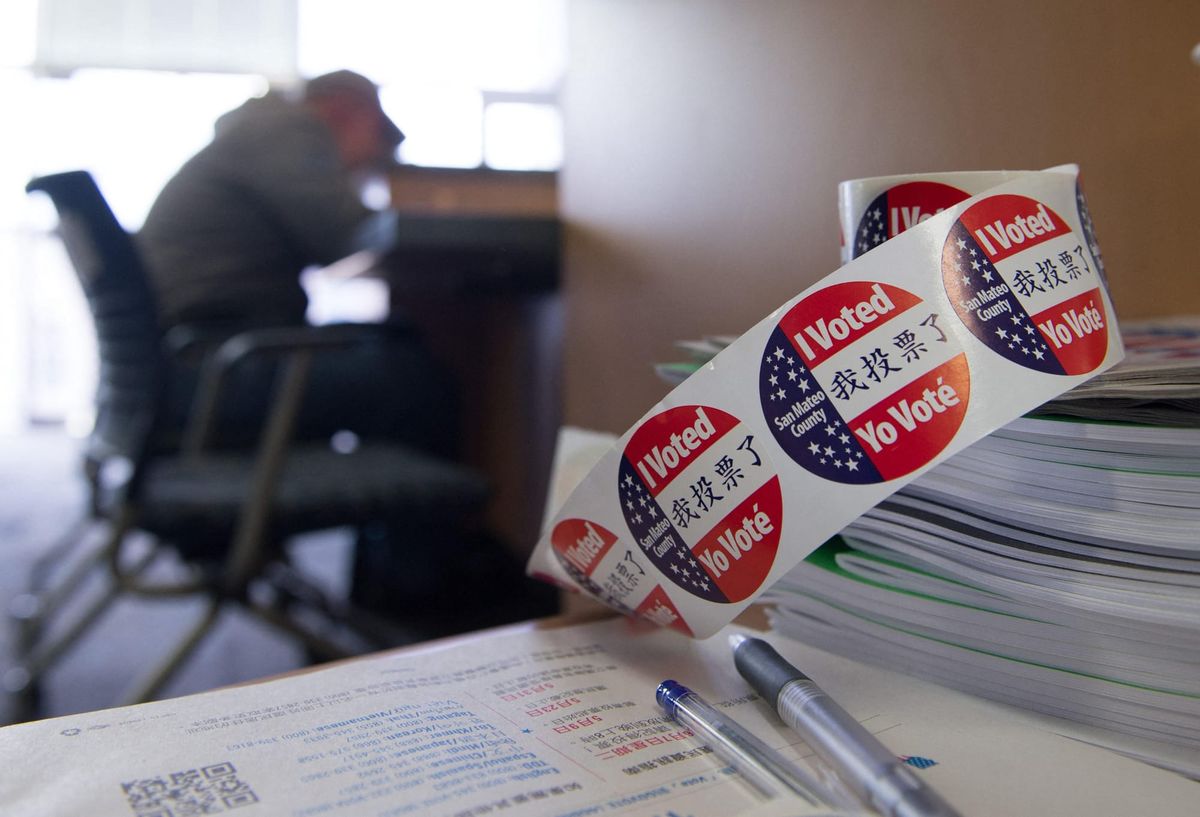
Millions of independent voters stayed home in the last gubernatorial primary. They are told they have no power and their only role is to spectate until November. However, they do not have to wait for the parties to give them permission to matter.
They already have a ballot. They already have choices. They already have the ability to shape the November election before most of the political world starts paying attention.
And in a state where voters are increasingly unhappy with both major parties, the June 2 primary may be the clearest reminder that California’s election system is not a private contest between party organizations.
It belongs to voters.