Source: en.wikipedia.org
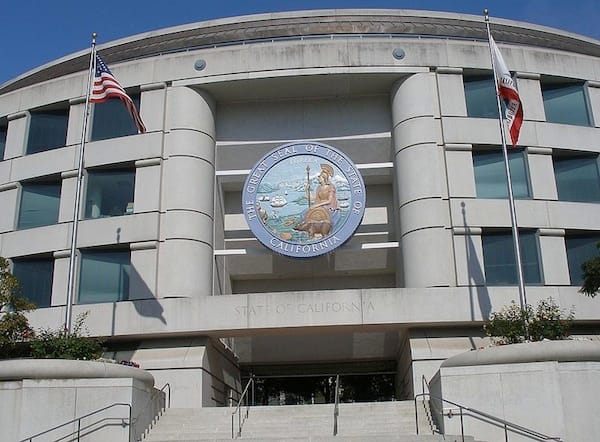
The California Legislature passed SB 1161 in August. If signed into law by Governor Brown, the bill would "prohibit the commission [Public Utilities Commission] from regulating Voice over Internet Protocol (VoIP) and Internet Protocol enabled service (IP enabled service), as defined, except as required or delegated by federal law or expressly provided otherwise in statute."
SB 1161 was supported by major technology companies, including Comcast, Microsoft, AT&T, Cisco Systems, Time Warner Cable and Verizon. It was opposed by the AARP, the Utility Reform Network, the Greenlining Institute, the Santa Clara University School of Law, and other organizations. Despite the opposition, the bill passed the California Senate and Assembly by overwhelming margins.
According to the Greenlining Institute, the deregulation of IP and VoIP service could limit consumer protections, increase costs, limit access to emergency services, and harm low-income and disabled customers, among other potentially negative consequences.
Susan Crawford, the (Visiting) Stanton Professor of the First Amendment at Harvard's Kennedy School and Visiting Professor at Harvard Law School, argues that the passage of SB 1161 will have disastrous consequences for California.
Crawford writes, "....SB 1161...leaves Californians without a protector to keep watch on the cost, service quality, safety, and availability of access to information, data, and entertainment – everything on which modern life depends. Because just a few giant companies control the wires, they’ll be picking the economic and social winners and losers."
Another cause for concern with SB 1161 is that the telecom industry has been one of the top contributors to Senator Alex Padila, the author of the bill. According to the San Francisco Chronicle, AT&T is Padilla's fourth largest campaign contributor. Padilla argues that bill is necessary to give the telecom industry, one of the few positive spots in California's stagnant economy, regulatory certainty with VoIP and IP services going forward.
Larry Downes, a consultant and author, believes that the concerns among opponents of SB 1161 are overstated.
"Opponents of the bill also seem to miss the crucial link between the success of VoIP and other Internet services and the absence of government oversight," Downes wrote. "Applications such as Skype, Google Voice and FaceTime can evolve and spread at lightning speed precisely because they are not subject to the plodding and often pointless rules of state utility regulators."
However, CPUC Commissioner Mike Florio argues that the bill is a rush to deregulate a burgeoning market without understanding the potential consequences:
"This is one of the most ambiguous and unclear pieces of legislation I've ever seen. It's not at all clear under this bill that we'd be able to touch anything having to do with quality-of-service problems...This is being done without much though...We've done nothing to regulate computer applications like Skype, have no desire to do so, and that's not what this is about."
If Governor Brown signs the bill, the only protection consumers in California would appear to have would be if the federal government stepped in to regulate IP and VoIP service. "The FCC's meddling is dangerous enough," Downes commented. "But now imagine adding different and possibly contradictory rules and proceedings by each of fifty state public utility commissions."
While creating new regulations for IP and VoIP service in California might not be the best approach, it may be best for California not to go forward with the deregulation set forth in SB 1161 until the FCC sets clear guidelines.