
 Jeremy Gruber
Editor's Note: The following is an exclusive series on IVN from the better elections group Open Primaries. The content originated from the group's weekly newsletter, "Primary Buzz."
This past weekend, Open Primaries and Let Us Vote participated in Harlem Week, the annual summer festival celebrating the culture, history, and economic life of the greater Harlem area. Cathy Stewart, National Organizing Director and National Organizer Bree Doldron, and I were joined by two dozen volunteers from across the city who spent the weekend talking about the voting rights of 1.2 million NYC independents, who can’t vote in the publicly funded primaries at our booth.
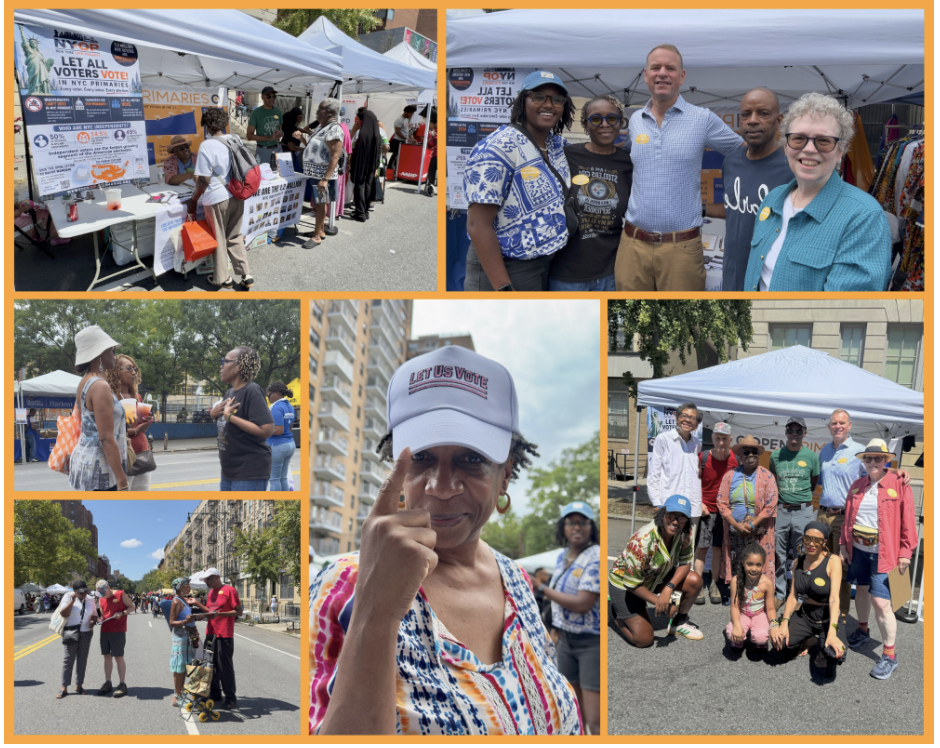
Hundreds of New Yorkers signed onto the Open Letter to Mayor Mamdani asking him to meet with independents at a Town Hall. We believe the Mayor does not really have a sense of who NYC independents are – 54.5% are people of color,and 49% are under 40. Most US cities – including DC which just made the switch this year most – allow independents to vote in the primaries. Independents are asking for the opportunity to share with the Mayor the experience of being denied full voting rights.
Many of the people we met were thrilled to find our booth – independents who are angry and upset about being turned away on Primary day and felt isolated! Check out what BJ Wheeler had to say about being an independent.
We interviewed dozens of people on video – some independents, and some registered with a major party – who wanted to go on record that it’s time for equal voting rights in the city.
Check out Briana Strong’s message to the Mayor:
And Bree Doldron’s statement:
Here are some key takeaways from the weekend:
When New Yorkers learn that 1.2 million independent voters are shut out of the primaries, they are shocked.
There is tremendous support for equal voting rights for independents. But most people simply don’t know that independents are barred from voting in New York’s primaries. And they are even more surprised to learn that our primaries are publicly funded — meaning their tax dollars help pay for elections that exclude 1.2 million of their fellow New Yorkers.
That tells us we have a lot of work to do — and a tremendous opportunity.
Our immediate goal is to secure a meeting with the Mayor. To help make that happen, we need people in every borough and every community to sign the Open Letter and add their voices to the call for equal voting rights.
There is also a myth circulating in the press that the movement for open primaries in NYC is “anti-Mamdani.” It’s not. This movement is about independent voters from communities across the city — joined by Democrats, Republicans and other allies — who believe New York City is stronger when every voter has a voice in every round of our publicly funded elections.
Check out this message to the the Mayor from independent leader Torsha Childs from Brooklyn:
This is about something bigger than any candidate or any one election. It is about building a healthier, more inclusive democracy in New York City.
If you live in NYC, be sure to come find our booth at the Atlantic Antic on Sunday, September 27th!
What We're Talking About
Florida Voters Aren’t Done With Open Primaries
In 2020, Floridians had the opportunity to change the system. A constitutional amendment to open the state’s primaries received 57% of the vote - a clear majority and more than either presidential candidate (Trump/Biden) received at the time, but not enough to meet Florida’s unusually high 60% threshold for constitutional amendments.
Six years later, and the debate over who gets to participate is bigger than ever.
Independent voters only continue to grow in the state. Four million Floridians -28% of the electorate -were shut out of this Tuesday’s partisan primaries simply because they aren’t registered with a major party.
The issue continues to generate a wave of media attention. Check out all the recent coverage:
The Orlando Sentinel, Florida Politics, Florida Phoenix, Fox News and Spectrum News.
In the Orlando Sentinel, columnist Scott Maxwell put it bluntly:
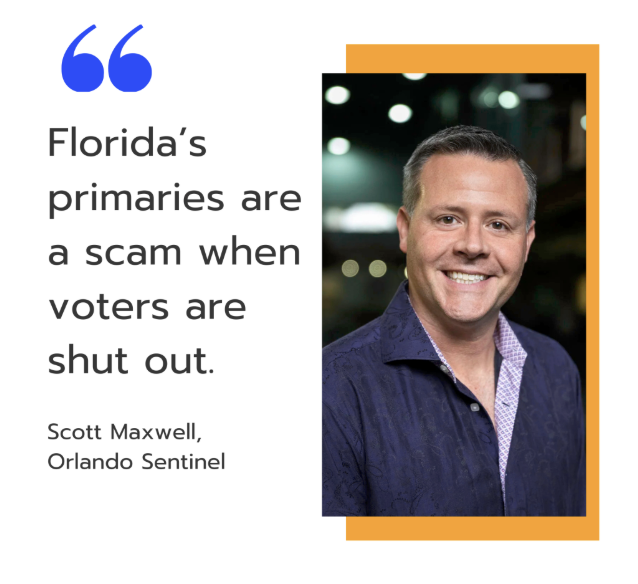
He points out that closed primaries can leave millions of Floridians without a meaningful vote in races where the primary effectively determines the winner.
A recent survey of Florida Democrats and independents found that 90% of both groups continue to support open primaries, while more than 80% said Democrats should open their primary even if Republicans refuse.
John Marvin, state coordinator for Florida Open Primaries, has seen the appetite for change firsthand. As he notes:
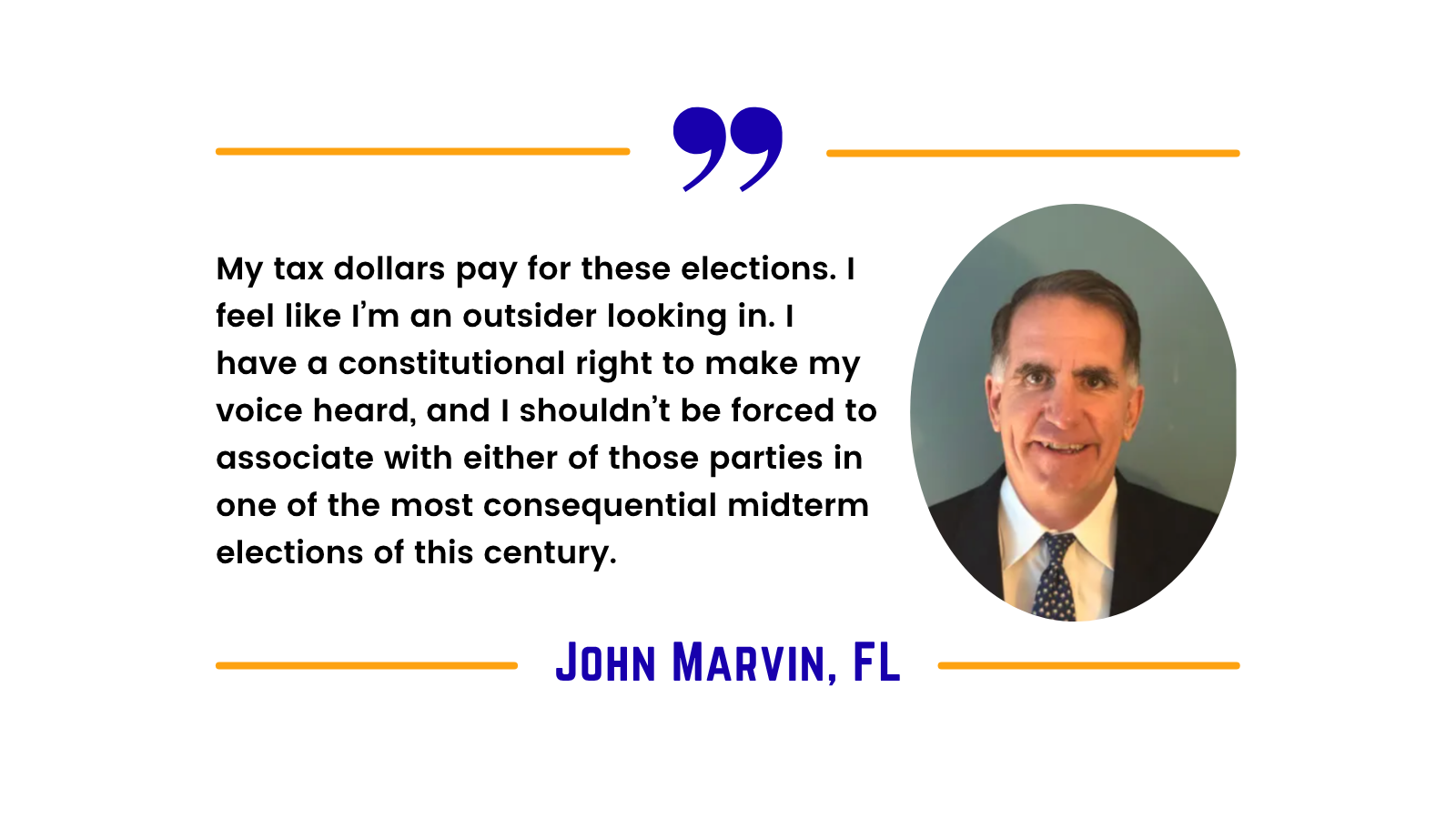
The question now is not whether Floridians want a conversation about open primaries. It is whether Florida’s political system is ready to catch up with its voters.
That’s why Open Primaries is exploring legislative and legal paths to reform, including seeking a sponsor for an open primaries bill in 2027 and considering a constitutional challenge to Florida’s closed-primary system.
The 2026 primary may be over, but the movement to open it is just beginning.
What We're Reading
Independents Reject Team Politics
America’s independent voters are done playing political team sports.
That’s the powerful message from political analyst John Halpin, who argues in a piece this week that the more than 40% of Americans who don’t identify with either party share one defining trait: they reject binary politics. They don’t want to be told which team to join, which party line to follow, or which side they’re supposed to hate.
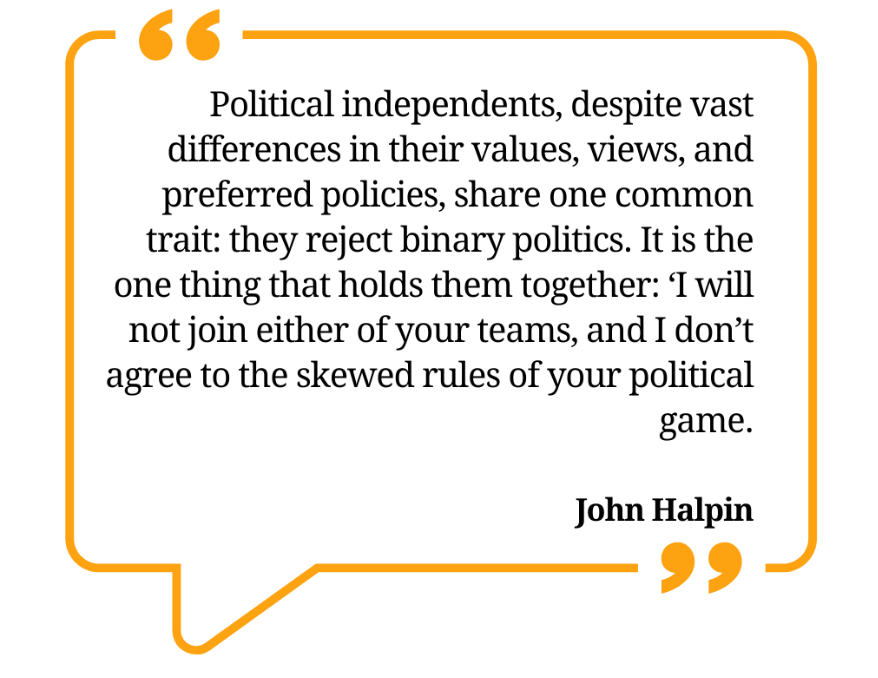
Halpin’s argument cuts to the heart of what’s broken in American politics. Democrats and Republicans increasingly demand loyalty in exchange for a voice, while millions of voters are looking for something else: the freedom to judge candidates and ideas on their merits.
And yet our election system is built around the teams independents have rejected. In states with closed primaries, independent voters can be shut out of the taxpayer-funded elections that often determine who ultimately takes office. They’re told they’re important enough to win elections-but not important enough to participate in choosing the candidates.
The independent voter isn’t the problem with American politics. The problem is a political system designed for voters who no longer exist.
Halpin’s piece is a powerful reminder that the independent movement isn’t about creating another political team. It’s about breaking free from the idea that American voters should have to choose one in the first place.
In Case You Missed It
OP President John Opdycke on CNN
Open Primaries President John Opdycke joined CNN to talk about Alaska’s primary system -and why the broader movement toward open primaries is gaining attention.
Opdycke made the case that opening primaries to all voters does more than enfranchise independents. It changes how candidates campaign by forcing them to build broader coalitions beyond their partisan base.
He also pointed to California as evidence that an open primary can change political behavior. California saw 41% turnout in its most recent primary, compared with just 9% in New York’s closed primary, he noted. He argued that California’s Top Two system has given voters more power and created greater incentives for Democrats and Republicans to work together.
Opdycke also weighed in on the different models states are experimenting with. His message: there is no single model every state has to adopt. States should have the freedom to find the system that works for their voters.
And he ended with a pointed observation about California: the fact that the parties hate the open primary, he said, is a signal that it is working.
Fast Takes
Wyoming’s Closed Primary Forces Voters to Pick a Side
Wyoming’s closed primary system is forcing voters to make an impossible choice: pick a party months before they even know who’s running.
A new Jackson Hole News&Guide report captures the absurdity. Teton County voters had to choose between participating in competitive local Democratic races or weighing in on consequential Republican contests for Congress and statewide office. Some switched parties. Others simply had to sit out races they cared about.
As one voter put it: “I would have liked to have been able to vote for other people on the other side as well.”
That’s not democracy working. That’s a system forcing voters to choose a team before they’re allowed to choose their candidates.
Activities/Events
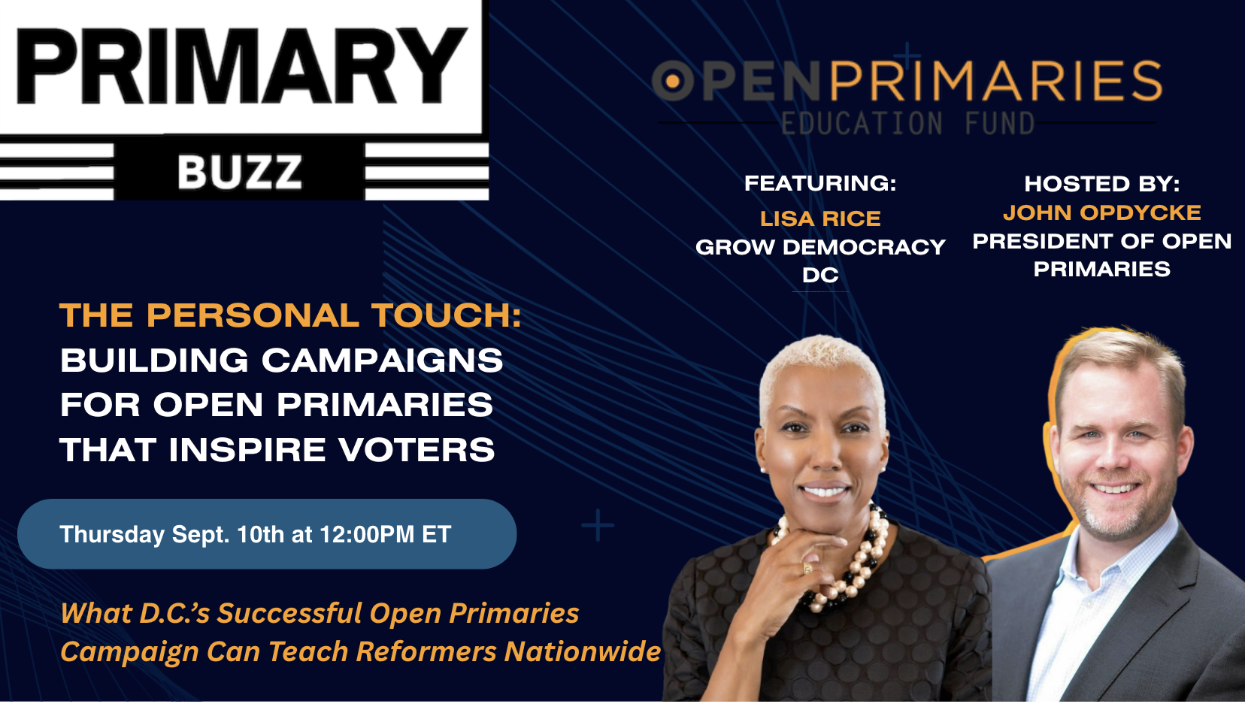
The Personal Touch: Building Campaigns for Open Primaries that Inspire Voters
What D.C.’s Successful Open Primaries Campaign Can Teach Reformers Nationwide
September 10 at 2:00 PM ETFeaturing Lisa Rice, Founder of Grow Democracy DCModerated by Open Primaries President John Opdycke
Winning open primaries isn’t about policy. It’s about enfranchising voters who are shut out and building trust that changing the rules creates positive possibility and opportunity. If voters are not inspired, don’t trust campaign leadership, and don’t see a relationship between open voting and improving their lives - who cares what the policy is.
In 2024, 73% of D.C. voters approved Initiative 83, voting to open the city’s taxpayer-funded primary elections and deploy ranked choice voting in the general election. But after the measure passed, ranked choice voting was implemented and open primaries was shelved by the city council - leaving nearly 100,000 independent voters shut out.
For nearly two years, the will of the voters was blocked. But Lisa Rice, founder of Grow Democracy DC, and her team don’t know how to take no for an answer - thank god!
Please join us for a discussion about how the DC team went to the mattresses and forced the city council to implement open primaries in the nation’s capitol.
Open Primaries President John Opdycke will sit down with Lisa to explore what the D.C. campaign can teach reformers across the country: How do you make structural reform personal? How do you build a coalition that lasts beyond Election Day? And how can campaigns connect with and inspire voters in ways that move political leaders to act?
Join us on September 10 at 2:00 PM ET for a behind-the-scenes conversation about what it takes to turn voter support into lasting political change.