
 Shawn Griffiths
RICHMOND, Va. - On Tuesday, Virginians will go to the polls and vote on a referendum that if passed will implement a temporary new congressional map that gives Democrats as much as a 10-1 advantage in House elections.
The race has become both heated and expensive. Yet, most of the money that has poured into it is shrouded in secrecy. This is because it has been funneled through multiple nonprofit entities commonly referred to as “dark money” groups.
Supporters of the referendum say this was all triggered by the actions of Texas, Missouri, and North Carolina to gerrymander their maps. They also say this is temporary and that the state’s voter-approved bipartisan redistricting commission will resume its business in 2030.
 Shawn Griffiths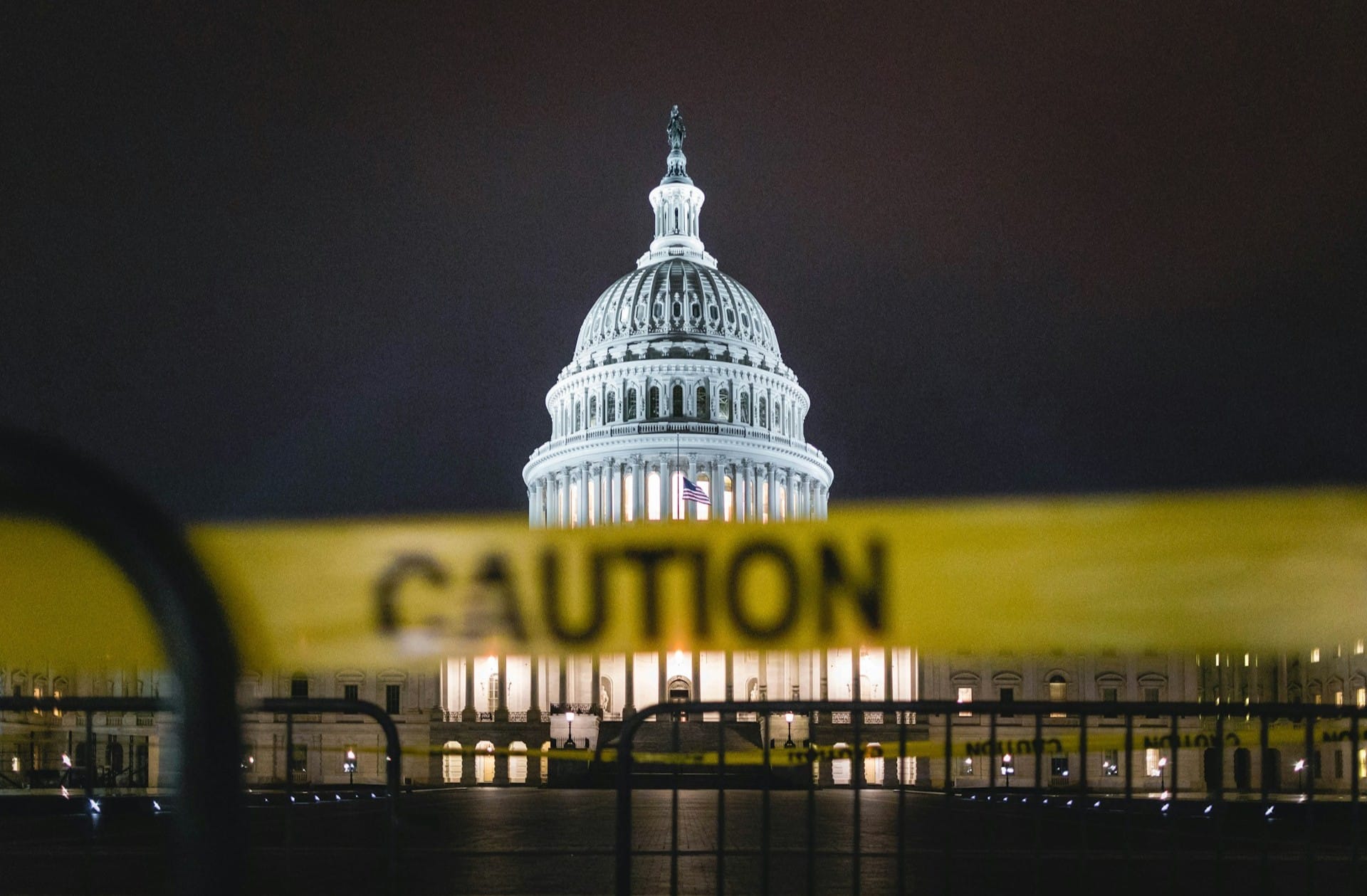
Former President Barack Obama recently voiced his support for it, much like he did with Prop 50 in California.
"Over the past year, several Republican-controlled states have taken the unprecedented step of redrawing their congressional maps in the middle of the decade,” he said. “And they’ve done it for a simple reason: to give themselves an unfair advantage in the midterms this fall.”
Of course, when supporters talk about the actions of Republican-controlled states, they leave out California and failed attempts in Washington and Maryland (a state with only one Republican representative in the US House).
After Prop 50, California Democrats may end up with as much as 92% of their state’s congressional seats.
They also negate to mention that Colorado Democrats are attempting to do the same thing.
It is a common theme in this ongoing gerrymandering fight: One side points their finger at the other side and says, “they started it,” but won’t take accountability for how their party has contributed to escalation.
Republican US Rep. Jennifer Kiggans asserted that the referendum is “a blatant power grab by the Democratic majority." She added that it will “permanently diminish conservative representation in Virginia’s congressional delegation.”
Then there are reform-focused groups, like the Forward Party, who call all of these efforts – whether it is Texas, California, Missouri, or Virginia – a “race to the bottom.”
“When politicians control the drawing of districts, it moves us further away from a system where voters choose their leaders and closer to one where leaders choose their voters,” the Forward Party wrote in a statement of opposition.
“Respecting stable and fair processes strengthens public trust and encourages the kind of competitive elections that bring more voters, including independent voters, into the democratic process.”
Like Prop 50, the Virginia redistricting effort will be left up to voters to decide. And just like the California measure, the special election has seen a tremendous influx of cash.
Nearly $100 million went into the race (combining both support and opposition contributions). But here’s the thing: No one knows the source of most of it because 95% came from “dark money.”
Simply put, a “dark money” group has 501(c)(4) nonprofit tax-exempt status. Not all organizations in this category are “dark money” entities. The label is reserved specifically for nonprofits that regularly engage in and contribute to political activity, but because of their status they don’t have to disclose their donors.
Super PACs are a common example of 501(c)(4) groups in political spending.
In total, more than $66 million was raised to support Virginians for Fair Elections, the committee that is spearheading the “Yes” campaign. About $38 million came from House Majority Forward (a 501(c)(4) group).
Nearly $12 million came from The Fairness Project (which is funded by another layer of nonprofits), $5 million was provided by George Soros’ Fund for Policy Reform, and nearly $3.7 million is attributed to American Opportunity Action.
All of these are 501(c)(4) lobbying groups.
None of them are required by law to disclose their donors. The funding could have come from mega donors and people out of state who will not be represented by members of the Virginia delegation – it’s largely unknown.
The dark money space used to be dominated by Republican and conservative entities. But over the last few years, Democrats have also embraced funding routes that make their ultrawealthy donors harder to identify outside already known names like Soros.
The opposition committee, Virginians for Fair Maps, has also taken in millions from unknown sources. It has just taken in less.
Out of the $23 million contributed to the “No” campaign, nearly $20 million came from an entity with the same name, Virginians for Fair Maps. An additional $2.5 million came from Per Aspera Policy Incorporated, a PAC directly tied to billionaire Peter Thiel.
It is unclear how much of this money came from Thiel. In the case of Fund For Policy Reform, it is known that most – if not all – the money likely came from Soros, just like it did when his group got involved in Prop 50.
There are many similarities between the April 21 referendum in Virginia and California Prop 50. However, while more money went into the California election, the amount of undisclosed dollars in Virginia is far greater.
In California, nonprofit money was dwarfed by individual mega donors, labor unions, and political committees. But in Virginia, it is the exact opposite.
Tuesday’s election may also not be as one-sided as Prop 50, which got a “Yes” vote from nearly two-thirds of participating California voters. The most recent polling from State Navigate shows support at 50%, despite the “Yes” campaign outspending their opponents by significant margins.
Another poll from The Washington Post and George Mason University shows support at 53%.
In Other Reform News…
Independent Registration Surges in New Mexico Ahead of State’s First Semi-Open Primaries
Independent voter registration was already on the rise in New Mexico. However, there has been a recent explosion in independent registration following two things:
- The legislature passed a semi-open primary bill in 2025
- The state has a new automatic voter registration system
According to the latest reports, more than 80% of new registrants from June to now have registered unaffiliated with a political party. In whole numbers, the number of independent voters has risen by about 57,000.
While automatic voter registration is being credited for the surge, independent voters were already one the rise. Independents now make up 28% of the registered voting population in New Mexico. This is up 3 points from 2025.
From 2010 to 2025, independent registration increased from 19% to 25%. So, the trend toward independence already existed.
Here’s the most important takeaway: It would have been irresponsible to have automatic voter registration without open primaries. If the state still had closed primaries, all of these new registrants would be denied the right to vote in June’s taxpayer-funded elections.
Under the state’s automatic voter registration (AVR) system, New Mexico citizens are registered to vote when they do business with the Department of Motor Vehicles (i.e. when they renew their driver’s license or get a state ID).
In some cases, there may be a voter who has a party preference, but if they don’t state it then they are registered unaffiliated. Under the old closed primary rules, they would be turned away at the polls if they tried to vote in the Republican or Democratic primary.
But after the passage of SB 16, this is no longer an issue. Whether a voter meant to register independent or not – they won’t be denied their right to vote.
Shawn Griffiths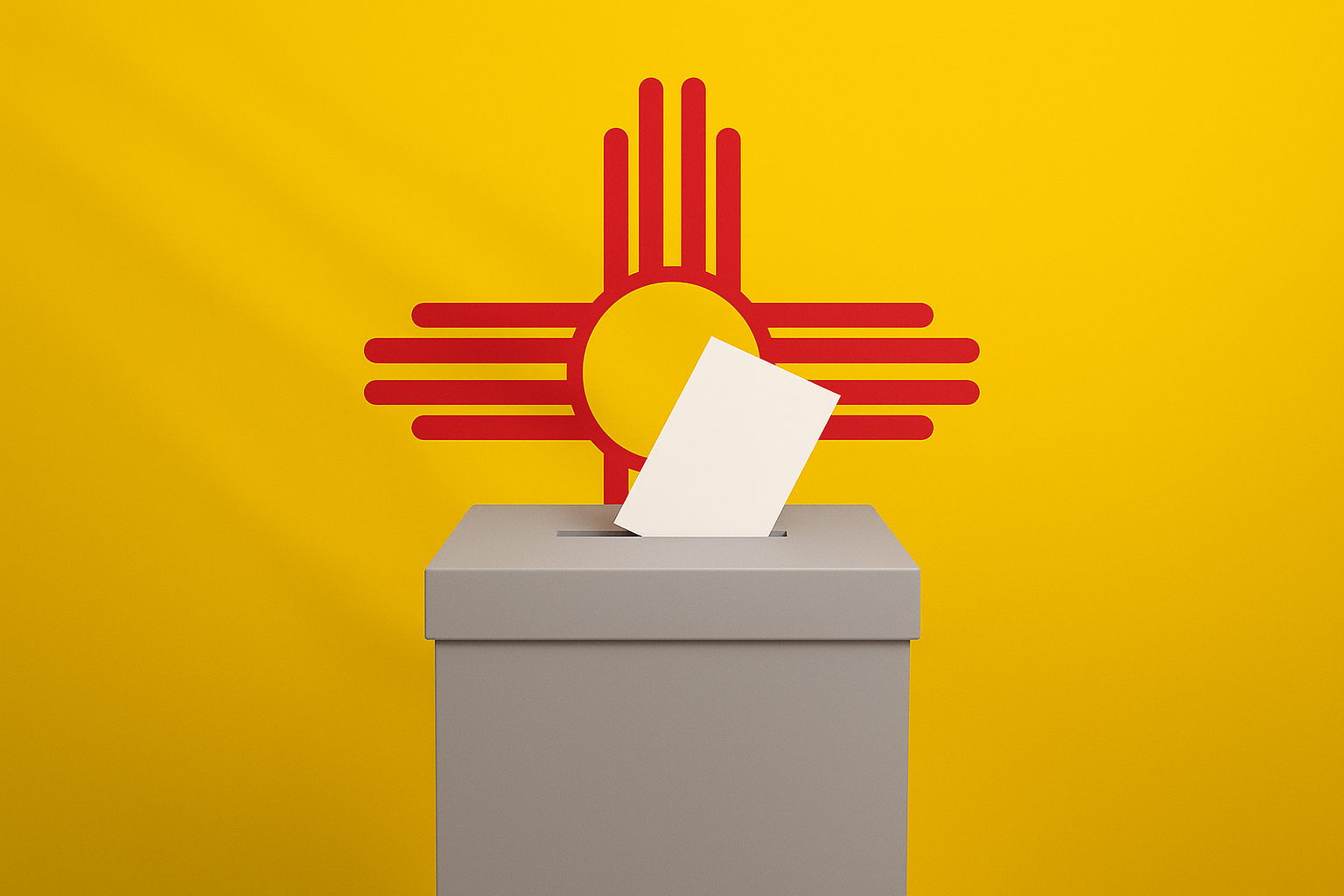
Under a semi-open primary system, voters registered with a political party have to vote in their respective party’s primary. Independent voters can choose which party’s ballot they want. While their options are limited to the candidates of that party, they now have access to the most important elections in New Mexico.
In any given election cycle, half of the state’s legislative races go uncontested, which means the district is so safe for one party or the other that other parties don’t bother to field a candidate. This means the only true election is the primary.
Prior to 2025, independent voters had no say in who represents them. Now, they do.
Judge Tells Challengers to California’s Top Two Primary: You Can’t Re-Litigate a Lost Case
Last week, I reported on a federal judge’s decision to dismiss a new lawsuit against California’s Top Two nonpartisan primary system. The judge told plaintiffs that they tried this already and lost. As such, they can’t repackage the same arguments and sue again.
Shawn Griffiths
The plaintiffs in the case included the Peace and Freedom Party, Libertarian Party of California, Green Party of California, the American Solidarity Party of California, and several individual candidates affiliated with those parties.
The only new plaintiff was the American Solidarity Party of California. However, simply adding another party to the lawsuit wasn’t enough to re-litigate challenges that have been rejected by courts in California and Washington (which also uses Top Two).
Plaintiffs claimed Top Two violated their right to equal protection since only major party candidates tend to advance. The judge re-affirmed existing court precedent, which states that Top Two creates a level playing field by applying the same rules to everyone.
All voters and candidates participate on a single primary ballot. Ballot-access rules are the same for every candidate, regardless of party. It is not the fault of the system if a candidate and their party are not popular or have broad support.
It does not make the nonpartisan open primary unconstitutional.
Plaintiffs also challenged California’s ban on write-in candidates in the general election. The judge said there is nothing unconstitutional about the state’s interest to advance two candidates to the general, and overturning the ban would negate the point of Top Two.
The Independent Voter Project – which sponsored the Top Two measure approved by voters in 2010 – now advocates for expanding the number of candidates that advance to the general election to four.
But the organization’s position is that California should not go backwards. In other words, it should not return to a closed partisan system that shuts out independent voters and creates an unequal playing field for voters and candidates alike.
Quick Hits
- A new documentary film titled People vs. Politics premiered at the 2026 Washington, DC International Film Festival over the weekend. It profiles ongoing and expanding grassroots movements to bring systemic reform to partisan US elections, including the 2024 campaign to get Initiative 83 (open primaries + ranked choice voting) passed in DC. The documentary includes campaign leaders and reform activists who have worked in this space for years.
- Speaking of DC, city voters are preparing to vote in their first primary election using ranked choice voting. However, more than 80,000 independent voters will be denied access to these taxpayer-funded elections despite overwhelming voter approval of Initiative 83. This is because the DC City Council has refused to implement it. This has led the Washington Post editorial board to ask, "Why are DC Democrats so afraid of independent voters?"
- The same question could be asked of Republicans in Texas, Alabama, Tennessee, Colorado and other states in the South that have tried to close their primary elections. A closed primary bill in Alabama recently died without a vote while Tennessee lawmakers continue to consider closed primary legislation.
- ICYMI - Better Ballot Sacramento began collecting signatures for a proposal that if approved by voters would eliminate primary elections in the city, which would instead conduct one election each cycle using ranked choice voting.
- President Donald Trump has once again attacked ranked choice voting. Specifically, the Top Four election model used in Alaska that includes ranked choice voting in the general election. He has called on state voters to repeal a system he calls “very fraudulent” and “restore free, fair, and honest elections” without providing evidence to support his claims. He also supports a repeal measure that would eliminate laws that enforce greater transparency in who is spending money to influence state elections.