Skip to content
Subscribe

Romney Regulatory Reforms Would Slow Regulation

Published:

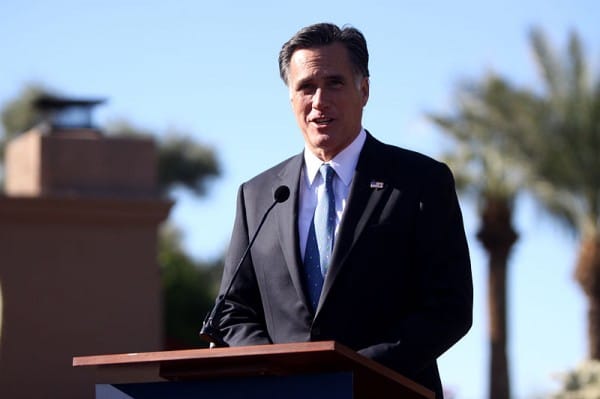
A number of Governor’s Romney’s proposals have been criticized for not being specific enough.  One area where he has been quite specific, however, is regulatory reform.  Romney’s plan for regulatory reform would permanently change the way the government regulates everything from consumer fraud to airplane safety to toxic chemicals. Here are his two major proposals, how they would work, and their pros and cons.

#1.  Impose a regulatory cap of zero.

How it would work. Suppose that EPA decides a pesticide is dangerous and that a ban would cost industry $100 million.  In order to pass the ban, EPA would have to repeal some other regulation (which might of might not involve the same industry) costing $100 million.  Similarly, if the FAA wanted to impose a new airline safety rule, it would have to repeal an existing one.

Pros. The regulatory budget would freeze the total cost of regulation to society. The amount of resources that businesses collectively would have to devote to regulatory compliance would not change over time. Also, the regulatory cap might cause agencies to prioritize better by eliminating marginal regulations in order to enact more beneficial ones.

Cons.  The regulatory budget could force agencies to sacrifice beneficial existing regulations to deal with urgent new situations.  This could require making tough choices between protecting different groups of pollution victims or between limiting consumer fraud by banks versus improving banks’ financial stability. Also, it would double the complexity of the regulatory process since there would have to be a proceeding to repeal one rule as well as the proceeding to adopt another.

#2.  Require Congressional approval for all major new regulations.

How it would work. Suppose the FAA decides that airlines need to adopt expensive new safety measures. Currently, the main checks on the agency are Presidential oversight and review of the final rule by the courts. Under the proposal, a new check would be added. The regulation would not go into effect until it was approved by Congress and signed by the President.  A fast-track procedure would be used so that the proposal wouldn’t get stuck in committee or filibustered.

Pros.  The procedure would ensure that Congress, not just agencies controlled by the President, plays a role in approving new regulations.  This would shift power away from the White House and give Congress more of a role, providing a check on executive authority.  It would also provide another opportunity for the public to have input, in addition to the existing right to file comments in the rulemaking proceedings.

Cons. Congress may not have the time or expertise to delve into the technical issues.  Major rules often involve very complex scientific and economic issues in areas where Congress does not have expert staff.  The formal records in the proceedings can involve tens of thousands of pages of evidence and debate, which Congress could not possibly review. The process might improve democracy or could just give special interests another opportunity to block rules.  The courts might back off from review of regulations once they had received congressional approval, which could be either good or bad.

Both of these proposals would probably make it much more difficult to create new regulations.  So whether judgments about the proposals are likely to vary, depending on whether you think we need new regulations or already have too many.

Adhere to the IVN etiquette

By posting a comment, you agree to adhere to our etiquette rules: No partisan attacks, no personal attacks, substantiate your sources, no self-promotion.

Contact IVN

Questions about this article or our coverage? Send us a message. A free IVN member account is required.

Message sent

Thanks, we’ll review it and get back to you if needed.

Message not sent

Sorry, something went wrong. Please try again.

Sign in to send a message

Messages are tied to your IVN member account. Signing in is free and takes a few seconds.

Republish this article

Republishing guidelines

Republish IVN articles for free. Independent Voter News articles may be republished online or in print under a Creative Commons BY-NC-ND 4.0 license, on these terms:

  1. Credit the author and IVN. Keep the byline ("By Author Name, Independent Voter News") and the attribution note at the end, which links to the original.
  2. Keep the meaning. You may update time and place references and apply your house style. You may trim for length, as long as the cuts don't change the meaning or misrepresent the author. Keep the headline. Mark any additions as your own (for example "Additional reporting by ...").
  3. Translations are welcome. Translate faithfully, add "Translated from English by [your outlet]", and tell us at editor@ivn.us.
  4. Keep the links, including the link to the original article.
  5. Keep the tracking image. The HTML includes a 1-pixel image that counts readers on your page. It collects no personal information.
  6. Photos and illustrations. Images credited to IVN may be used with this article only. Images credited to others (AP, Getty, Unsplash, Wikimedia and so on) stay under their owners' terms. Secure the rights or switch "Include images" off.
  7. Don't sell it. You can't sell our articles or sell ads specifically against them. Your normal site advertising is fine.
  8. No implied endorsement. Don't suggest that IVN or the author endorses you, your candidates or your causes, or that donations to you support IVN.
  9. Keep labels. Opinion or analysis pieces keep that label.
  10. Point search engines to the original. Where your CMS allows, set the canonical URL to the original IVN article.
  11. No bulk or automated republishing, and don't submit our articles to aggregators (Apple News, Google News, MSN) as your own.
  12. Corrections and removals. Update your copy when we correct it, and remove it promptly if we ask. We'll contact you at the email you give us.
  13. Questions or print republication: editor@ivn.us.

IVN staff: fill in who you're inviting above, then create the invite.

Preparing the article

Romney Regulatory Reforms Would Slow Regulation

Choose a format
  • HTML
  • Email HTML
  • Markdown
  • Formatted (.docx)
  • Plain text
  • WordPress blocks
  • PDF
Choose a platform

Photos credited to others need their owners' permission.

To for

Republishing somewhere else? Questions? editor@ivn.us