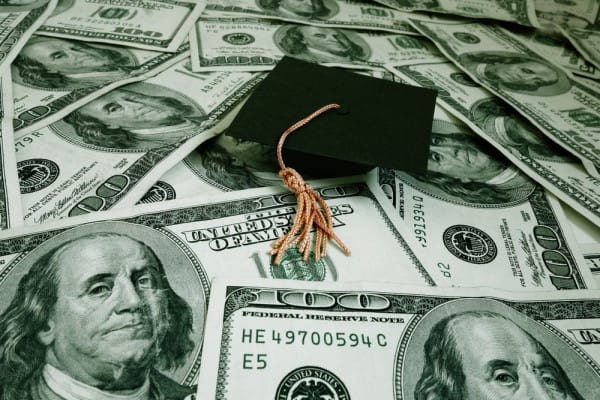
Credit: zimmytws / Shutterstock.com
In a Rolling Stone article in politics by Matt Taibbi, he explains why the student debt crisis has almost nothing to do with student loan interest rates. It's rooted in the industry of student loans itself, and those who are well-off in post-graduate careers can still face the harsh consequences of student debt.
Taibbi interviewed a handful of students who are actively dealing with their student debt situations and the comments tell the story:
"I am nearly $45,000 in debt. . . . If I had known what I was doing, I would never have gone to college.""Nobody sits down and explains to you what it all means,""Only a small minority of those who've been to college have been told very simple things, like what their interest rate was"
The last comment came from Alan Collinge, who founded StudentLoanJustice.org. Long story short, Collinge borrowed from Sallie Mae, graduated college, found a job, lost his job, then his remaining debt more than doubled because of his inability to make payments. Refinancing options were scarce. Well, he can find another well-paid job eventually, right? His new job ran a credit check on him, and he was done.
It may seem like an isolated incident, and maybe most students just don't know what they're getting into. But there's a reason why 38 million people are a part of the national student debt of $1.1 trillion. If students don't have the exact details of what they're loans entail and where they could be in four years, something is bound to go wrong whether its a private loan, or a government loan with better payment options.
Students are making decisions at 18 years of age that are going to be weights on their shoulders until they're 40, maybe even older. You can blame the student for not doing enough research, but even the brightest minds may not be able to comprehend the fine print or begin to ponder the implications if its not made readily available.
In the end, the bipartisan legislation that was enacted on student loan interest rates is going to do very little to prevent the growth of the $1.1 trillion student debt crisis. It ties the loan interest rate to that of treasury notes, leaving the possibility of rates above the feared 6.8 percent. As illustrated by Taibbi, the bipartisanship was about putting on a political show, not about the financial problems college graduates face for years to come.
How can we expect a government to regulate itself, especially if it can potentially profit from a policy that may have good intentions? There are parallels between the banks' past involvement -- before they were regulated -- with student loans and the government's current involvement.
Senior policy advisor for independent Senator Bernie Sanders stated:
"It was wrong when banks were making an $86 billion profit on students, but somehow it's OK when the government makes a $185 billion profit on them."
Student debtors can be pointed at for lack of responsibility when taking out loans, but the government needs to responsible as well. Creating a system that sets up many for financial failure is not being responsible.
Maybe a better education about what it means to pursue higher education itself through loans would solve the problem; or maybe getting rid of guaranteed government loans altogether; or maybe bolstering a better job market; or even better insight on why tuition is so high to begin with.
I don't know enough to solve the problem myself, but who is going to make this the issue discussed when trying to solve the student debt crisis? It's the discussion that needs to happen to sustain the American higher education system.
(Read the entire story by Matt Taibbi on Rolling Stone here.)