The Lessons We Didn't Learn
The stock market has been on a tear lately. It has been setting new records right and left. And not just the NYSE, but also Nasdaq and the S&P. Even unemployment is slowly dropping as jobs are slowing coming back. By a mere look, our economy seems to be improving. But looks can be deceiving. With the stock market doing so well, businesses are making record profits but still hiring people, creating jobs, and even borrowing still struggle. We have managed to make our way through a housing collapse and a banking collapse which brought on what is termed "The Great Recession," but could we possibly be laying the seeds for the next one? And could it be even worse than this last one?
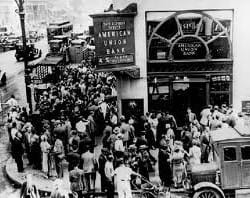
The banks are the main focus of this part piece since they are essentially the foundation of the economy. In 2008, the banking industry collapsed (as a result of the housing market collapse). Lehman Brothers filed for bankruptcy in 2008 since no other bank was interested in buying up its assets. But the dominoes were already starting to fall. Other big banks started declaring that they, too, had bad assets and were on the verge of bankruptcy. The Bush administration (with Treasury Secretary Henry Paulson) and the Democrats that were controlling Congress came up with TARP (the Troubled Assets Relief Program). TARP, which was part of the larger Emergency Economic Stabilization Act, was designed for the government to buy up assets and equity and strengthen the financial system. The EESA was designed to provide the banks the funds they would need to operate and not go into bankruptcy. The banks were deemed "too big to fail," and the economy would not be able to sustain a hit if all the major banks went bankrupt the same way Lehman Brothers did. The funding came from the taxpayers and was set at $700-billion. (This would later be reduced by the Dodd-Frank Wall Street Reform and Consumer Protection Act to $475-billion. The Congressional Budget Office announced in October 2012 that total disbursements would be $431-billion.) Taxpayers were not too pleased by this move since they were footing the bill and the banks were still foreclosing on their houses and weren't giving them any assistance. Even the federal government wasn't doing much to assist the average taxpayers. The argument in favor though was that, again, the economy would get even worse (possibly to a depression level) if all the banks failed at once. The easy solution in this was to buy time so that the banks could shore themselves up and then get to a more manageable size. The problem is that this easy solution never happened.
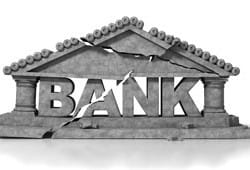
Instead of the big banks being busted up into a size more manageable and able to go bankrupt without bringing down the entire economy, they only got bigger. JPMorgan Chase would buy Bear Stearns, Bank of America would buy up Merrill Lynch, and Wells Fargo would buy Wachovia. (NOTE: This is just a small sample and not a complete list.) So the banks that were too big to fail before are even bigger now. And in a real smack to taxpayers, and largely unknown to them as well, the bailouts are still happening. In February of this year, the New York Times reported on a secret deal struck in July 2012 between the Federal Reserve Bank of New York and Bank of America. That doesn't mean that Congress hasn't made any attempt at all to break the banks up. In January, Sen. Sherrod Brown (D-OH) and Sen. David Vitter (R-LA) wrote legislation that would have the Government Accountability Office study whether banks with more than $500-billion in assets require an economic benefit. This legislation passed unanimously in the Senate. It even earned the praise of conservative columnist George Will, who wrote in the Washington Post that conservatives should be on board not only with that legislation but also with the proposal that the two Senators were teaming up on to bust up the big banks. When a bank goes bankrupt (yes, there is irony ), it should not be able to bring down all the other banks and the entire economy. In 1995, the largest 6 banks had combined assets that were 16-percent of GDP. Today, that number is 64-65-percent of GDP.
In 2012, the CEO of JPMorgan Chase, Jamie Dimon, was summoned before Congress after it was reported that the bank had lost $2-billion in "risky" trading in May. Early reports were denied and minimized in an attempt to minimize exposure. JPMorgan Chase had accepted taxpayer bailout money from TARP, afterall. By July 2012, the amount was upgraded to $4.4-billion and the bank was still continuing to lose money on the bad hedge fund investments. The ordeal is still under investigation by the FBI, SEC, and the Federal Reserve. But it still goes to show how little these big banks (and their CEO's) actually care for the US taxpayers and the economy as a whole. They are continuing to make risky investments, and then they will expect us to bail them out should things go sour once again.
During the recession, the people learned many things. We learned to do without certain things and make cut backs where we could; we learned not to buy things that we probably couldn't afford; and we learned to save up whenever it was possible. We have redefined ourselves. Yet, as we have made these adaptions, the big banks have not. They are still making risky and bad investments. And though they are posting record profits (in the billions), they still are being quite frugal with credit. Part of the bailout was to help keep credit flowing so the economy could continue. Sadly, that part wasn't made a requirement for getting taxpayer bailout funds. And while the banks were too big to fail before, they have been allowed to get even bigger by our very government. Millions of people remain unemployed (and even more underemployed) because the economy is not growing by leaps and bounds that the stock market would have you believe as of late. We all know the lessons that should have been learned from the recession. And as we, the people, have taken note of them, the banks have only turned a blind eye. They are planting the seeds already for the next economic collapse almost on the exact same reason. The 4 big banks can manipulate the economy in any way that suits them. Unfortunately, it will again catch up with them, and it will be us, the taxpayers, that pay the ultimate price. It would even seem plausible that the next time could be even worse since we are less likely to allow the government to bail them out again with our tax dollars. The lessons need to be learned... both by the big banks and the government. It goes back to the old axiom, "Fool me once, shame on you. Fool me twice, shame on me."