As Democrats scramble to replace Graham Platner, the former logger and Maine Senate president offers a rare mix of progressive politics, labor credibility, and proven appeal in Republican-leaning areas.
Prediction markets are already pricing in a post-Platner race—and the name that is closing the gap with Collins before any announcement has been made may help the party avoid a full Joe Biden situation.
Buried in Title 21-A, section 374-A of Maine's election statutes is a provision built for exactly this kind of situation: a primary winner who becomes, in the party's estimation, more liability than asset before the general election arrives.
His campaign website frames the entire race around one premise: that Big Money has corrupted both parties to the point where regular people who play by the rules can no longer afford the lifestyle their parents had
With a nationwide slate of independent candidates, $2 million ready to be deployed, and campaign staff with real experience, Bob Chew’s in a better position than many to force a conversation he believes is necessary.
The goal is to deny either party a working majority, then set terms before helping anyone organize the chamber. Pinkins offered a particularly specific account of what those terms would look like.
This isn't a candidate who left one party for the other. It's a candidate who spent time in both, looked around, and decided that the incentives that govern both are the fundamental problem.
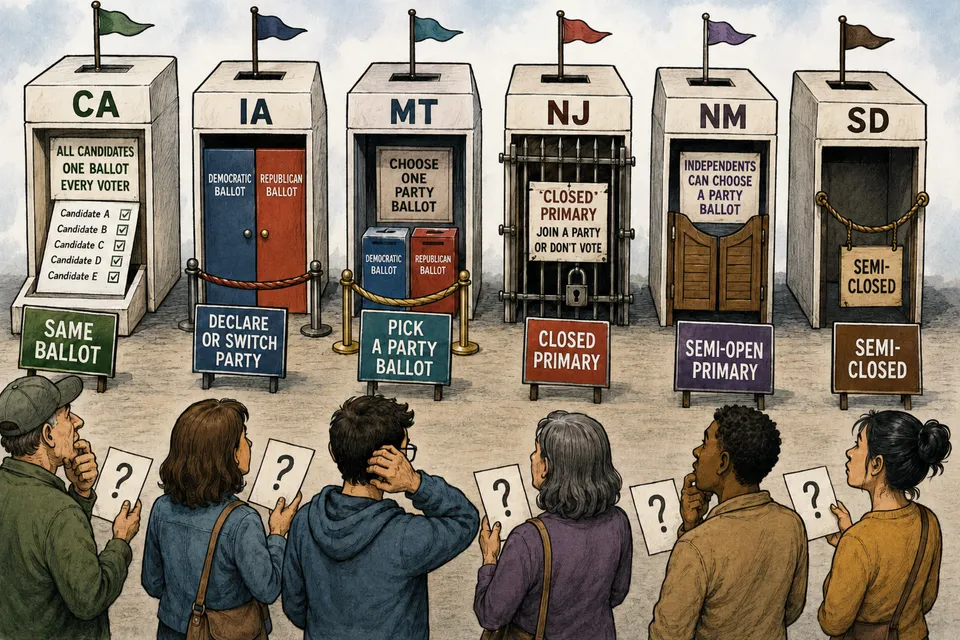
June 2 primary elections are being held in several states across the US. And when it comes to independent voters and their rights, none of them have the same rules.

 Shawn Griffiths

 Nathan Smolensky

 Cara Brown McCormick

 Matt Shinners

 Independent Voter Project