Independent Voter Podcast
Everyone's calling Troy Jackson the establishment's safe replacement for Graham Platner. Here's the thing: Jackson has defied Democratic Party leadership more than Platner ever did - and he's got two decades of receipts.
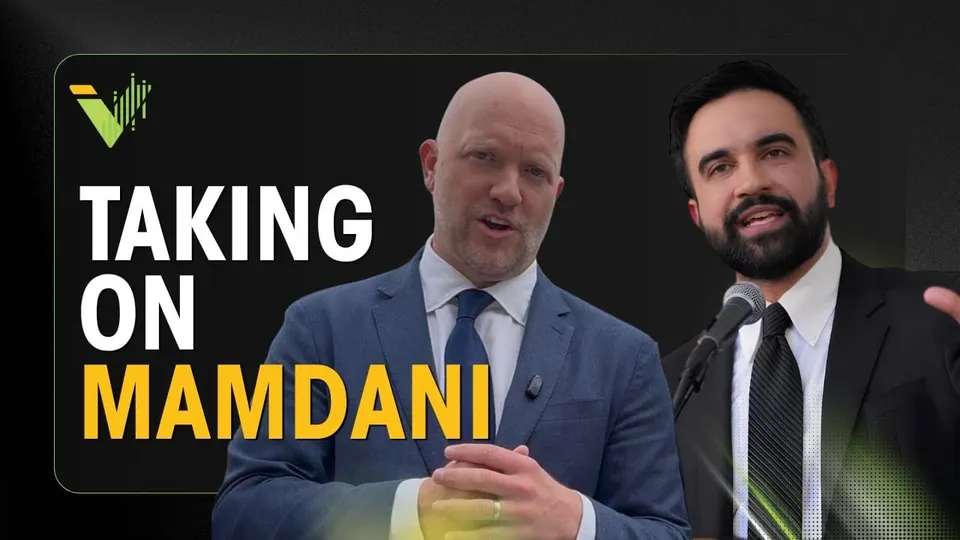
Cara called the whole Maine shakeup before it happened - Platner out, Troy Jackson in - and she explains why she saw it coming and why she's genuinely excited about it. Chad and Cara break down what makes Jackson different: a Senate president who bucked his own party's leadership to back ranked choice voting, outperformed other Democrats with Trump voters, and would be the first bona fide working-class U.S. Senator in a chamber of 100.
This episode is sponsored by the Independent Voter Project and produced by Olas Media. Listen on Spotify or Apple Podcasts.
Episode Highlights
This episode of the Independent Voter Podcast digs into the turn of events in the Maine Senate race — and why Troy Jackson, the man replacing Graham Platner, may be more independent than the movement candidate he's succeeding.
Hosts Chad, Cara, and Ethan open with Cara's now-vindicated prediction: the moment Platner withdrew, she knew Jackson would end up as the nominee. But the bigger story, she argues, is what grassroots organizers in Maine just proved — thousands of people with a personal stake in politics can organize around a goal and win, giving an ugly saga what she calls "kind of a nice ending."
The hosts then challenge the red-vs-blue narrative that this was simply the establishment swapping in a safe pick. Platner, Chad argues, was riding a partisan far-left wave, while Jackson has repeatedly stepped out of the party line — most notably breaking with Democratic Party leadership to support ranked choice voting, and outperforming other Democrats with Trump voters.
Cara, who watched Jackson defy leadership from inside one of the three most powerful offices in a state capitol, explains how Senate presidents, speakers, and governors control the committees where bills go to die — and why it matters that Jackson used that power differently. At 58, with two decades of fighting for Maine people behind him, he'd also be the first bona fide working-class U.S. Senator among all 100.
The conversation pivots to Trump's nationally televised speech claiming the 2020 election was rigged and citing a Department of Homeland Security list of 278,000 non-citizens registered to vote. Cara was mid-argument that the president had lost his mind when a press release crossed the transom: New Jersey's new Democratic governor, Mikie Sherrill, announced the state's motor-voter system had registered roughly 6,000 people who said they weren't U.S. citizens.
That becomes the episode's central theme: both can be true. You don't have to be an election denier to recognize real problems — like California taking 38 days to certify an election — and you don't have to accept every extrapolation as fact. The hosts argue partisans on both sides have turned politics into a world where one side admits no cons and the other admits no pros.
Case in point: California's Attorney General just reissued the ballot title for the state's voter ID initiative at the eleventh hour — changing "establishes additional voter identification and citizenship verification requirements" to "prohibits citizens from voting unless they present government issued identification." The hosts ask whether anyone can honestly call that neutral, and Cara recalls fighting the same battle in Maine when Shenna Bellows wrote a loaded title for the Super PAC initiative.
Chad closes with a breakdown of California's ballot harvesting rules: the only state allowing harvesters to collect unlimited ballots with no relationship to the voter, a three-day return rule with no enforcement mechanism, and ballots accepted up to seven days after the election. The result, he argues, isn't proof of a conspiracy — it's a system with no chain of custody that leaves voters arguing about trust because nobody can prove anything.