Skip to content
Subscribe

Supreme Court Decision on Affirmative Action Needed

Published:

Credit: University of Michigan
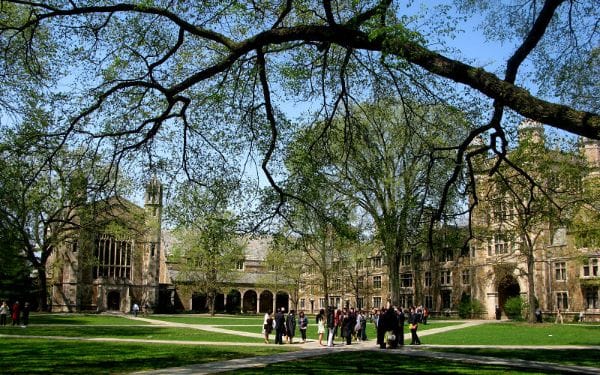
Supreme Court On Affirmative Action

On Thursday, the 6th Circuit Court of Appeals ruled that the Michigan ban on affirmative action was unconstitutional. This decision contradicts the 9th Circuit's decision to uphold the California ban, demonstrating a Supreme Court decision on affirmative action is needed more than ever.

Michigan passed a ban on affirmative action in 2006 for government hiring and contracting, and for admission to public universities by amending its constitution.

The decision was not based on racial discrimination, but on a violation of the Fourteenth Amendment -- the right to equal protection. The court ruled 8-7 on the ban.

The court considered that people who want to change other elements of a university admission process have several ways to do so: lobby the admissions committee, petition university leaders, attempt to influence the college’s governing board or take the issue to a statewide initiative.

However, the only means proponents of affirmative action have to achieve their goals is through the constitution. Amending a constitution is a long and costly process. “The existence of such a comparative structural burden undermines the equal protection clause’s guarantee that all citizens ought to have equal access to the tools of political change,” ruled Judge R. Guy Cole Jr.

This isn't the first time the University of Michigan's affirmative action policies have come into question. In 2003 the US Supreme Court upheld the law school's admission policies in Grutter v. Bollinger. The court ruled that considering race as one element to determine admission was constitutional as long as it did not result in quotas.

What was once a more widely accepted policy, affirmative action has now been banned in public school admission in seven states, making the policies increasingly contested and controversial. Last week's decision highlights the diversity of opinion on the issue and states' need for clarification by the Supreme Court.

The Supreme Court is set to rule on affirmative action next year. In October, the court heard arguments in the case of Fisher v. University of Texas. Three outcomes are expected from that decision: a complete ban on race-conscious admissions, a tightening of the current limitations on use of race and ethnicity in  the admissions process or a decision that maintains the status quo.

Adhere to the IVN etiquette

By posting a comment, you agree to adhere to our etiquette rules: No partisan attacks, no personal attacks, substantiate your sources, no self-promotion.

Contact IVN

Questions about this article or our coverage? Send us a message. A free IVN member account is required.

Message sent

Thanks, we’ll review it and get back to you if needed.

Message not sent

Sorry, something went wrong. Please try again.

Sign in to send a message

Messages are tied to your IVN member account. Signing in is free and takes a few seconds.

Republish this article

Republishing guidelines

Republish IVN articles for free. Independent Voter News articles may be republished online or in print under a Creative Commons BY-NC-ND 4.0 license, on these terms:

  1. Credit the author and IVN. Keep the byline ("By Author Name, Independent Voter News") and the attribution note at the end, which links to the original.
  2. Keep the meaning. You may update time and place references and apply your house style. You may trim for length, as long as the cuts don't change the meaning or misrepresent the author. Keep the headline. Mark any additions as your own (for example "Additional reporting by ...").
  3. Translations are welcome. Translate faithfully, add "Translated from English by [your outlet]", and tell us at editor@ivn.us.
  4. Keep the links, including the link to the original article.
  5. Keep the tracking image. The HTML includes a 1-pixel image that counts readers on your page. It collects no personal information.
  6. Photos and illustrations. Images credited to IVN may be used with this article only. Images credited to others (AP, Getty, Unsplash, Wikimedia and so on) stay under their owners' terms. Secure the rights or switch "Include images" off.
  7. Don't sell it. You can't sell our articles or sell ads specifically against them. Your normal site advertising is fine.
  8. No implied endorsement. Don't suggest that IVN or the author endorses you, your candidates or your causes, or that donations to you support IVN.
  9. Keep labels. Opinion or analysis pieces keep that label.
  10. Point search engines to the original. Where your CMS allows, set the canonical URL to the original IVN article.
  11. No bulk or automated republishing, and don't submit our articles to aggregators (Apple News, Google News, MSN) as your own.
  12. Corrections and removals. Update your copy when we correct it, and remove it promptly if we ask. We'll contact you at the email you give us.
  13. Questions or print republication: editor@ivn.us.

IVN staff: fill in who you're inviting above, then create the invite.

Preparing the article

Supreme Court Decision on Affirmative Action Needed

Choose a format
  • HTML
  • Email HTML
  • Markdown
  • Formatted (.docx)
  • Plain text
  • WordPress blocks
  • PDF
Choose a platform

Photos credited to others need their owners' permission.

To for

Republishing somewhere else? Questions? editor@ivn.us