Photo: Maxim Shemetov
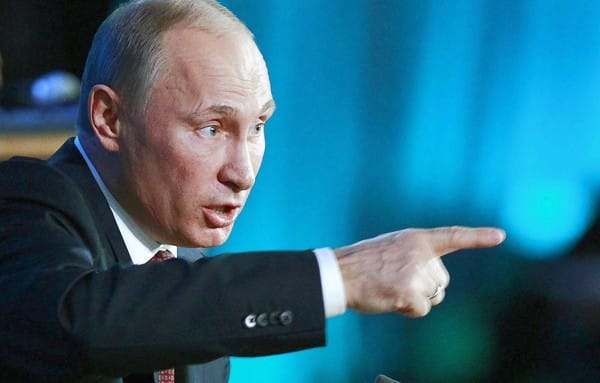
Last week President Vladimir Putin signed into law a ban on adoptions of Russian children by American citizens. The law sought to retaliate for the recently enacted American Magnitsky law, which banned the Russian officials deemed responsible for Sergei Magnitsky’s death from entering the United States or owning property and other assets in the country. The Russian ban on adoptions has created a firestorm of diplomatic ruptures internationally and a web of devastated families in the United States.
The U.S. law was named in memory of Sergei Magnitsky, a Russian attorney, who was working for an American law firm in Moscow on tax issues when he discovered a $230 million tax fraud being carried out by Russian police and officials. He went public with the information and Russian police arrested him soon after. Evidence has recently surfaced that Magnitsky was beaten and tortured in prison, where he subsequently died in pre-trial custody in November 2009 after a year in jail. No one has been punished and Russian officials are continuing to prosecute him posthumously.
While the U.S. perceived the law as a way to insert human rights concerns into their diplomatic relations with Russia, officials reacted with outrage against it, painting it as both “unjust and unfounded…an attempt to interfere in our internal affairs.”
Within days Russian policy makers retaliated by passing a similar law that focused on parallel sanctions for American judges and other citizens accused of violating the rights of adopted Russian children in America. However, Putin went a step further and signed a presidential decree ordering that the government take additional steps to encourage adoption by Russians and improve the internal health care for the large number of orphans in the nation who often slip through the cracks of the weak child welfare system in the country.
Realizing that few Americans owned property, traveled, or had assets in Russia, however, Russian officials went a step further and quickly passed a full ban on American adoptions, a measure which stopped the process of thousands of adoptions currently in process.
Russia currently has more than 700,000 orphans. Since 1992, U.S. families have adopted over 60,000 Russian children. Recently, more Russian children were adopted by U.S. parents than from any other country in the world.
The ban appears to have further strained relations between the two former Cold War rivals. Since Putin returned to office, he has blamed the U.S. for many problems befalling the nation. When Russians took to the streets to protest the nation’s election fraud in December 2011, Putin blamed the U.S. for provoking the demonstrations and expelled an American aid mission that sought to work to improve Russia’s public health system. In addition, Putin made it illegal for Russian NGOs to receive U.S. funding if they engaged in political activities, and outlawed serving as the head of a Russian organization if anyone had dual Russian-American citizenship, like the previous head of a Moscow-based Helsinki Group that monitored human rights in the country.
The law has torn apart the lives of families who had been working through the bureaucratic adoption process, some of which had been ongoing for years and could not be completed before the law went into effect. Stories have poured out across the country from couples like Heather and Aaron Whaley in Frederick, Maryland who had been matched with a 4-year-old girl with special needs from Vladivostok, Russia. Whaley is a therapist for special needs children and had worked with many girls like their potential adopted daughter. After undergoing an exhaustive screening process and being selected, the ban has stopped their adoption process dead in its tracks.
Another family in Troy, Michigan were days away from adopting a second child from Russia when the ban went into effect, delaying any possibility that the adoption will go through -- a possibility they have described as “devastating and terrifying.”
Senator John McCain, who championed the Magnitsky law responded to the Russian law in a press statement, saying:
"The idea that this legislation is any way comparable to the U.S. Congress’s passage of the Magnitsky Act is utterly baseless. Our law singles out and punishes individual Russian officials who are corrupt and complicit in gross human rights abuses; Russia’s barring of adoptions broadly punishes the neediest, most defenseless, and most innocent members of its own society."
While McCain points out the original U.S. law targeted Russian officials for a grave human rights abuses, it has, in the end, produced another human rights travesty for both the children in Russia and families in the United States. Furthermore, it signals a serious change in Putin’s diplomatic proceedings targeted at consolidating his own power and scapegoating the U.S. that will affect not only the lives of Russian children and U.S. families, but also diplomatic relations between the former Cold War rivals going forward. This could present new challenges for Obama's second term, although it could offer an opportunity for creative, targeted, and effective leadership on the international level.