Shawn Griffiths
Things looked like they could get even more chaotic this week in the mid-cycle gerrymandering arms race between the two major parties as the Indiana Senate took up a new congressional map to give Republicans an even greater electoral advantage in the state.
Trump has told Republicans to redraw their maps. California Gov. Gavin Newsom has made it clear Democrats are willing to do the same. But Indiana Senate Republicans this week put their foot down and declared that they want no part in this race to the bottom.
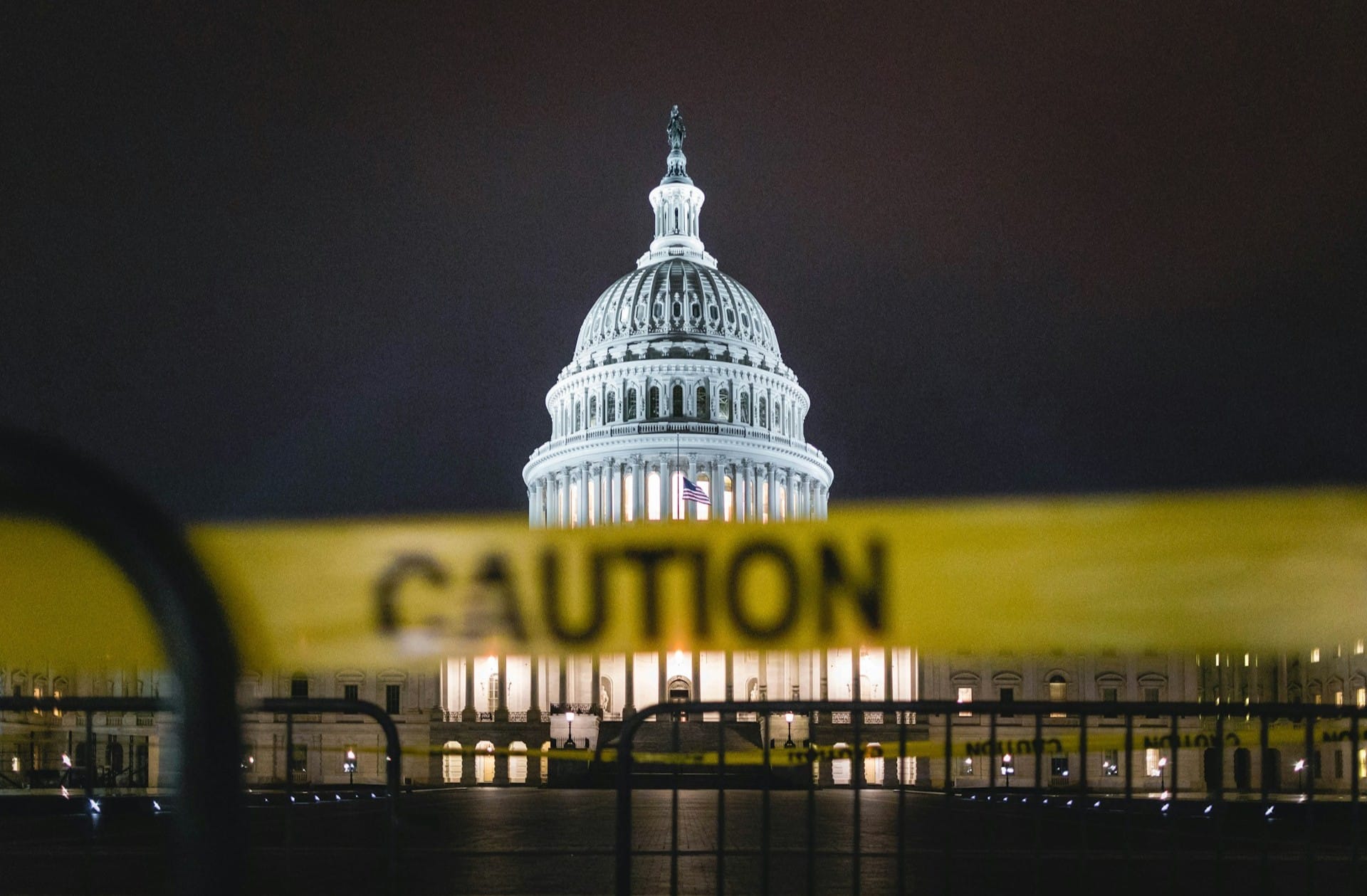
Passing a new gerrymandered map wouldn’t have been hard in Indiana, where Republicans hold a super-majority in the legislature. However, the Indiana Senate voted 31-19 against the plan.
This means 21 Republicans joined the 10 Democrats in the chamber to vote down a new congressional map in the midst of a partisan fight that has gotten so bad that senators received death threats, including bomb threats, unsolicited pizza deliveries, and swatting.
State lawmakers also faced political pressure from the White House, state visits from Vice President JD Vance, and whip calls from U.S. House Speaker Mike Johnson – not to mention threats of political consequences from Gov. Mike Braun.
By small group, he means more than half of sitting Republicans. Braun said he will be working with President Trump to primary the lawmakers who defied party leaders. In his response, Trump specifically singled out Senate President Pro Tempore Rodric Bray and said he hoped he will be primaried.
The use of partisan primary elections as a weapon to keep members in line is nothing new to the Republican and Democratic Parties – but it has become much more visible to the public over the last few years as party leaders openly threaten their members over any sign of revolt.
And for MAGA Republicans, defiance represents an existential threat to the Trump movement.
“You have a state full of MAGA Republicans run by Republican MAGA haters,” said Trump 2024 campaign manager Chris LaCivita.
If you don’t defend a political movement from those that stand in the way — then it’s not a movement at all — a handful of politicians in Indiana will now know what standing in the way really means.”
What the future holds for Indiana Senate Republicans remains to be seen. For now, their rejection of a mid-cycle gerrymander could stall escalation. Just next door, the Democratic-controlled and already heavily gerrymandered Illinois was watching and waiting.
“Our neighbors in Indiana have stood up to Trump’s threats and political pressure, instead choosing to do what’s right for their constituents and our democracy,” said Illinois Governor JB Pritzker.
“Illinois will remain vigilant against his map rigging — our efforts to respond and stop his campaign are being heard.”
In Other Reform News…
Closed Primaries Are Democracy’s Silent Inequality Machine, New Study Finds
A new study released on Monday, December 8, found that not only do nonpartisan primaries increase turnout among historically under-represented voters, but it also confirms something reformers have said for decades:
Closed primary elections create a system of political inequality that is designed to benefit the two major political parties and their most loyal, rank-and-file members.
"Consequences of this political inequality include the distortion of public policy where the preferences of certain groups are amplified by closed primary elections, and the resulting policies and candidates reflect the interests of the more powerful groups,” the study finds.
This can lead to policies that benefit various categories of partisans over people with weaker party affiliations, but also the older and wealthier at the expense of the less privileged. Another consequence of political inequality is the erosion of trust in government.”
The analysis was written by political science professors Todd Donovon from Western Washington University, Nathan K. Micatka out of the University of South Alabama, and Caroline J. Tolbert from the University of Iowa.
All three authors previously published research that looked at increased voter turnout in Alaska when the state first used its nonpartisan Top Four primary system in 2022.
“We find that Alaska’s change to a top-4 nonpartisan primary in 2022 corresponded with proportionately greater increased turnout among independents, younger voters, liberals and to some extent, moderates,” they write.
Their latest paper is one of the first academic studies outside the reform space that uses voter files to explicitly make the connection between political inequality and primary election rules that bar millions of independent voters from participating.
“Barriers to primary participation for unaffiliated voters posed by closed primary rules may be further exacerbated by other trends in American politics, including partisan gerrymandering and geographic self-sorting of the electorate along ideological lines,” the authors write.
This makes most House elections in the U.S. uncompetitive, with primaries determining outcomes.”
They note that the Cook Political Report has found that 95% of U.S. House races are safe for the Republican or Democratic Party, which means the most consequential vote is cast in taxpayer-funded primaries where the winner is effectively chosen.
IVN News is cited in this study, as we have reported extensively on this topic – including on Unite America research that “a mere 8 percent of voters elected 83 percent of the U.S. House of Representatives in uncompetitive general election districts” in 2022.
This is important because as the authors note, “Political scientists and policymakers don’t often connect primary election rules as contributing to political inequality.”
Of course not. Political scientists have looked at U.S. politics the same way for the last half century. And policymakers – they know how important primary elections are, but they also benefit from the very political inequities they have long ignored.
As the study notes, 27 million independent voters are now locked out of primary elections they fund, and many more live in states with mixed primary systems that effectively require them to join a party to get full and meaningful participation in elections.
The continued growth of independent voters across the country is making it harder for those who have long operated under the country’s two-party structure to overlook the connection between closed primaries and political inequality.
The Study Shows Reformers Are on the Right Track
The authors of the study do not explicitly advocate for reform. It is strictly an academic paper motivated by a question: Do primary systems that allow independent voters to participate have higher turnouts across demographic groups?
“Since unaffiliated voters are disproportionately young, less affluent, and people of color, this study is interested in the possible downstream effects of open primaries on the turnout of various demographic groups,” the paper states.
However, while researchers remain neutral on the subject of reform, their data suggests reformers are moving in the right direction.
They make a critical distinction between nonpartisan open primaries – like in California, Washington, and Alaska – and open partisan primaries, which allow independent voters to select a party’s ballot but limit their choices to the candidates of that party.
This primary system still serves a partisan purpose (i.e. selecting party nominees for the general election).
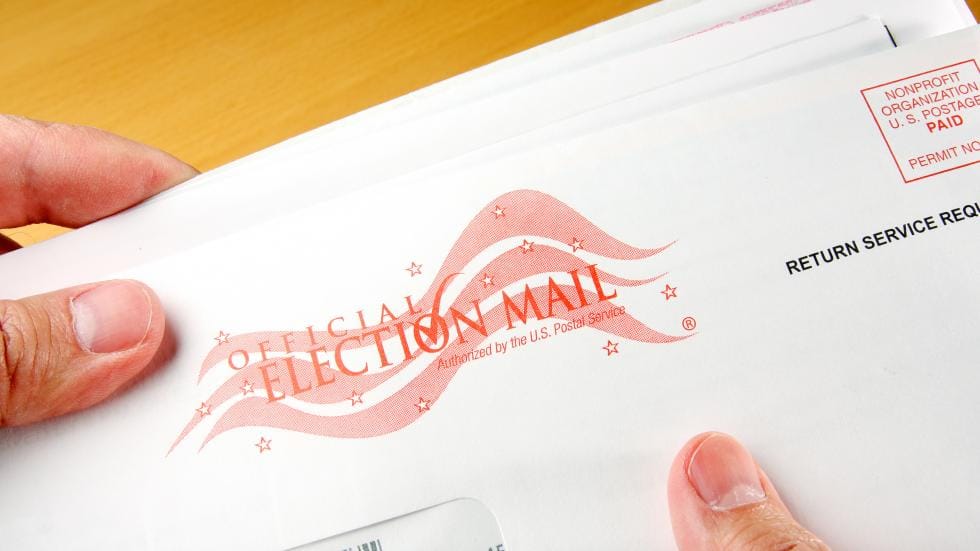
A nonpartisan system is party agnostic. All voters and candidates participate on a single ballot, regardless of political affiliation. All Democrats, Republicans, third party, and independent candidates compete against each other for a spot in the general election.
The number of candidates that advance can vary. In California, there are two candidates that advance – though the Independent Voter Project (which authored Top Two in the state) now advocates for five candidates. In Alaska, there are four candidates that advance.
In short, under nonpartisan primary systems:
- Every voter receives the same ballot – no need to opt into a party.
- Independent voters (who skew young and lower-income) face no administrative barrier.
- Competition is higher, because all candidates appear on the same ballot.
- Parties can't weaponize these elections because they don't control them
- Moderates and independents feel more empowered, so turnout broadens.
Researchers have found that there is not much of a difference in turnout in states that use open partisan primaries versus closed primaries. However, there is a notable difference in turnout under nonpartisan systems.
“Across age, education, and income groups, with family income measured by credit bureau reports, we find that turnout is higher in nonpartisan primaries than in closed primaries,” the study finds.
When open primary states are compared to closed primary states, we find no differences in turnout across these demographic groups, apart from higher turnout for people in the lowest income category.”
States like Washington and California have not only removed barriers to participation by using nonpartisan systems, but they also have made voting more accessible through other state policies. Thus, turnout is higher in these states compared to the national average.
The thing that motivated the fundamental question of the study were claims the authors say reformers have made that nonpartisan systems lead to higher turnout, more representative primary outcomes, and less extreme candidates.
However, higher turnout isn’t the reason for reform. It is a possibility under a system that drastically lowers social inequities. When every voter gets equal access and treatment in elections, it creates opportunities that don’t exist under closed primary systems.
And that is the point.
Nonpartisan election reform is about ending systems designed to only benefit two private political corporations and their members at the expense of independent voters, who tend to be younger, less affluent, and people of color.
The most important takeaway from the study is that political scientists are starting to write about what reformers have talked about for decades, lending further credibility to the independent reform movement.
AZ Democrats Sue to Stop Arizona Independent Party from Emerging
This week, The Democratic Party of Arizona filed a lawsuit against Secretary of State Adrian Fontes, a Democrat, to prevent the No Labels Party from changing its name to the Arizona Independent Party. It claims he does not have the authority to allow it.
Fontes is Arizona’s chief elections officer.
The main argument the Democratic Party is relying on is that the name change will cause confusion, noting that Fontes has instructed county supervisors to register voters who write “IND” on their registration form as unaffiliated and those who write “IND Party” with the Arizona Independent Party.
“In other words, in some cases, the only distinction between voters who will be registered as Arizona Independent Party members and those who will be registered as unaffiliated is the lone word ‘Party,’” said attorney Roy Herrera.
The Citizens Clean Election Commission has already filed a lawsuit, making the same claim.
Whether the Democrats’ lawsuit is actually about preventing voter confusion is subject to dispute. In 2023, the Democratic Party filed a lawsuit when Fontes first recognized the No Labels Party. It claimed the No Labels organization violated disclosure requirements in its effort to get the party certified ahead of the 2024 presidential election.
Both major parties in Arizona have a history of trying to snuff out competition.
For example, the state GOP passed a 2015 law that targeted only the Libertarian Party. It raised the number of signatures Libertarian candidates need to qualify for their own party’s primary ballot from a couple hundred to a few thousand.
Efforts by the Libertarian Party to have the law overturned have failed.
Still, while the Democratic Party’s motives are in question, there is historical evidence that adding “independent” in a party’s name can lead to voter confusion. In particular, this can be seen in California.
In 2014, IVN News was the first to report that most voters registered with the American Independent Party (AIP) in California had done so by mistake, thinking that they were registered independent of a party (which is No Party Preference in the state).
Two years later, the LA Times published its own report confirming that many voters were registered with AIP by mistake, including quotes from registered voters who said they meant to register as an independent.
Since California uses a nonpartisan Top Two primary, this doesn’t prevent AIP voters from expressing themselves in most elections. However, California still uses a semi-closed presidential primary which has a documented history of causing confusion.
Under a semi-closed primary system, political parties can decide whether or not to allow No Party Preference voters to participate. However, registered party members can only vote in their respective party’s primary, including voters registered with AIP.
If voters think they are registered independent… It is easy to see why this causes confusion.
The Independent Voter Project petitioned the Supreme Court to hear its challenge to California’s use of semi-closed presidential primaries when the state constitution calls for open primaries. The high court chose not to hear the case.
Arizona uses a semi-open primary system, which allows independent voters to select a party ballot in primary elections. However, registered party members are limited to their own party’s primary – meaning Arizona Independent Party voters could run into the same problem.
This story highlights a number of issues with Arizona elections:
- Both parties have fought against nonpartisan primary reform that would eliminate the confusion problem and treat all voters equally in primaries – like Prop 140 in 2024.
- While voters rejected Prop 140, which did not clearly define what nonpartisan primary model would be used, they also rejected a ballot measure that would ban primary reform – indicating a desire for change.
- Third parties are often the target of lawsuits by the major parties, either to prevent their recognition by the state or to stop their candidates from gaining ballot access.
- No Labels Party is changing its name in part to entice independent candidates to run under the party banner because of the state’s discriminatory petition requirements for independents. Qualifying for the ballot as an unaffiliated statewide candidate requires over 42,000 valid signatures – significantly higher than party candidates.
RCV Goes National? New Bill Aims to Blow Up America’s Broken Elections
U.S. Reps. Jamie Raskin (Md.), Don Beyer (Va.), and U.S. Senator Peter Welch (Vt.) reintroduced legislation Wednesday that requires the use of ranked choice voting in all congressional elections, both for the primary and the general.
The bill gives every voter in the country the opportunity to rank congressional candidates in order of preference (first choice, second choice, third choice, etc.). If a candidate wins more than 50% of first-choice votes, they win outright.
If not, the candidate with the fewest first-choice selections is eliminated and their voters’ ballots are redistributed to their next choice. The process continues until one candidate has majority support.
“Ranked choice voting is a great advance in democracy. It gives voters more power at the ballot box and makes our politics more positive and inclusive, encouraging candidates to connect with more voters,” Raskin said.
I’m proud to partner with Representative Beyer and Senator Welch on this important legislation to keep growing and improving electoral democracy.”
Speaking of RCV, Report Shows Mathematicians Love It
IVN News author Cara McCormick reported this week on a new comprehensive report that – like the study on turnout in nonpartisan primaries – shows researchers outside the reform space see the value of more choice elections.
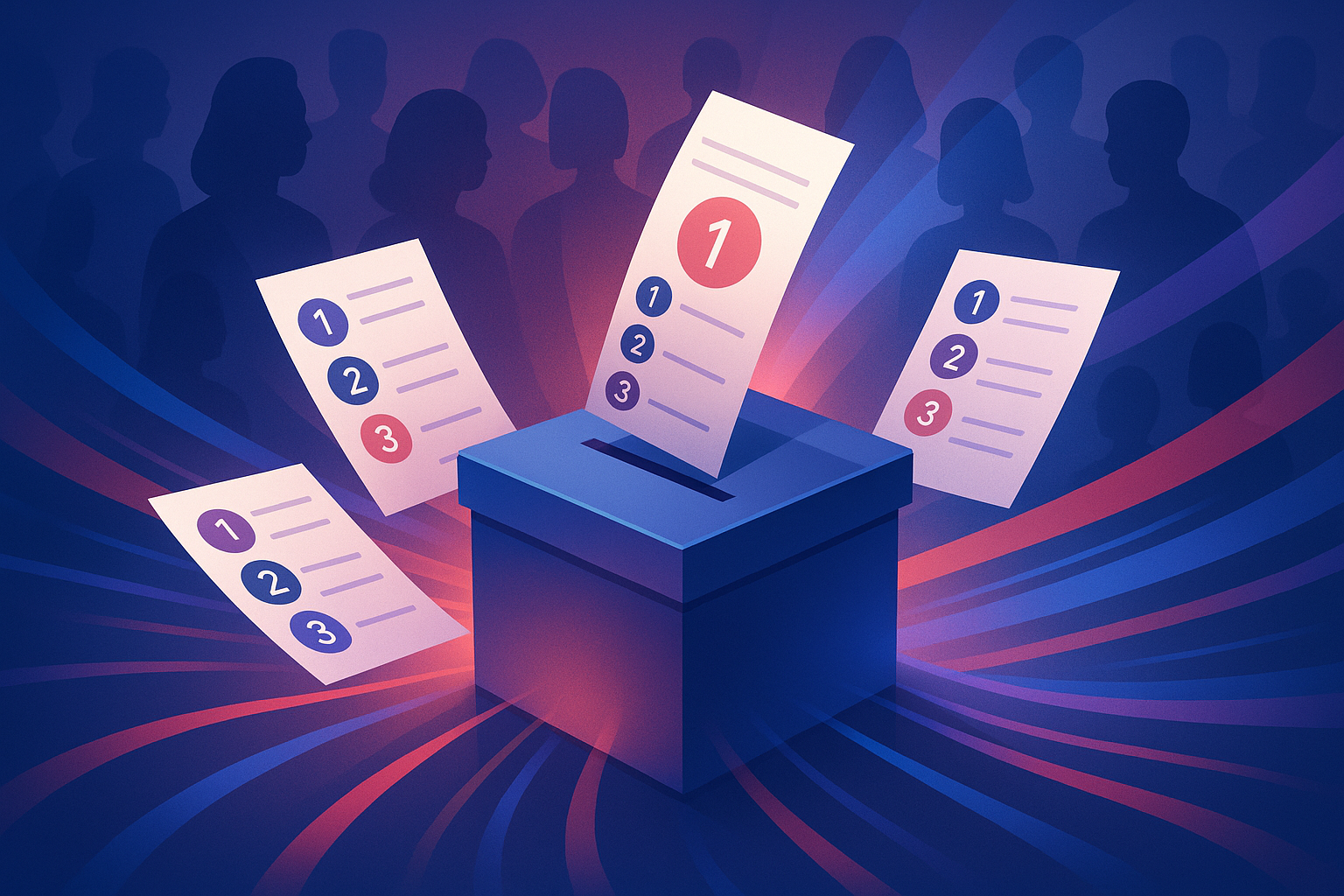
The 60-page report from the Institute for Mathematics and Democracy (IMD) analyzes nearly 4,000 real ranked ballot elections and 60 million simulated ones to test how different voting methods compare and perform.
“The study’s conclusion is clear. Ranked choice voting methods outperform traditional first-past-the-post elections on nearly every measure of democratic fairness,” McCormick writes.
IMD’s research team, led by mathematicians from Wellesley College, William Jewell College, Colby College, High Point University, and Boston University, found that IRV and Condorcet methods of tabulation consistently produce outcomes that better reflect the majority will and reduce the effects of vote splitting and ‘spoiler’ candidates.”
IMD Director Ismar Volic said:
We need better electoral engineering, namely a better design of mechanisms of democracy that would produce outcomes that are favorable to more people.”