
Syria Uprising: A Worrisome Future

 Lauren Moore
Credit: The Hindu
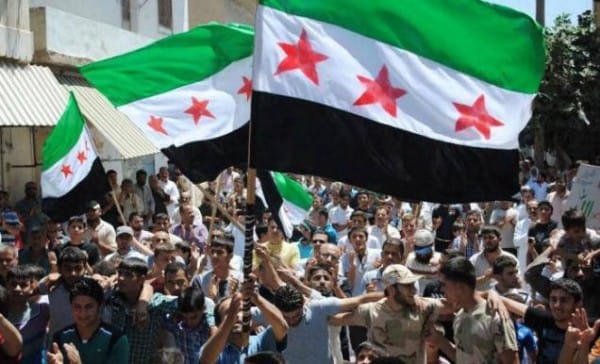
Latest developments in Syria speak of President Bashar al-Assad's eventual exit and the ramifications of rumored chemical weapon stockpiles. Meanwhile, months of bloody uprisings have activists estimating up to 19,000 people have been killed. By most media accounts this bloodshed has come at the hands of the Assad regime.
Abdul*, a Syrian-born Alawite, has a different take from the dominant media narrative. From nearby Turkey, he tells his story for the sake of balance.
He speaks of the religious intricacies of his country, now scrutinized from the outside. It's a land where religion diverges into multiple directions, and occasionally towards fanatical ends found in places more familiar to the American public, like Iraq and Afghanistan. His own people, the Alawites, are a form of Shia Muslim.
“We are 12% . [President Basher al-Assad] is supported by us, and he is still protected by the Christians. Did you know that the massacres were all villages of Alawites people? All [Assad’s] own group. And [Assad] went to Kofi Annan and said 'I’m not drunk, I’m not taking drugs, I’m not stupid. I know all the world's eyes are on Syria and all of the media are looking at me and all the world is saying it’s my mistake. Why do I have to kill my own people in their own villages?'”
On his part, Abdul blames missing media explanation of the accurate picture on the ground in Syria.
Abdul's claims are not unfounded. Popular German magazine, das Spiegel, recently ran a story claiming rebels were behind the massacre. Another German magazine, the Frankfurter Algemeine Zeitung, has eyewitness accounts, "those killed were almost exclusively from families belonging to Houla’s Alawi and Shia minorities."
"Over 90% of Houla’s population are Sunnis. Several dozen members of a family were slaughtered, which had converted from Sunni to Shia Islam. Members of the Shomaliya, an Alawi family, were also killed, as was the family of a Sunni member of the Syrian parliament who is regarded as a collaborator. Immediately following the massacre, the perpetrators are supposed to have filmed their victims and then presented them as Sunni victims in videos posted on the internet.”
“What’s the reason?” continues Assad, “I mean...there is no logical reason why he is doing this,” he says, referring to popular media reports of Assad's regime perpetuating civilian attacks. “Because the 12%, they are supporting him. But the media they transferred it as he is killing them.”
An influx of outside reporters with no grounding in Syrian history or religious dynamics have given way to the media's narrative, says Abdul.“Nobody talks about it in the media here, they say 'oh, I am very sorry' because they were sent just to make pictures and YouTube videos and bring it back... makes a big problem.”

Abdul says he doesn't explicitly condone the actions of the Assad regime, but that a Syrian nation in the hands of the rebels worries him much more. It's a difficult nuance for many to perhaps understand, in a climate that rewards assigning players of an intensely complex national conflict into “good guys” vs “bad guys”.
For now, Abdul is not convinced of a brighter Syrian future. His priority instead, is finding a route for his family to escape.
“When the rebels get the power it will be a very very very bad situation,” he said. “I am very sad to say it will be a future like Somalia.”
Getting his family out is less than simple, most of the escape routes are rebel-controlled. Rebels he and his family do not trust.
“You have to go through the rebels to get to my area. That’s why I am finding a very tough time to get them out. The only way for me through Turkey. But we are just 90 miles from Cyprus. If we can smuggle with a boat...I don’t know, to be honest with you we don’t know yet.”
The outlook for Christian Syrians seems much more ominous, according to what Abdul tells IVN. To him, there is no question as to whether they must flee.
“The Christian people, they will leave the country--they will have to leave--I am sure, because they will be killed. I am sure of this. I know because they are already being killed now.”
Abdul cites the regimes of regional heavyweights like Saudi Arabia and Qatar as hypocritical examples of the democratic state being championed for Syria in the international community. A pseudo-democracy, he says, is less than ideal. Given the limited education of most Syrians, Abdul is not convinced a fully democratic state will be instituted or would result in a better government. He is highly critical of what he believes to be conflicts of interest, whether Western business interests or the actual national origin of numerous rebels.

“The most of are paid people, they are paid by Saudi Arabia and Qatar to make the regime more Sunni regime like they have, because they don’t like ours.”
*Name has been changed.
You Might Also Like


