
Fight for Free and Open Internet is Not Over

 Terri Harel
Photo: International Telecommunications Union
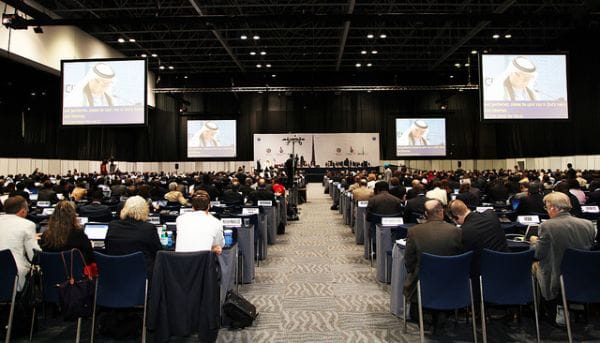
Yesterday, an e-mail from Vint Cerf, a founding father of the Internet, circulated commending those nations which refused to sign the Final Acts at the World Conference of International Telecommunications in Dubai last week. Those who didn't sign are, according to Cerf, protecting the free and open Internet. In all, 89 countries signed the treaty, while 55 refused to sign or determined further review and research needed to be conducted before making a final decision.
The treaty aimed to set particular standards of government involvement and Internet/telecomm operations throughout the world. The WCIT stated the conference sought to review the International Telecommunications Regulations (ITRs) such that they “serve as the binding global treaty designed to facilitate international interconnection and interoperability of information and communication services, as well as ensuring their efficiency and widespread public usefulness and availability.”
According to the document, telecommunication is defined as any transmission of signs (including signals, writing, images, sounds, and intelligence) by virtually any means, including wire, radio, Internet, and other systems. This is a broad spectrum over which governments, given membership to the treaty, reign on communications within and to/from their borders.
Interestingly, the Acts focus less on the rights of “the public” -- which, by the way, by definition include the population, the government, and any other legal bodies that may be involved in telecommunication usage -- and more on the entities which delegate the way “the public” interacts, uses, and accesses means of telecommunications. Article 4 requires member states to “promote” international telecommunication and “foster” the availability of such connectivity to the public, but offer absolutely no details of the specific rights a population would have in access or retainment of access.
The document uses words like “reasonable,” “foster,” and “endeavour” in Article 4 to describe member states’ supposed obligation to their populations. This language is incredibly vague and ambiguous, and offers little guarantees or protections to a citizen’s right to access.
Article 5 gives government telecommunications precedent over all other communications, with the exception of “safety-of-life,” in times of emergency. There is little specifications as to what constitutes an emergency or “safety-of-life” circumstance, however, giving governments ample room for interpretation. Such vagueness could be cause for worry, particularly in regions which experience public unrest, known power abuses, and stringent regulation on the media.
Additionally, a member state can exercise its right to suspend services, partially or totally, the only requirement being they must notify the Secretary General which in turn notifies all member states bound by the treaty. While the notifications may seem like a protection to restricted access, governments which seek to stifle dissidence or exercise greater control over Internet activity are offered a means - a right - to such actions.
In a guest post on CNN.com in the days leading up to the conference, Vint Cerf warned of the dangers of allowing treaties like the one at WCIT to pass.

Freedom House
Without significant oversight as well as specific, detailed, and well-research requirements for governments to protect Internet freedoms, Cerf’s fear is warranted. His warnings should not be taken lightly by nations, telecommunication companies and, particularly, the public which benefits most from the breadth of the Internet. The Final Acts will require revisiting, investigation, and tracking to ensure they beget freedom, not repression.
You Might Also Like


