
Colorado Legislature Kills Measures to Establish Presidential Primary

 Caitlin Hurkes
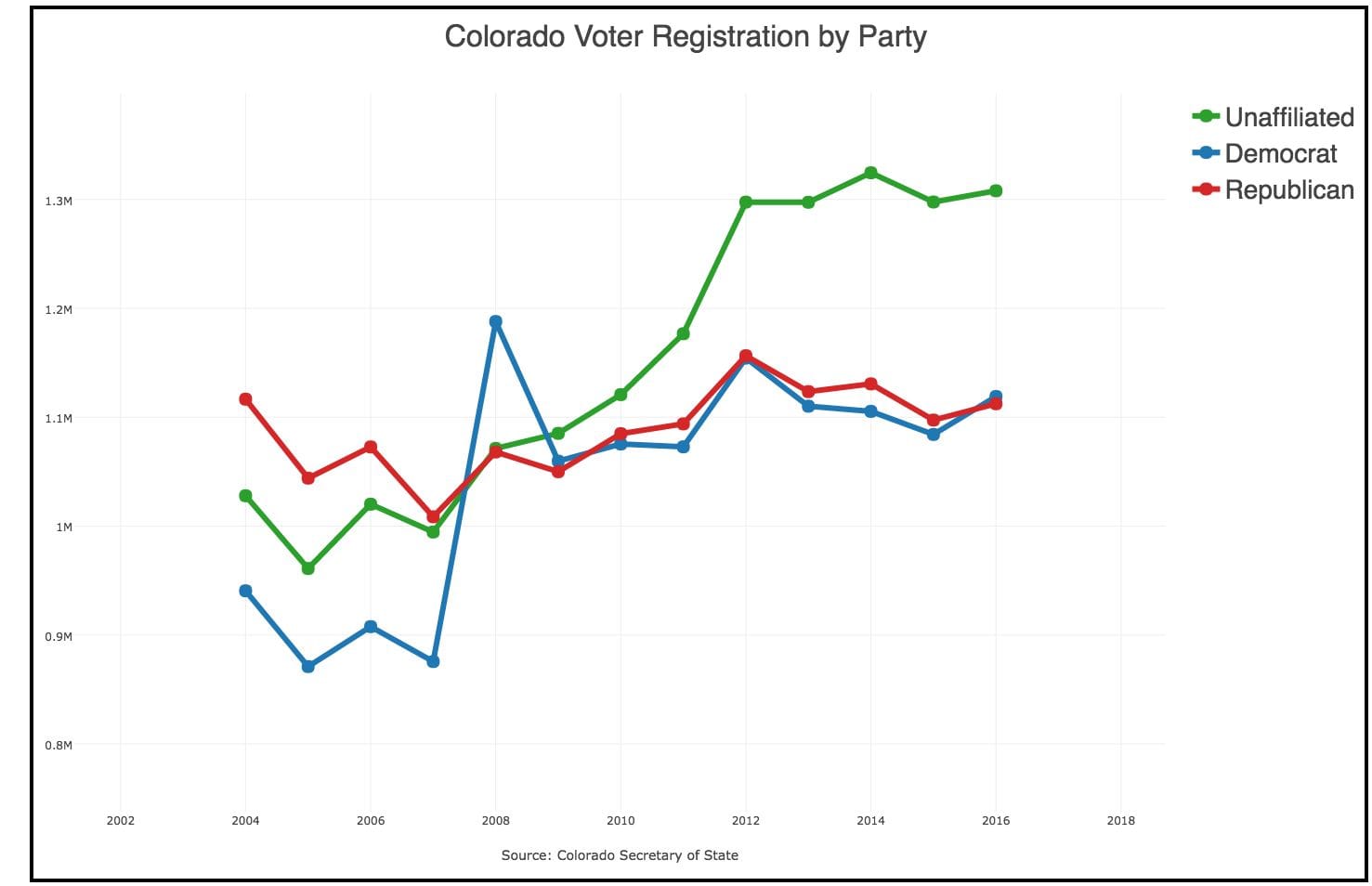
Two efforts by the Colorado state legislature to switch from a closed caucus system to a presidential primary died this week due to confusion over what to do with the state's 1.3 million unaffiliated voters.
Disillusionment with Colorado's closed caucus system reached a breaking point during the presidential caucus in March.
Democratic voters were frustrated at the overcrowded precincts and long waits while Republican voters didn't have the chance to participate as their party decided against holding a caucus in Colorado, opting for a state convention where only party insiders could choose the winner.
Many Coloradans saw this chaos as an opportunity to petition lawmakers to switch to a presidential primary.
But, during debate this week, Republicans and Democrats could not come to an agreement on whether unaffiliated voters would have to either fully or temporarily register with a party in order to participate in the proposed presidential primary.
House Bill 16-1454, which would have let unaffiliated voters register with a party for one day in order to participate in the primary process, died because lawmakers did not want to rush legislation.
The second bill, Senate Bill 16-216 died Monday (5/9). This bill would have established a presidential primary open to only Democratic and Republican voters.
Unaffiliated voters in Colorado now make up almost 37 percent of the electorate, outnumbering both Democrats and Republicans. Despite being the majority, unaffiliated voters must register as a Democrat or Republican to vote in the caucus.
And, as the debate among Colorado lawmakers this week shows, efforts to reform the system only go so far to include the state's majority of unaffiliated voters. The discussion still centered on forcing unaffiliated voters to change their party registration in order to exercise their most fundamental democratic right.

Why can't unaffiliated voters simply vote without having to register with a party first?
Political consultant and Colorado resident Jim Jonas told Colorado Public Radio that more Americans are registering as unaffiliated because they see government dysfunction stemming from the two-party system.
"There are a lot of unaffiliated voters in Colorado and nationwide. I am one of them. As a former Republican, I felt like the party left me," Jonas said.
Jonas explained there are many reform efforts across Colorado and the country trying to redefine what elections are about.
"Currently, the parties want us to believe that elections are about them. But, in a representative democracy, elections should be about voters." - Jim Jonas, Colorado resident and unaffiliated voter
The actions of Colorado lawmakers this week showed that even when our representatives try to reform the system, they do it in a piecemeal fashion that still excludes unaffiliated voters. Hopefully, citizen-led efforts to make democracy more representative fare better.
Photo Credit: Colorado Public Radio
You Might Also Like


